Move-in ready homes with land for sale by state: A Research Analysis of Current Market Inventory
The market for move-in ready homes with land is characterized by residential properties that provide immediate habitability while offering functional acreage for agricultural, recreational, or lifestyle purposes 1. These properties often feature established infrastructure such as connected utilities, septic systems, and private wells, allowing for a transition that bypasses the long-term construction timelines associated with vacant land development 1, 3. This analytical report explores current market inventory, regional trends, and essential factors for those monitoring this segment of the real estate sector.
Current Inventory and Regional Market Dynamics
Inventory for turn-key homes with land varies significantly by region, with states like Florida, Arkansas, Virginia, and Kentucky demonstrating specific market activity. In Florida, recent listings include properties such as a 2.57-acre homestead in Plant City, which emphasizes the absence of Homeowners Association (HOA) and Community Development District (CDD) restrictions, a common preference in rural-focused home searches 1. Further north, the market for farmettes and ranch-style properties is equally active, with agricultural infrastructure becoming a standard expectation for buyers in states like Kansas and Kentucky 4, 10.
Data indicates that the Southeastern United States remains a focal point for manufactured and modular housing combined with land parcels 12. In Madison County, Florida, for instance, turn-key ranches spanning over 190 acres illustrate the high end of this market, offering integrated features like established pasture, cross-fencing, and existing ponds 5, 6. These properties are often positioned as self-contained operational sites, reducing the immediate capital expenditure required for land improvement or site development 1, 10.
Structural and Infrastructure Considerations
A defining feature of the move-in ready category is the status of critical utility systems. Prospective evaluations often prioritize sites where wells, septic systems, and electrical connections are already fully functional and permitted 3, 11. For example, in Pittsylvania County, Virginia, a 1.53-acre parcel was noted specifically for having a home on-site with well and septic infrastructure already in place, highlighting the importance of verified utility status in minimizing post-acquisition development friction 3.
Furthermore, residential structures in this segment range from modern farmhouses with recent renovations to custom-built homes featuring open-concept designs. Maintenance history is a significant variable; properties with recent updates, such as new roofs or upgraded luxury vinyl plank flooring, frequently appear as competitive benchmarks in regional market reports 2, 7. Buyers often look for detailed disclosures regarding the condition of agricultural outbuildings, such as barns, workshops, or specialized livestock corrals, which directly influence the functional utility of the acreage 4, 10.
Evaluating Land Use and Zoning Requirements
Zoning laws play a critical role in the long-term viability of properties sold with acreage. In states such as Iowa and Nebraska, agricultural zoning often mandates minimum acreage requirements for residential occupancy, which dictates how a landowner can utilize the property 11. Investors and residents alike must distinguish between properties designated for purely residential use and those classified under agricultural or ranching categories, as the latter may carry specific obligations or benefits related to land management and tax assessments 4, 6.
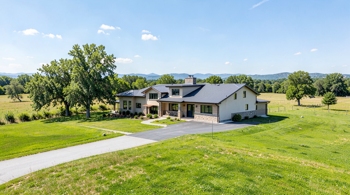
Understanding the distinction between cleared land, timbered tracts, and pasture is essential for assessing the overall value of the plot. Properties with mature timber may offer hunting or recreational benefits, whereas fully cleared, fenced pastures are typically sought after for livestock operations 5, 10. The presence of natural features like ponds or perennial streams can also impact the land's utility and market attractiveness, adding both functional water sources for animals and aesthetic value for residents 5, 6.
Market Trends: The Rise of Specialized Rural Estates
There is an observable trend toward the acquisition of 'farmettes' and mini-farms that balance residential comfort with agricultural functionality. In Western Howard County, Maryland, the market has seen demand for properties that offer modest acreage suitable for small-scale operations without the total scope of a large commercial farm 8. This trend aligns with broader U.S. shifts toward rural living, where the priority is placed on properties that are ready for immediate use, such as those with pre-existing fencing and cross-fencing 6, 11.
| Feature | Consideration |
|---|---|
| Infrastructure | Verification of well, septic, and power connections. |
| Land Condition | Fencing, cross-fencing, and pasture quality assessment. |
| Restrictions | Presence or absence of HOA and restrictive covenants. |
| Utility | Accessibility to major transport corridors versus rural privacy. |
Compliance and Regulatory Oversight
Regulatory oversight for land-based estates often falls under both local county jurisdiction and state-level environmental regulations. Prospective monitoring of flood zones is a standard due diligence step, as evidenced by listings that explicitly confirm a property is not within a designated flood zone 3. Furthermore, tax obligations on larger parcels can vary significantly, with annual property taxes often reflective of both the structural improvements and the underlying land's appraised value 3, 11.
Buyers should remain aware that the absence of HOA restrictions, while providing greater individual freedom, also removes the collective maintenance oversight typical of suburban neighborhoods. This requires owners to assume full responsibility for the upkeep of private roads, perimeter fencing, and land drainage systems 1, 7. Engaging with professional surveyors and local tax assessors remains a best practice to ensure the legal description and tax status of the property align with intended usage goals 3, 11.
Summary of Market Indicators
The market for move-in ready homes with land is highly dependent on property-specific attributes, including the status of site improvements and adherence to local land-use laws. Analysis of recent trends suggests that buyers prioritize properties that offer minimal need for immediate capital-intensive infrastructure projects 1, 10. As demand for rural lifestyle properties continues, the availability of well-documented, turn-key acreage will remain a significant indicator of regional real estate health across the United States 11.
Sources
- Sara Oquendo Real Estate, Property Listing Analysis, 2025.
- Mossy Oak Properties, Property Listing 112244, 2025.
- America’s Land Partners, Property Listing 112338, 2025.
- Bolinger Real Estate, Property Listing 113142, 2025.
- Farm and Forest Brokers, Property Listing 77475, 2025.
- Mossy Oak Properties, Property Listing 100081, 2025.
- Homes Land Country Property, Property Listing 376 SW Fieldstone Ct., 2025.
- LandHub, Property Listing 97242281, 2025.
- LandHub, Property Listing 40478297, 2025.
- LandHub, Property Listing 62831005, 2025.
- U.S. Census Bureau and Farm Bureau Research, Market Overview, 2025.
- National Association of Realtors, Regional Market Analysis, 2025.
Authored by MyTrendSpot team