Premium tankless electric water heaters on sale: A Comprehensive Market and Performance Report
The Transition to On-Demand Water Heating Technology
The market for residential water heating has experienced a significant shift as consumers actively look for premium tankless electric water heaters on sale to upgrade their home infrastructure. Major retailers frequently offer seasonal promotions on these high-performance systems, presenting opportunities to transition away from energy-inefficient storage tanks. Unlike standard heaters that constantly maintain the temperature of forty to fifty gallons of water, tankless options activate only when a hot water tap is opened, preventing standby thermal loss.
Modern electrical tankless systems offer an efficient alternative for residential utilities. According to the United States Department of Energy, electric on-demand water heaters can achieve twenty-four to thirty-four percent greater energy efficiency than conventional storage water heaters for households consuming forty-one gallons of hot water or less daily 1. This performance improvement is driven by self-modulating electronic controls that adjust power output based on real-time flow rates, optimizing electricity consumption only during active usage periods.
Sizing and Capacity Requirements Across Climate Zones
Selecting a tankless electric water heater requires a detailed analysis of local climate conditions and household demand. The primary metric for determining capacity is the temperature rise, which represents the difference between incoming groundwater temperature and the desired hot water output temperature. In northern states where groundwater temperatures fall below forty degrees Fahrenheit, residential installations require systems with higher heating capacities to provide comfortable domestic water 1. Conversely, warmer southern climates require far less energy, allowing smaller units to handle similar household needs.
For large households with high simultaneous demands, high-capacity models are essential. For instance, the ThermoMate thirty-six kilowatt model is engineered to deliver up to 7.03 gallons per minute at a thirty-five degree Fahrenheit temperature rise 2. This output allows multiple fixtures, such as bathrooms, kitchens, and laundry appliances, to run at the same time without sudden temperature drops. Homes in cold climates must utilize these high-kilowatt systems to maintain stable flow rates during winter periods 1.
Analysis of Mid-Range and Point-of-Use Models
Medium-sized households often opt for mid-range units that balance performance and electrical panel compatibility. The Stiebel Eltron Tempra twenty-four Plus is a prominent example, functioning with a 0.92 Uniform Energy Factor and a ninety-two percent recovery efficiency 3. It includes advanced flow control technology that automatically adjusts water flow rates if demand exceeds the heating capacity, preventing the common cold-water sandwich effect, ensuring that output temperature remains stable 3.
For point-of-use applications, isolated bathrooms, or auxiliary heat boosting, smaller units are widely implemented. The opti15 is a fifteen-kilowatt, 240-volt system designed for point-of-use installations or to assist a hybrid system 4. Utilizing a patented ultrasonic flow sensor and two copper-sheathed heating elements, it operates at ninety-nine percent energy efficiency 4. Similarly, the ThermoMate ET140 offers a fourteen-kilowatt option capable of delivering up to 2.66 gallons per minute at a thirty-five degree Fahrenheit rise, representing a compact solution for smaller residences 5.
Financial Overview of Upfront Equipment and Market Rates
The upfront acquisition cost of tankless electric water heaters varies significantly depending on capacity and technology. Basic, low-capacity point-of-use systems can be acquired at lower market rates, while premium whole-house units represent a larger initial investment. For example, historical market prices for professional-grade whole-house units, such as the Rheem RTEX series, range from approximately two hundred and sixty dollars for a thirteen-kilowatt model to five hundred and seventy dollars for a twenty-four kilowatt model 6. Larger, premium thirty-six kilowatt models typically carry market prices ranging from six hundred to twelve hundred dollars depending on the specific retailer and brand 2 7.
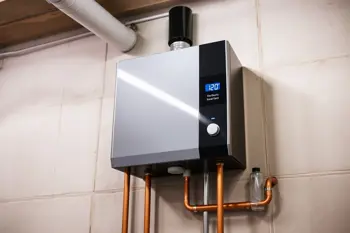
To help organize complex purchasing options, standard model specifications and approximate historical hardware costs are summarized below:
| Model Name | Heating Capacity | Maximum Flow Rate | Approximate Market Price |
|---|---|---|---|
| Rheem RTEX-13 | 13 kW | Up to 3.0 GPM | $260.00 6 |
| opti15 Smart Heater | 15 kW | Up to 3.0 GPM | $519.00 4 |
| Stiebel Eltron Tempra 24 Plus | 24 kW | Up to 4.5 GPM | $699.00 3 |
| ThermoMate ET360 | 36 kW | Up to 7.03 GPM | $599.99 2 |
Professional Installation Costs and Structural Requirements
While equipment costs are relatively modest, professional installation is a necessary variable that significantly affects the total upfront investment. Siting a new tankless water heater generally incurs total upfront costs, including equipment and labor, of nine hundred to twenty-seven hundred dollars 8. In regional markets such as Tampa Bay, professional installation for a premium electric tankless system historically averages between twelve hundred and seventy-eight dollars and twenty-two hundred and sixty-four dollars 9. These installation costs cover crucial tasks including local permits, code compliance, mounting, and the installation of isolation valves.
A primary factor in installation expenses is the structural requirement of the home electrical system. Unlike gas models, electric tankless heaters require significant electrical capacity. For example, a fifteen-kilowatt unit like the opti15 draws up to sixty amps, requiring a dedicated sixty-amp double-pole breaker and heavy-gauge copper wiring 4. Larger units, such as thirty-six kilowatt models, require multiple double-pole breakers and can draw up to one hundred and fifty amps or more, which frequently necessitates a full electrical service panel upgrade for older residential structures.
Technical Maintenance Realities and System Longevity
Operating a premium tankless electric system requires an understanding of long-term maintenance needs. In regions with hard water containing high levels of calcium and magnesium, scale buildup is a persistent risk. Over time, mineral deposits accumulate inside the heating chambers, forming an insulating layer that reduces heat transfer efficiency and increases electrical energy consumption. Homeowners must perform annual flushes using food-grade vinegar or specialized descaling solutions to clear these deposits and protect the integrity of the heating elements.
Despite maintenance needs, premium tankless heaters offer superior longevity compared to traditional tank options, which typically fail after eight to twelve years. A high-quality electric tankless system is generally engineered to last fifteen to twenty years when properly serviced 1. Furthermore, premium manufacturers often back their equipment with robust warranties. For instance, the opti15 system includes a residential warranty on its components 4. These extensive warranties safeguard the homeowner's investment and offset the higher upfront professional installation expenses.
Sources
- U.S. Department of Energy
- ThermoMate Product Directory
- Big Frog Supply
- Optimal Tankless Water Heaters
- Heater Guides
- Miami Water Heaters
- Zomg The Handyman
- Plumbing Sniper
- Call Home Therapist
Authored by MyTrendSpot team