Best Time of Year to Visit Egypt: A Seasonal Analysis for Travelers
The best time of year to visit Egypt is generally October through April, when Cairo, Luxor, and Aswan offer more comfortable daytime conditions for pyramids, temples, and Nile travel. December and January are popular but typically bring heavier visitor demand, while March, April, and October can provide similar comfort with fewer crowds. 1
Overall travel season
Egypt’s principal sightseeing season runs from October to April because daytime temperatures are usually more suitable for extended outdoor visits. Across Cairo, Luxor, and Aswan, reported daytime conditions in this period commonly fall within approximately 20°C to 28°C, although Upper Egypt can remain warmer than the capital. November, February, and March are frequently identified as especially balanced months for combining comfortable touring with more manageable demand. 1
December and January remain attractive for travelers who prioritize mild winter sightseeing, but they also coincide with the busiest period. One operator identifies December 20 through January 5 as the busiest two-week interval, with Christmas and New Year contributing to higher occupancy and Nile cruise rates. Travelers choosing these dates should expect greater pressure on accommodation and transport availability than during shoulder months. 4
Weather differences by region
Egypt does not have one uniform travel climate. Long-term planning ranges place Cairo and Giza at roughly 19°C to 22°C for typical winter highs and 34°C to 36°C for summer highs. Luxor is warmer, with winter highs around 23°C to 27°C and summer highs near 40°C to 42°C. Aswan and Abu Simbel can reach approximately 41°C to 43°C in summer, making exposed archaeological sites particularly demanding. 3
Alexandria is cooler and more humid than inland destinations, with spring and autumn identified as strong periods for visiting. The Red Sea resorts of Hurghada and Sharm El-Sheikh are more flexible because coastal breezes moderate conditions, although summer land temperatures can still reach about 34°C to 38°C. Winter evenings in desert and inland areas may feel distinctly cold, so seasonal planning requires both sun protection and layers for nighttime conditions. 3
Month-by-month seasonal pattern
October and November mark the transition into the most comfortable sightseeing period. October is often described as a late-autumn sweet spot, while November combines winter-quality weather with demand that is generally less intense than the Christmas period. February and March also perform well for Cairo, Luxor, Aswan, and Nile cruising. April can remain pleasant, though temperatures begin rising and spring desert winds may affect visibility and comfort. 4
May through September forms the hotter period, particularly in Upper Egypt. June, July, and August can be substantially less expensive than peak winter travel, but the trade-off is severe afternoon heat, including temperatures around 42°C in Luxor. August is also associated with the Nile’s highest water level. Summer itineraries are therefore more practical when sightseeing is concentrated at sunrise or later in the day, with lighter schedules around midday. 4
Nile Valley and archaeological sites
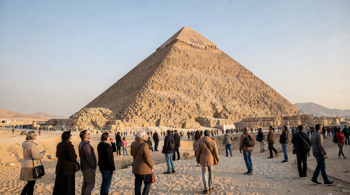
For a temple-heavy itinerary, October through March is the strongest regional window because Luxor, Aswan, and Abu Simbel involve extensive walking in exposed environments. Winter provides warm, dry daytime conditions, while early spring can offer a useful balance between touring comfort and visitor levels. The southern Nile Valley is consistently hotter than Cairo, so a month that feels mild around the pyramids may still feel considerably warmer at Karnak, the Valley of the Kings, or Abu Simbel. 2
Summer visits to the Nile Valley are possible but carry a greater heat-related burden. A schedule built around early departures, air-conditioned transfers, indoor midday periods, and reduced daily site coverage is more realistic than attempting full-day outdoor touring. Desert travel also requires caution because summer temperatures can be dangerous, while winter nights may approach near-freezing conditions in some desert regions. 7
Red Sea holidays and diving
Hurghada and Sharm El-Sheikh can support beach and water-focused travel throughout much of the year, making the Red Sea less seasonally restricted than inland Egypt. October and November are among the strongest all-around periods for combining coastal activities with excursions, since land conditions are generally more moderate and sea activities remain practical. Summer is hot on land but continues to attract visitors seeking resort time and water activities. 6
For diving, April through June and September through November are associated with clear Red Sea water. Summer diving can provide warmer water and quieter boats, but heat on land remains a consideration when transfers or archaeological excursions are included. Travelers whose primary objective is underwater activity can tolerate a broader calendar than those planning long walks through Luxor and Aswan’s monuments. 1
Crowds, events, and cultural timing
Seasonal demand is shaped by international holidays as well as weather. December and January are the most crowded and expensive months in many itineraries, while Easter week is another high-demand period. The Abu Simbel Sun Festival occurs in February and October and attracts additional visitors because of the solar alignment at the temple. Event dates and access arrangements should therefore be checked separately from general climate conditions. 4
Ramadan shifts approximately ten days earlier each year, so its dates vary across the calendar. Sites generally remain open, but business hours, daily pacing, and daytime dining arrangements may change, with services more limited during fasting hours. After sunset, the period has a distinctive festive atmosphere. Ramadan is not automatically unsuitable for travel, but it creates operational constraints that should be considered when planning meals, transfers, guided visits, and evening activities. 8
Sources
- My Way to Egypt, “Best Time to Visit Egypt: A Local's Season-by-Season Guide”
- One Nation Travel, “Best Time to Visit Egypt: Weather & Crowds”
- Pyramids Land, “Best Time to Visit Egypt: Month by Month”
- Egypt Photography Tours, “Best Time to Visit Egypt: Weather, Crowds & Prices”
- Discovery Tours Egypt, “Best Time to Visit Egypt: Month-by-Month Guide”
- Sphinxreise, “Best Time to Visit Egypt”
- Egypt Travel Ways, “Best Time to Visit Egypt 2027”
- General research sources, including U.S. Department of State travel information
Authored by MyTrendSpot team