Beautiful Dresses for Weddings: A Neutral Guide to Silhouettes, Fabrics, and Dress Codes
Beautiful Dresses for Weddings can refer to bridal gowns, wedding-party attire, or guest dresses, each governed by different expectations. The most useful distinctions involve silhouette, fabric, neckline, length, train, venue, and stated dress code rather than appearance alone.
Silhouettes Define the Overall Shape
A-line gowns fit through the bodice and gradually widen toward the hem, creating a proportion that can work across many body types. Ball gowns pair a fitted bodice with a full skirt and therefore produce a more formal, dramatic effect. These two categories are commonly treated as foundational bridal silhouettes because they distinguish controlled volume from a more gradually expanding shape. 10 11
Mermaid and trumpet dresses remain close to the torso and hips before flaring lower on the body, emphasizing the figure. Sheath dresses follow a relatively straight, body-skimming line and are frequently associated with modern, minimalist, beach, or destination settings. Fit-and-flare designs occupy a related category, but the point at which the skirt expands can vary, making the exact cut important when assessing movement and comfort. 12 13
Fabric Changes Structure and Formality
Lace, satin, chiffon, tulle, crepe, and mikado produce different visual and physical results. Chiffon and lightweight materials generally create softer movement, while satin, mikado, and structured lace can support a more sculptural outline. Fabric selection also affects how a dress responds to heat, outdoor movement, body support, and the level of formality expected at the ceremony. 14
Documented dress examples show how materials can become the central design feature. Grace + Ivory’s Betsy uses laser-cut lace, clear sequin shimmer, a basque waist, a ball-gown skirt, and a detachable puff sleeve. Its construction includes boning and breast cups, while the label describes the gown as made to the wearer’s measurements and potentially customizable. 4 Mira Zwillinger’s Ria instead uses silk brocade with embossed botanical motifs, a corseted sweetheart bodice, a fluid A-line skirt, and integrated pockets. 6
Dress Codes and Wedding Settings
Black tie generally indicates an ankle-sweeping, floor-length dress rather than a midi style. Vogue’s formalwear guidance identifies tulle, pleated chiffon, silk, and liquid embellishment as possible directions, while also noting that an upscale city venue can call for a different interpretation than a rural setting. A classic A-line or halterneck can provide formality without relying on highly elaborate decoration. 2
Summer and outdoor ceremonies create additional considerations. InStyle’s 2026 editorial research identifies three-dimensional details and lightweight jersey among notable summer directions, while its selected categories include beach-ready minis, cocktail midis, and floor-length gowns. The setting, temperature, surface underfoot, and expected amount of standing or dancing should therefore be considered alongside the visual style. 1
Contemporary Bridal Details
Modern bridal design often combines a familiar silhouette with a distinctive construction detail. Grace + Ivory’s Rani is described as a one-shoulder satin gown with a draped skirt and hand-beaded pearls cascading across an asymmetrical bodice. The combination places a traditional long gown within a more sculptural, contemporary framework, while the fluid satin skirt is intended to maintain movement rather than a rigid profile. 5
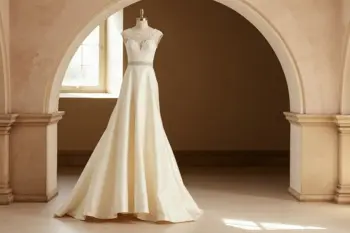
Neckline selection also changes the balance of a dress. Sweetheart, V-neck, square, bateau, halter, and off-the-shoulder necklines can alter perceived proportion and formality. Betsy provides a scoop and cat-eye neckline with a strapless option, while Rani uses an asymmetrical one-shoulder treatment. These examples demonstrate why neckline, sleeve treatment, bodice support, and skirt volume should be assessed as a connected design system. 16 4 5
Wedding-Guest Dresses Are a Separate Category
Guest attire generally includes more colors, shorter lengths, and broader levels of formality than bridal gowns. Current editorial and retail research groups guest dresses into cocktail, midi, maxi, formal, black-tie, beach, floral, satin, and destination categories. The Knot’s editorial directory names retailers and labels spanning department stores, specialty brands, and occasionwear platforms, indicating that wedding-guest dressing is treated as a broad market rather than one fixed style. 7
Department-store category data illustrates that range. Bloomingdale’s lists chiffon tiered dresses, lace-inset asymmetrical dresses, floral mikado styles, stretch silk dresses, gowns, pleated maxis, and metallic designs. Macy’s similarly records printed satin A-line dresses, chiffon midi dresses, one-shoulder sequined gowns, fit-and-flare dresses, velvet burnout midis, and embellished long-sleeve styles. These categories show how length, textile, neckline, and decoration interact with dress-code expectations. 8 9
Fit, Etiquette, and Practical Friction
The clearest etiquette boundary for guests is color: unless the couple specifies otherwise, white and white-adjacent shades should be avoided. Cosmopolitan’s guidance also identifies off-white, cream, light yellow, and very pale blue as potentially bridal in photographs. Guests are likewise expected to respect the requested dress code and avoid visually upstaging the couple, especially through a gown that is excessively bridal in color, train, or ornamentation. 3
Fit and logistics create practical risks that photographs cannot resolve. Made-to-measure gowns require accurate bust, waist, and hip measurements, and structured dresses may involve boning, built-in cups, zippers, or support engineering. Trains can require bustling, while heavy embellishment or restrictive silhouettes may affect mobility. Retail categories also change, and listed prices, sizes, colors, and production timelines require verification from the relevant retailer or designer rather than assumption. 4 5 15
Sources
- InStyle, “The 56 Best Wedding Guest Dresses of 2026”
- Vogue, “28 Black-Tie Wedding Guest Dresses”
- Cosmopolitan, “What to Wear to a Wedding 2026”
- Grace + Ivory, “Betsy Lace Wedding Dress”
- Grace + Ivory, “Rani Wedding Dress”
- Mira Zwillinger, “Ria Floral Silk Brocade Wedding Dress”
- The Knot, “Where to Buy Wedding Guest Dresses”
- Bloomingdale’s, “Wedding Guest Dresses”
- Macy’s, “Women’s Wedding Guest Dresses”
- Brides, “Wedding Dress Silhouettes”
- The Knot, “Wedding Dress Silhouettes”
- Martha Stewart Weddings, “Wedding Dress Silhouettes”
- WeddingWire, “Wedding Dress Styles”
- Azazie, “Wedding Dress Styles”
- David’s Bridal, “Wedding Dress Guide”
- Essense Designs, “Wedding Dress Necklines”
Authored by MyTrendSpot team