Top rated foam rollers for back: An evidence-informed comparison
The search for top rated foam rollers for back discomfort involves more than choosing the firmest cylinder. Back-oriented designs differ in how they distribute pressure, protect the spine, target surrounding muscles, and accommodate beginners or experienced users. The products and categories below are compared as recovery tools, not as treatments for diagnosed back conditions.
How back-focused rollers differ
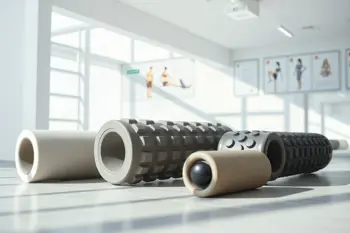
Traditional cylindrical rollers place pressure across a relatively broad surface, while textured models concentrate contact on smaller areas. The TRIGGERPOINT GRID uses a multi-density exterior and a rigid hollow core, combining varied pressure with a structure intended to retain its shape through repeated use.2 A separate review describes the Grid 1.0 as a 13-inch EVA-foam roller with an extra-firm feel and three-dimensional surface zones designed for targeted muscle work.3
Contoured products address a different concern: avoiding direct pressure on the spinal column. The Rollga has grooves designed to cradle natural body curves and work the muscles on both sides of the spine, rather than pressing directly over vertebrae.1 Chirp Wheel products similarly use a central channel intended to keep pressure away from the spine while contacting adjacent back muscles.12 These designs may be more suitable for users who find flat rollers uncomfortable across the back.
Shortlist of highly rated options
Available research identifies several distinct categories rather than one universal winner. The TRIGGERPOINT GRID is associated with general recovery and targeted pressure, Rollga with contoured spinal clearance, and vibration models with added intensity. Lunoo assigns RumbleRoller X a 9.12 out of 10 score and describes it as ranked first in its documented Therabody recovery-roller category.4 That score reflects a category-specific method and should not be interpreted as a clinical ranking for back pain.
Vibration adds another layer of adjustment. The Vyper 2.0 by Hyperice is described as having three speed settings and app connectivity, while remaining usable manually.6 LifePro’s vibrating model is reported to have four massage modes, adjustable intensity, a rechargeable battery, and a carrying case, although its vibration may feel intense and the device is heavier than standard rollers.5 These tools are more complex than passive rollers and introduce charging and intensity-management considerations.
Firmness and surface texture
Firmness should match tolerance and intended use. Rollga is offered in LITE, Standard, and PRO densities, described respectively as soft, medium, and hard, with beginners directed toward the softer or middle options and advanced users toward the harder version.1 Smooth, high-density rollers generally provide uniform pressure, while raised or grooved surfaces create more localized contact. A highly firm or deeply textured tool can therefore feel more aggressive without necessarily being more useful.
The GRID’s multi-density exterior is intended to vary the massage sensation across its surface, while its hollow core supports durability.2 A review rates the Grid 1.0 at 4.7 out of 5 overall, with 4.5 out of 5 for value and 4.6 out of 5 for ease of use, but also describes it as extra firm and available in a single size.3 Those characteristics may favor experienced users but can limit comfort for people new to rolling.
Size, portability, and construction
Dimensions affect reach, storage, and stability. The Rollga is reported at 18 by 6 by 6 inches and approximately 6.4 ounces, making it notably portable; certain packages include a carry strap.1 The Grid 1.0 is identified as a 13-inch roller weighing about 0.5 kilograms.3 A shorter roller may be easier to transport, while a longer roller can provide a broader support platform during floor-based mobility work.
Construction also influences long-term usability. The GRID’s rigid hollow core is designed to resist compression and retain its shape, and its exterior is described as relatively easy to clean.2 The Luckcolor Back Roller uses a polypropylene core with 0.6-inch EVA padding and is described as supporting up to 880 pounds, with a widened, wheel-like form and a reported price of $37.89 at the time of its review.7 Such specifications describe structure, not proof of effectiveness for a medical condition.
Safe technique for the back
Foam rolling should focus on muscle tissue beside the spine rather than the vertebrae themselves. Guidance summarized in the research recommends avoiding direct rolling over the spine, neck, joints, and acute injuries.11 For back use, controlled movement and moderate pressure are more defensible than forcing body weight into a painful point. The central groove on a contoured roller can help with positioning, but it does not remove the need to avoid painful or unstable areas.
Foam rolling may temporarily improve range of motion and reduce perceived muscle tightness, but it should not be treated as a standalone intervention for persistent back pain.10 Osteoporosis, acute injury, numbness, radiating pain, or unexplained symptoms are reasons to seek medical guidance before using a roller.10 Pain that travels into an extremity or changes with neurological symptoms warrants particular caution rather than increasingly forceful self-massage.
How to interpret ratings and limitations
Published ratings are useful for comparing stated features, but they are not interchangeable. Lunoo’s scores place Vyper 2.0 at 8.68 out of 10 and LifePro at 8.52 out of 10 within a recovery-roller category.56 The Elite Daily Finds review gives the Grid 1.0 a 4.6 out of 5 composite score across quality, value, ease of use, and features.3 Different scoring systems, reviewers, test conditions, and product versions can produce different outcomes.
The most relevant selection criteria are pressure preference, surface design, length, portability, and whether the goal is general muscle recovery or reduced pressure over the spine. A smooth roller may suit broad, uniform work; a textured roller may offer more localized contact; and a contoured or grooved design may address spinal comfort. The principal market friction is that greater intensity, vibration, or specialized shaping can also increase discomfort, complexity, weight, or maintenance requirements.
Sources
- Greenlight.blog, Rollga Foam Roller Review
- Fitness For Life Company, TRIGGERPOINT Performance Therapy Grid Review
- Elite Daily Finds, TriggerPoint Grid Foam Roller Review
- Lunoo, RumbleRoller X
- Lunoo, LifePro Vibrating Foam Roller
- Lunoo, Vyper 2.0 by Hyperice
- DifBetween, Luckcolor Back Roller Review
- The New York Times Wirecutter, Best Foam Roller Guide
- SELF, Best Foam Rollers
- Cleveland Clinic, Foam Roller Benefits
- Hospital for Special Surgery, Foam Rolling Guidance
- Chirp, Chirp Wheel Product Information
Authored by MyTrendSpot team