Top rated air purifiers in 2026: A comprehensive technical analysis of market leaders
In 2026, the market for home air purification has matured significantly, shifting toward integrated smart technology and highly specific filtration capabilities designed to address varied indoor environmental concerns 1. With Americans spending approximately 90 percent of their time in indoor environments, the demand for systems capable of mitigating allergens, wildfire smoke, and volatile organic compounds (VOCs) has reached a new threshold of technical scrutiny 1, 8. This report analyzes the performance metrics of the current top-rated models, grounded in laboratory testing and industry-standard benchmarks.
Understanding Filtration Standards and CADR Metrics
The core utility of any modern air purifier is measured primarily by its Clean Air Delivery Rate (CADR), which establishes the speed at which a unit cleans air within a specific square footage 5. HEPA filtration serves as the established industry gold standard, required to capture a minimum of 99.97 percent of particles at 0.3 microns or larger 1, 7. Manufacturers are increasingly pairing these mechanical filters with activated carbon stages to neutralize gaseous pollutants and odors, a critical feature for users in regions prone to wildfire smoke 1, 7.
| Metric | Industry Standard | Significance |
|---|---|---|
| HEPA Efficiency | 99.97% of 0.3 micron particles | Captures fine dust, dander, and pollen |
| CADR | CFM (Cubic Feet per Minute) | Measures air exchange volume and speed |
| VOC Removal | Activated Carbon Depth | Neutralizes chemical odors and gases |
Performance Leaders in the 2026 Market
Testing throughout 2026 has identified several models that demonstrate superior performance across distinct use cases. The Coway Airmega series, specifically the Mighty2 (AP-1512N), continues to hold a prominent position for its balanced performance, compact design, and reliability in small to medium-sized residential rooms 3, 7. Concurrently, the Blueair Blue Pure 311i Max has earned top marks for its rapid cleaning capabilities in medium rooms, often completing a cycle in approximately 10 minutes while maintaining whisper-quiet energy efficiency 4.
For larger spaces, units such as the Blueair Blue Signature provide high CADR ratings, making them suitable for open-concept floor plans where air circulation is more complex 6. These models frequently incorporate multi-stage filtration, though consumers must consider the long-term maintenance costs associated with specialized proprietary replacement filters, which can range significantly in price per unit 6.
Multi-Functional and Smart Home Integration
The 2026 landscape is defined by the integration of smart sensors that track real-time indoor air quality (IAQ) and adjust fan speeds automatically to minimize energy consumption 7. Devices like the Dyson Purifier Humidify+Cool PH2 represent the expansion into multi-functional technology, combining air purification with humidification and air circulation features 9. While these advanced units offer high levels of control and integration with platforms like Matter, Amazon Alexa, and Google Assistant, they often carry higher upfront costs compared to single-function HEPA purifiers 9.
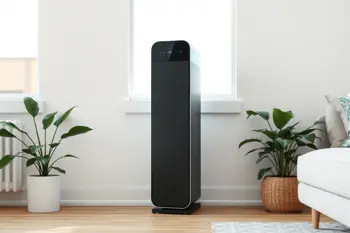
Users interested in smart features should evaluate whether the complexity of app-based control adds value to their specific living situation. While some users prefer set-and-forget automation, others may find that units requiring constant app synchronization represent a potential point of technical friction 4.
Specialized Solutions for Chemical Sensitivity
For individuals with specific health needs, such as Multiple Chemical Sensitivities (MCS) or those recovering from home renovations, the requirements shift toward deeper chemical absorption 7. Models like the Austin Air HealthMate are frequently cited for their specialized focus on heavy VOC removal and high-capacity filtration, prioritizing long-term durability over smart feature sets 7. These machines are typically engineered for a single room rather than open-plan homes, with performance claims often based on two air changes per hour rather than the standard AHAM benchmark of five 7.
Assessing the safety and material composition of these units is as essential as their filtration performance. Users are encouraged to look beyond marketing claims and verify the actual air exchange capacity for the specific square footage they intend to treat 7.
Evaluating Long-Term Economics
Beyond the initial purchase price, the long-term cost of ownership for air purifiers in 2026 is driven by the frequency and cost of filter replacements. Many manufacturers have transitioned to subscription-based programs for filter fulfillment, which can alter the total cost of maintenance over a five-year period 5, 7. Budget-oriented series, such as the Levoit Core and Vital lines, remain popular for their lower barrier to entry and straightforward maintenance requirements, though they may lack the high-end sensors found in premium models 5.
Consumers should assess the availability of compatible third-party filters versus proprietary versions when calculating the potential five-year expense of a unit. Efficient operation does not always correlate with the most expensive machine; rather, it relates to the correct matching of CADR performance to the intended room size and the local air quality stressors 5, 7.
Operational Risks and Maintenance Realities
All air purifiers require consistent maintenance to remain effective. Failing to replace filters at the manufacturer-recommended intervals can lead to reduced air flow and, in some cases, the circulation of dust or debris captured by a saturated filter 5. Furthermore, users should be wary of ionizer-based features in some devices; while these can assist in particle settling, they may be a source of ozone, which can irritate the respiratory system in sensitive individuals 4. Ensuring that a unit is certified by recognized bodies, such as the Association of Home Appliance Manufacturers (AHAM), provides a degree of assurance that the advertised filtration performance has been verified through independent testing 5.
Sources
- Consumer Reports: 8 Best Air Purifiers of 2026
- RTINGS: The 4 Best Air Purifiers of 2026
- Wirecutter: The 4 Best Air Purifiers of 2026
- TechGearLab: Blueair Blue Pure 311i Max Review
- ThirstyBear: 15 Best HEPA Air Purifiers Tested and Reviewed
- PCMag: Blueair Blue Signature Review
- R3 Recs: Austin Air HealthMate Review and Analysis
- Sylvane: The Best Air Purifiers of 2026
- PCMag: Dyson Purifier Humidify+Cool PH2 De-NOx Review
Authored by MyTrendSpot team