How to reduce inflammation safely at home: Evidence-based guidance and warning signs
How to reduce inflammation safely at home starts with distinguishing helpful short-term inflammation from persistent or severe inflammation. The body uses inflammation to respond to injury, infection, and irritation, but unexplained, worsening, or prolonged symptoms should not be managed only with home remedies. 8
Understand the type of inflammation
Acute inflammation is a protective immune response that can cause redness, heat, swelling, and pain while the body repairs damaged tissue or responds to germs. Chronic inflammation is different: it involves persistent immune activation and may be associated with conditions affecting the heart, metabolism, joints, or other organs. A home strategy can support general health, but it cannot identify or treat every underlying cause. 8
Persistent or unexplained inflammation warrants medical assessment, particularly when it occurs with fever, significant pain, or other new symptoms. Sudden severe inflammation, rapidly increasing redness or swelling, breathing difficulty, chest pain, or signs of serious infection require prompt care rather than prolonged self-treatment. 11
Use an anti-inflammatory eating pattern
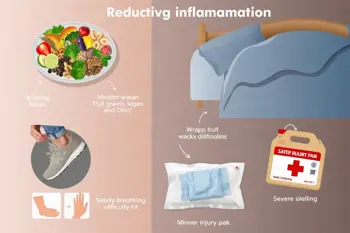
The strongest dietary guidance focuses on an overall Mediterranean-style pattern rather than a single “miracle” food. Meals can emphasize vegetables, fruits, whole grains, legumes, nuts, seeds, fish, and unsaturated oils such as olive oil. Harvard Health and the American Heart Association describe these foods as components of eating patterns associated with lower inflammatory burden. 2 9
Foods commonly limited in this pattern include refined carbohydrates, heavily processed products, deep-fried foods, processed meats, and items high in added sugars. The research describes the pattern of eating as more important than any isolated ingredient, so restrictive “detox” approaches are not a substitute for balanced nutrition or treatment of an inflammatory disease. 2
Add regular, appropriate movement
Regular physical activity can help address factors associated with chronic inflammation and supports broader cardiovascular and metabolic health. The World Health Organization recommends that adults generally complete 150 to 300 minutes of moderate-intensity aerobic activity weekly, or 75 to 150 minutes of vigorous activity, together with muscle-strengthening activity. Activity should be adapted to current fitness, pain, injury status, and medical conditions. 1
Movement should not be used to push through severe pain, rapidly increasing swelling, or an acute injury that has not been assessed. For people with overweight or obesity, gradual weight management may also reduce inflammatory signaling because excess body fat can contribute to inflammation. Weight-related changes should be approached as sustainable health care, not as an extreme short-term restriction. 4
Prioritize sleep and smoking cessation
Adequate sleep supports immune regulation and general health. The Centers for Disease Control and Prevention states that most adults need at least seven hours of sleep per night, although individual needs and sleep quality vary. A consistent schedule, attention to sleep-disrupting habits, and evaluation of ongoing sleep problems can support a broader plan for reducing chronic inflammatory burden. 3
Smoking is another modifiable factor linked with poorer inflammatory health and increased risk of many chronic diseases. Stopping smoking can improve overall health, but persistent cravings, withdrawal, or long-term tobacco use may require structured clinical support. Sleep and smoking changes are maintenance practices, not one-time treatments, and their benefits depend on consistency over time. 4
Manage minor injury symptoms carefully
For a minor acute injury, a cold pack may temporarily reduce pain and swelling. The American Academy of Orthopaedic Surgeons advises protecting the injured area and avoiding direct contact between ice and skin. Excessive or prolonged icing can damage tissue, so cold treatment should be brief and appropriately buffered rather than applied continuously. 10
Over-the-counter anti-inflammatory painkillers, including ibuprofen and naproxen, can reduce pain and inflammation but are not appropriate for everyone. The FDA warns about possible heart attack, stroke, and gastrointestinal bleeding risks, while the NHS notes potential kidney, cardiovascular, allergic, and ulcer-related complications. Medication interactions and conditions such as kidney disease, cardiovascular disease, ulcer history, or pregnancy should be reviewed with a clinician or pharmacist. 6 7
Be cautious with supplements and warning signs
Turmeric and curcumin supplements are often discussed for inflammation, but concentrated products can cause gastrointestinal effects and interact with medicines. Food quantities of turmeric are generally less concentrated than supplements, yet even “natural” products can present risks depending on a person’s medications and health conditions. Supplements should not replace prescribed treatment or evaluation of persistent symptoms. 5
Medical advice is especially important when inflammation is severe, unexplained, recurrent, or accompanied by high fever, significant pain, rapidly spreading redness, major swelling, weakness, breathing difficulty, or chest pain. Home measures are most appropriate for limited, mild symptoms with a clear explanation and improving course. When symptoms do not improve or their cause is uncertain, professional assessment is safer than adding remedies. 11
Sources
- World Health Organization, Physical activity
- Harvard Health Publishing, Anti-inflammatory diet and foods that help reduce chronic inflammation
- Centers for Disease Control and Prevention, How much sleep adults need
- Cleveland Clinic, Inflammation and obesity-related inflammatory signaling
- National Center for Complementary and Integrative Health, Turmeric
- U.S. Food and Drug Administration, Nonsteroidal anti-inflammatory drugs
- National Health Service, Anti-inflammatory painkillers
- Mayo Clinic, Inflammation
- American Heart Association, Anti-inflammatory foods
- American Academy of Orthopaedic Surgeons, Ice and heat treatment
- MedlinePlus, Inflammation and when to seek medical assessment
Authored by MyTrendSpot team