Easy Short Haircuts for Thin Hair: A Practical Shape and Styling Analysis
Easy short haircuts for thin hair can create a lighter, more modern appearance while helping fine strands look fuller. The most useful choices balance a strong perimeter with controlled movement, since excessive weight can flatten the roots while excessive texturing can make the ends appear sparse.
How short cuts affect the appearance of thin hair
Shorter hair removes some of the downward pull that can make fine strands lie flat. A blunt or blunt-ish perimeter creates a visually stronger baseline, making the ends appear denser than highly tapered ends. Subtle internal layers can then add movement without removing the visible fullness at the bottom. This balance is especially relevant when thinning is most noticeable around the crown or when longer hair exposes more scalp through its weight. 5
Cutting technique remains important because thin hair does not respond equally well to every type of layering. Over-layering and aggressive razor cutting can separate the ends into wispy pieces, while carefully placed layers can create lift and shape. The practical objective is not maximum texture; it is controlled texture that preserves enough hair in the perimeter to maintain a fuller-looking outline. 6
Blunt and graduated bobs
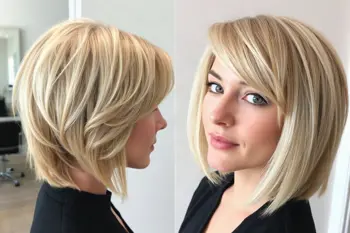
A blunt bob is one of the clearest options for creating the appearance of density. A chin-length version keeps the ends visually compact, and the strong baseline can make fine hair look more substantial. An asymmetrical variation creates a focal point through an uneven length, while an A-line or graduated bob uses shorter sections at the nape to build lift toward the back. These shapes generally require regular trims to preserve their geometry. 1
A short bob for fine hair is also relatively adaptable because it can be worn polished, softly bent, or parted to one side. Cutting guidance for this shape emphasizes precise sectioning, angles that support volume, and layering that does not remove too much density. The principal maintenance issue is that a bob loses its intended structure as it grows, so the perimeter and nape may need more frequent reshaping than a deliberately tousled cut. 2
| Shape | Visual effect | Primary consideration |
|---|---|---|
| Blunt bob | Stronger-looking ends | Preserve the perimeter |
| Graduated bob | Lift at the nape | Maintain the graduation |
| Asymmetrical bob | Directional focal point | Balance the longer side |
Bixies, pixies, and short crops
A soft layered bixie combines the structure of a bob with the shorter ease of a pixie. The documented example uses gentle crown layers for lift, feathered ends for an airy finish, and a fringe that frames the eyes while contributing front volume. A light golden blonde color was also described as adding brightness and dimension, although the cut itself remains the central factor for creating movement in thin hair. 3
Textured pixies and short crops concentrate styling near the roots and crown, where small amounts of lift can change the overall silhouette. A short crop with micro fringe and an undercut removes bulk around the ears while leaving the top textured and light. This can be an efficient shape for daily styling, but the short perimeter exposes growth quickly, and the undercut or fringe may require precise upkeep to retain its intended proportions. 4
Shaggy layers and fringe choices
Shag-inspired cuts use separated layers to prevent hair from sitting as one flat mass against the scalp. A softer, wispy shag can add definition while retaining more weight than a heavily razored style. A 2026 example associated with Kate Hudson used waterfall layers and curtain bangs, with sleek styling rather than a large blowout. The reported appeal for thin hair was added definition without removing too much weight. 7
Fringe should be selected according to where density is available. Curtain bangs and longer face-framing pieces can draw attention toward the eyes and cheekbones without taking a large section from the crown. Micro fringe is more graphic and exposes more of the forehead, while a side fringe can blend into a bob or pixie. The starting point of face-framing layers should be specified clearly, such as below the cheekbone or near the chin, because that point controls how much hair is separated from the main body. 6
Parting, styling, and daily maintenance
A deep side part can create an immediate impression of greater volume by shifting more hair to one side. Lightweight volumizing mousse, texturizing spray, or styling powder can support root structure without the heaviness associated with dense creams and oils. Korean-inspired short styles commonly combine airy fringe, face-framing, and controlled texture, with styling adjusted between polished and slightly undone finishes. 8
Daily styling should remain proportionate to the hair’s fragility. Blow-drying at the roots can add lift, while heat tools should be paired with heat protection when used for sleek or bent finishes. Powder and wax should be applied sparingly because excessive product can collapse fine strands or make separated ends look thinner. The practical maintenance reality is that short cuts are not maintenance-free: they often style quickly, but fringe, nape lines, and shape changes become visible sooner as the haircut grows. 4
What to request and what to avoid
A clear salon request can reduce the risk of losing density. A useful description is a strong or blunt perimeter, limited internal layering, face-framing pieces beginning at a chosen point, and no aggressive thinning at the ends. For a bob, the desired length should be identified by a landmark such as the chin or jaw. For a pixie or crop, the request should specify the amount of crown texture, fringe length, and how closely the sides and nape should be tapered. 6
The main risk is confusing movement with removal of weight. Short layers scattered throughout thin hair can turn into weak, disconnected pieces, and razor-thinned tips may look transparent. A blunt base with restrained layering is therefore more suitable when the priority is a fuller-looking outline. People experiencing sudden or significant thinning should also distinguish a cosmetic haircut decision from an underlying hair or scalp concern, since a cut can alter appearance but cannot diagnose or treat the cause. 5
Matching the cut to practical preferences
Hair texture, face shape, and tolerance for maintenance should guide the final selection. A soft pixie is described as suitable for fine to medium hair and oval or heart-shaped faces, while a classic bob is presented as adaptable across styling situations. A textured shag provides movement, whereas a sleek bob emphasizes line and surface. These categories are starting points rather than fixed eligibility rules because the same cut can be adjusted through length, fringe placement, and the degree of graduation. 8
For someone prioritizing fuller-looking ends, the blunt bob or a softly graduated bob offers the most direct structural approach. Someone prioritizing quick styling may consider a crop, pixie, or bixie, accepting more visible growth between trims. Someone wanting movement without a very short silhouette may consider a controlled shag with curtain bangs. Across all options, the consistent principle is to preserve perimeter strength, avoid unnecessary razor removal, and use lightweight styling to support rather than overload the hair. 1
Sources
- Fabmood, “Effortless Short Haircut for Thin Hair: Blonde Soft Layered Bixie with Fringe”
- YouTube, “How to Cut the Perfect Short Bob for Fine Hair | Amal Hermuz's Tips”
- Fabmood, “Short Crop with Micro Fringe and Undercut for Thin Hair”
- The Brands Pedia, “Why the Korean Pixie Cut Is the Best Short Hairstyle for Fine Hair”
- EatHealthy365, “Short Hairstyle Ideas to Disguise Thinning Hair”
- Lemon8, “Best Haircut for Thin Hair: Blunt Cut + Long Face-Framing Layers”
- Glamour, “Kate Hudson Just Debuted the Coolest Shaggy Bob for Spring 2026”
- Korea Hair Salon, “Short Haircut Trends in Seoul: 2026 Style Guide”
Authored by MyTrendSpot team