12-day tropical cruise to Philippines: An analysis of regional maritime expedition trends
A 12-day tropical cruise to Philippines represents a specialized segment of the maritime tourism industry, focusing on expedition-style voyages that navigate the diverse archipelagos of Southeast Asia 1. These journeys, often categorized as small-ship expeditions or extended regional sails, prioritize deep immersion into coastal ecosystems, cultural heritage sites, and remote island environments that are frequently inaccessible to larger commercial vessels 2. Prospective travelers typically observe itineraries that span multiple international jurisdictions, frequently linking major maritime hubs such as Manila, Singapore, Hong Kong, and Keelung 3. This analytical overview examines the logistical, environmental, and structural characteristics defining these 12-day maritime expeditions.
Navigational Routes and Geographic Scope
Expedition itineraries spanning 12 days usually feature a combination of dense urban port calls and secluded natural stopovers. For instance, routes originating in Manila and proceeding toward Raja Ampat or other Papuan regions often emphasize a transition from colonial historical centers to pristine marine biodiversity zones 1, 8. Voyages moving from Northern hubs like Keelung to Singapore provide exposure to the cultural tapestry of the Philippines, including stops at Currimao, Corregidor Island, and Coron Island, before continuing into Bornean coastal waters 3, 4.
These extended voyages are structured to maximize time in territorial waters, with many operators allocating 3 to 4 days specifically for Philippine coastal exploration 12. The operational design of these cruises often involves navigating the Ryukyu archipelago or the South China Sea, creating a multi-country experience that highlights the distinct regional identities of East and Southeast Asian nations 7, 9.
Vessel Class and Onboard Infrastructure
The 12-day duration is common for boutique expedition ships, which are purposefully built for accessing remote, shallow, or ecologically sensitive coastal regions 9. Ships such as the SH Minerva, which features a passenger capacity of approximately 158 guests, operate with a high ratio of crew to passengers to provide personalized service and expert-led cultural programming 7, 9. These vessels often utilize specialized hulls for stability and advanced navigation systems to reach areas such as the Batanes Islands or the limestone islets of the Hundred Islands 7, 9.
Onboard amenities for these expeditions typically emphasize educational and observational experiences over traditional cruise-line mass entertainment. Features often include libraries, observation decks, and specialized equipment like kayaks or zodiacs for shore excursions to sites such as the Cuatro Islas or the freshwater lakes in the Camotes Islands 8, 9. Such infrastructure supports a focus on wildlife spotting, photography, and the exploration of indigenous heritage sites 1.
Key Ports and Cultural Engagement
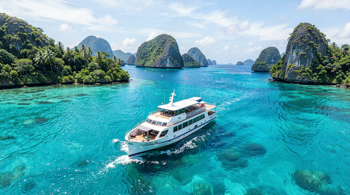
Philippine ports featured on these 12-day itineraries serve as focal points for both historical and ecological tourism. Manila remains a primary anchor, offering access to the Walled City of Intramuros and the American Cemetery and Memorial, which provide context regarding the region's colonial and mid-century history 6. Beyond the capital, Puerto Princesa and Coron are frequently cited for their natural features, including significant cave systems and marine protected areas 2, 3.
| Region | Primary Focus | Typical Activities |
|---|---|---|
| Manila | Colonial History | Intramuros walking tours, museum visits |
| Coron/Palawan | Marine Environment | Snorkeling, limestone karst photography |
| Batanes/Northern | Indigenous Culture | Visiting traditional stone villages |
| Central Philippines | Ecotourism | Tarsier sanctuary visits, sandbar exploration |
Logistical Realities and Entry Protocols
Travelers considering these maritime expeditions must navigate specific entry and health requirements set forth by local authorities. The Philippine Bureau of Immigration generally manages entry protocols for cruise passengers, with many nationalities benefiting from visa-free entry for up to 30 days 11. It remains standard practice for operators to require coordination with the Department of Tourism (DOT) to ensure that health protocols and travel requirements are met prior to embarkation 12.
Operations in this region are heavily influenced by the tropical climate. While cruising is possible throughout the year, the dry season-typically spanning November through April-is often cited by maritime experts as the most predictable period for navigation and shore excursions 11. Travelers should be aware that itineraries may be subject to adjustment based on meteorological conditions, given the sensitivity of expedition ships to regional weather patterns and sea states.
Economic Considerations in Maritime Expedition Travel
The cost structure for 12-day expedition cruises is fundamentally different from mass-market cruise pricing due to the inclusion of specialized excursions, smaller ship capacity, and high-touch service models. Market trends suggest that entry-level pricing for these voyages typically reflects the premium nature of the expedition experience, with cabin categories and seasonal demand significantly impacting final rates 12. Prospective participants are encouraged to evaluate inclusions such as expert-led guided walks, shore excursions, and local cultural performances when assessing the overall value of a specific expedition package 1, 8.
Regulatory Oversight and Safety Standards
Safety and regulatory compliance represent critical components of 12-day cruise operations. Accredited operators, particularly those maintaining ATAS or similar international industry body memberships, provide 24/7 emergency support and established local contacts at each port of call 1, 7. Ships operating in these waters are expected to adhere to international maritime safety standards, including specialized training for crews regarding the sensitive marine ecosystems of the Philippines and Indonesia 7, 8. Travelers should review the safety records and operator credentials of any cruise line to ensure adherence to standard industry oversight practices 12.
Sources
- Eclipse Travel (eclipsetravel.com.au)
- Cruises.To (cruises.to)
- World of Cruising (worldofcruising.co.uk)
- Global Journeys (globaljourneys.com)
- Norwegian Cruise Line (ncl.com)
- Adventure Life (adventure-life.com)
- Peregrine Travel Centre (peregrinetraveladelaide.com.au)
- Princess Cruises (princess.com)
- Royal Caribbean (royalcaribbean.com)
- Holland America (hollandamerica.com)
- Bureau of Immigration Philippines (immigration.gov.ph)
- Philippine Department of Tourism (tourism.gov.ph)
Authored by MyTrendSpot team