Yoga Classes for Seniors: A Practical Guide to Formats, Safety, and Class Selection
What Senior Yoga Classes Typically Include
Yoga classes for seniors are usually adapted around mobility, balance, flexibility, strength, and comfort rather than advanced poses. Formats labeled gentle, senior, chair, adaptive, or beginner are generally more suitable starting points than vigorous classes. The CDC recommends that adults age 65 and older include aerobic activity, muscle strengthening, and balance activities in a weekly routine, and adapted yoga may contribute to balance, flexibility, and strength goals. 1
Class activities can include breathing exercises, slow stretches, posture work, guided relaxation, meditation, and movements performed while seated or standing. A Senior Planet from AARP chair yoga description notes that sessions may alternate between sitting and standing, use verbal alignment cues, and finish with a short meditation. 11 The exact sequence depends on the instructor, venue, and participants' abilities.
Chair Yoga and Other Modified Formats
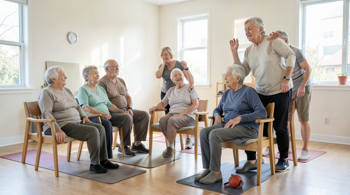
Chair yoga reduces the need to get down to the floor or maintain unsupported standing positions. Participants may perform traditional poses while seated or use a chair, wall, or other approved support for balance. AARP identifies chair yoga as an accessible option for older adults who have difficulty standing, balancing, or moving between the floor and a standing position. 7
Examples in the supplied class data show how widely chair-based instruction is used. An Indianapolis program describes gentle seated poses, breathwork, and guided relaxation for all abilities, while a Denver Active Older Adult class combines seated or standing movements, breathing, coordination challenges, and isometric strength holds with a chair available for support. 15 16 These formats may be relevant for people with limited floor mobility or fall concerns.
Potential Physical and Mental Benefits
Research summaries associate appropriately modified yoga with several outcomes relevant to aging, including improved flexibility, strength, balance, mobility, and continued physical activity. Harvard Health Publishing reports that yoga may help older adults remain active and may benefit flexibility, strength, and balance. 5 A systematic review indexed by PubMed also found evidence of physical and psychological benefits in older adults, while noting that more appropriately designed research is needed. 8
Balance practice is especially relevant because the National Institute on Aging explains that balance exercises can improve stability and help reduce fall risk. 3 Yoga should not be treated as a complete substitute for every recommended type of exercise, however. The CDC guidance calls for a combination of aerobic, muscle strengthening, and balance activities, so a personal routine may need additional activities selected according to medical advice and physical capacity. 1
How to Evaluate a Class
Useful screening questions concern the amount of seated work, the availability of chairs or props, the instructor's experience modifying poses, and whether participants may work at their own pace. Qualified instructors can provide alternatives for restricted range of motion, balance problems, chronic conditions, or discomfort. Johns Hopkins Medicine recommends modified approaches for seniors and emphasizes choosing movements appropriate to individual abilities. 6
Class location and schedule can vary substantially. The supplied listings include senior-center, recreation-center, library, health-system, park, and online options. Examples include a Takoma Park class using seated, standing, and floor poses with attention to bone health and balance, and a St. Augustine program for adults 50 and older combining physical exercises, meditation, and breathing techniques. 14 17 These descriptions illustrate categories to investigate rather than a current national directory.
Health Screening and Injury Considerations
Older adults should discuss yoga with a physician or other healthcare professional before beginning, particularly after surgery or when living with osteoporosis, joint limitations, chronic illness, or fall concerns. The Senior Planet class description explicitly advises medical consultation before starting a fitness program. 11 Participants should also tell the instructor about relevant conditions so movements can be adjusted and potentially unsuitable positions can be avoided.
The National Center for Complementary and Integrative Health describes yoga as generally safe when practiced appropriately but notes that injuries can occur and that people with health conditions may need modifications. 2 Risk can increase when a class moves too quickly, encourages painful range of motion, lacks adequate supervision, or uses challenging balance positions without support. Comfortable clothing, stable footwear when appropriate, water, and correctly positioned equipment may help with practical comfort, but they do not eliminate injury risk.
Examples of Community and Online Scheduling
Available schedules demonstrate several recurring patterns. The M-Effect lists yoga for seniors every Tuesday and Thursday at 10:15 AM, with participation in person or online. 12 Denver recreation programs list 50-plus gentle yoga at La Alma on Wednesdays and Green Valley Ranch on Thursdays during 2026, using seated or standing movements and chairs for support. 16 10 Dates, registration status, cancellations, and eligibility can change, so event details require verification with the named organizer.
Other listings show additional program structures. Kettering Health describes Tuesday chair yoga sessions in September 2026 for older adults, with registration required and walk-ins not accepted. 19 An Ellicott City seated gentle yoga series is described for active aging adults ages 50 and older, while a Philmont library event presents mindful yoga therapy in a chair or on a mat. 13 18 Medicare coverage also varies: Original Medicare generally does not cover gym memberships or fitness programs, while some Medicare Advantage plans may include fitness benefits. 4
Sources
- Centers for Disease Control and Prevention, Older Adults and Physical Activity Guidelines
- National Center for Complementary and Integrative Health, Yoga
- National Institute on Aging, Exercise and Physical Activity
- Medicare.gov, Gym Memberships and Fitness Programs
- Harvard Health Publishing, Yoga May Help Older Adults Stay Active
- Johns Hopkins Medicine, Yoga for Seniors
- AARP, Chair Yoga
- PubMed, Systematic Review of Yoga in Older Adults
- Yoga Journal, Yoga for Seniors
- American Council on Exercise, Yoga for Seniors
- Senior Planet from AARP, Chair Yoga
- The M-Effect, Yoga for Seniors
- Active.com, Seated Gentle Yoga with Jennifer Holder
- Active.com, Yoga for Healthy Aging in Takoma Park
- Active.com, Senior Chair Yoga in Indianapolis
- Active.com, 50-plus Gentle Yoga at La Alma and Green Valley Ranch
- Oldcity.com, Gentle Yoga Over 50 in St. Augustine
- Village of Philmont, Gentle and Chair Yoga for Seniors
- Kettering Health, Chair Yoga in Centerville
Authored by MyTrendSpot team