Public police auctions for seized trailers: A factual guide to sources, terms, and risks
Public police auctions for seized trailers are part of a broader government and law-enforcement property system that may include seized, forfeited, abandoned, unclaimed, or surplus assets. The central issue is not simply locating an auction, but confirming the selling agency, the trailer’s legal status, the applicable terms, and the practical requirements for inspection, payment, transport, registration, and removal. 1
How these auctions are organized
Government property auctions operate at federal, state, and local levels rather than through one universal marketplace. USA.gov identifies auction and sales resources across those levels, while federal channels include GSA Auctions and property handled through federal asset-forfeiture procedures. The U.S. Marshals Service manages and disposes of assets connected with federal cases, and the Department of Justice describes the broader Asset Forfeiture Program involving participating agencies. 1 2 3 4
Local police departments and municipal impound facilities may use an agency-operated sale, a contracted auctioneer, or an online platform. GovDeals, Public Surplus, Municibid, and PropertyRoom.com are examples of marketplaces where public agencies or participating law-enforcement organizations may list vehicles, equipment, impounded property, or unclaimed goods. A platform listing alone does not establish that a particular trailer was seized by police, so the consignor and legal basis for disposal require separate confirmation. 5 6 7 8
What trailer inventory may look like
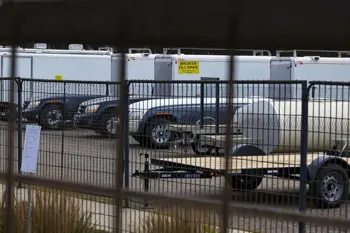
Trailer inventory can be inconsistent because listings depend on what an agency has legally cleared for disposal. A municipal tow-lot auction may contain only one trailer among a much larger vehicle catalog. For example, a Kansas City police tow-lot auction listing identified 198 vehicle lots, including one trailer category, alongside cars, sport utility vehicles, trucks, vans, and other items. That example illustrates why a general police-auction page should not be treated as a guarantee of trailer availability. 9
Other public impound auctions describe broader categories that can include recreational vehicles and trailers. An Abilene Police Impound Auction report stated that its annual online event included cars, trucks, motorcycles, sport utility vehicles, RVs, and trailers, with inspection dates and an online registration process. Inventory descriptions may be incomplete, and a trailer’s photographs may not establish roadworthiness, completeness, ownership history, or registration eligibility. 14
Inspection, identification, and condition
Inspection access is one of the most important differences between auctions. The Hampton Police and GB’s Towing auction scheduled onsite inspection before bidding, while the Abilene event specified limited inspection days at its police impound facility. Toledo’s seized-vehicle auction likewise announced a public preview before online bidding closed. Dates, hours, and locations are lot-specific, so an assumption that every sale permits unrestricted inspection creates avoidable uncertainty. 13 14 16
Condition language can be especially significant for trailers because structural damage, missing components, tire condition, wiring, brakes, lights, and registration requirements may not be apparent from photographs. Kansas City auction terms stated that vehicles were sold as-is and where-is, that many did not have keys, and that buyers might not know whether an item operated until after purchase. Comparable no-warranty language should be assumed only after reading the specific lot terms, not inferred from the word “police.” 15
Titles, liens, and legal status
A trailer can be described as seized, impounded, abandoned, forfeited, or unclaimed, and those descriptions may involve different legal processes. The auction listing should identify the consignor, available ownership documents, title status, serial or vehicle identification number, and any restrictions on registration. The research data emphasizes that title availability, registration status, liens, and sale conditions can differ substantially between auctions, including government and law-enforcement channels. 1
Government origin does not automatically resolve every documentation question. Auction Finder’s guidance on Australian police and government-seized goods recommends checking the relevant security-interest register and reviewing title conditions, while U.S. auction platforms also place responsibility on buyers to examine lot-specific information. Because jurisdictions differ, a prospective buyer should obtain written clarification from the selling agency or auctioneer about lien releases, title delivery, bonded-title issues, and whether the trailer can legally be registered in its intended state. 10
Bidding, payment, and removal requirements
Online and in-person auctions commonly impose binding bid rules, deposits, buyer premiums, administrative charges, taxes, and strict payment deadlines. The Kansas City auction required a $300 registration deposit, added a 10 percent buyer’s premium and a $25 administrative fee per lot, and required payment shortly after the auction closed. Its terms also stated that unpaid lots could be forfeited and that late or partial payment would not be accepted. 9
Removal planning is essential when a trailer is purchased through an impound facility. The same Kansas City terms required vehicles to be removed by the Saturday following the sale and applied a $30 daily storage fee to late pickups. San Antonio police auction reporting described same-day payment and specified pickup windows extending across several following days. Trailer buyers may also need a tow vehicle, compatible hitch, working lights, temporary transport documentation, and a location capable of receiving an unregistered unit. 15 17
How to evaluate an individual listing
A reliable review begins with the selling agency rather than the marketplace name. Copart can contain government, municipal, insurance, and other consignor inventory, while GovPlanet provides lot-specific information concerning inspection, condition, title, and removal. Those platforms demonstrate why the individual seller, legal basis, lot description, and contractual terms matter more than a generalized label such as “police auction.” 9 10
Before bidding, the relevant record should include the agency identity, lot number, photographs, VIN or serial number, title statement, inspection schedule, fees, payment deadline, pickup deadline, storage rules, and permitted payment methods. California Highway Patrol vehicle-auction information and Texas Facilities Commission surplus-property information illustrate that state programs may publish separate procedures rather than relying solely on national marketplaces. Independent verification remains necessary because public status does not guarantee condition, registration, completeness, or a clear transfer process. 11 12
Sources
- USA.gov
- GSA Auctions
- U.S. Marshals Service
- U.S. Department of Justice Asset Forfeiture Program
- GovDeals
- Public Surplus
- PropertyRoom.com
- Municibid
- Kansas City Police Tow Lot Auction listings
- GovPlanet and Auction Finder
- Texas Facilities Commission
- California Highway Patrol
- Auction757 Hampton Police and GB’s Towing Auction
- Abilene Police Impound Auction report
- Kansas City Police Tow Lot terms
- WTVG Toledo seized-vehicle auction report
- San Antonio police auction report
Authored by MyTrendSpot team