Understand Treatment Options for Depression: A Clinical Guide to Therapy, Medication, and Specialist Care
Understanding treatment options for depression begins with distinguishing a depressive disorder from temporary sadness. Depression can involve ongoing low mood, loss of interest, low energy, changes in sleep or appetite, and impaired daily functioning, typically lasting at least two weeks. It is treatable, but the appropriate approach depends on the person’s symptoms, severity, medical history, safety needs, and treatment preferences. 1
How Depression Treatment Is Chosen
Clinicians generally begin with a diagnostic assessment rather than treating a screening result alone. The evaluation considers symptoms, duration, effects on work or relationships, prior episodes, coexisting medical or mental-health conditions, medication effects, and possible safety risks. Depression may appear as major depressive disorder, persistent depressive disorder, seasonal depression, or another depressive condition, and treatment can differ across these presentations. A diagnosis requires clinical judgment because sadness after a difficult event does not automatically indicate a depressive disorder. 34
- Mild depression may be approached initially with psychotherapy, structured behavioral support, or supervised exercise.
- Moderate depression may be treated with psychotherapy, medication, or both.
- Severe, persistent, or treatment-resistant depression may require specialist assessment and additional interventions.
Psychotherapy and Talking Treatments
Psychotherapy is an established treatment for depression and can be delivered individually, in groups, or through telehealth. Cognitive behavioral therapy, commonly called CBT, addresses negative automatic thoughts, withdrawal, reduced activity, and practical problem-solving. Interpersonal therapy focuses on relationships, role transitions, grief, and communication patterns that may relate to depressive symptoms. For many patients, psychotherapy is organized over a defined course, and updated CANMAT guidance summarized by American Family Physician identifies approximately 12 to 16 sessions as a commonly recommended treatment structure. 26
- CBT may include behavioral activation and examination of unhelpful thinking patterns.
- Interpersonal therapy addresses relationship and life-transition difficulties.
- Therapy plans should be reviewed if symptoms do not improve or functioning worsens.
Antidepressant Medication
Antidepressants can reduce depressive symptoms, but improvement is not always immediate and medication selection requires professional assessment. Commonly considered medicines include selective serotonin reuptake inhibitors and other antidepressant classes. CANMAT guidance identifies bupropion, escitalopram, mirtazapine, paroxetine, sertraline, and extended-release venlafaxine among medications with strong effectiveness evidence for major depressive disorder. Medication should be taken as prescribed, monitored for benefits and adverse effects, and reviewed when response is limited. 27
- Potential side effects vary by medication and may affect sleep, appetite, energy, sexual function, or anxiety.
- Stopping medication abruptly can create problems and should be discussed with the prescriber.
- If early improvement is absent, clinicians may adjust the dose or consider switching treatment.
Combining Therapy, Medication, and Daily Supports
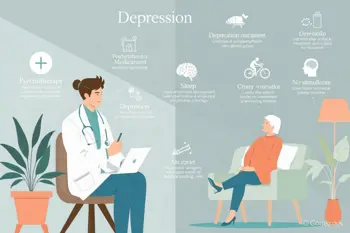
Psychotherapy and medication may be used together, particularly when symptoms are moderate to severe or when one approach alone has not produced adequate improvement. Daily habits can support recovery but should not replace indicated clinical care. Research and clinical guidance identify regular sleep, physical activity, social support, and reduced alcohol or substance use as supportive measures. For mild depression, supervised exercise lasting 30 to 40 minutes three or four times weekly for at least nine weeks is identified in CANMAT guidance as a possible first-line monotherapy. 211
- Exercise plans should match physical ability and medical conditions.
- Sleep routines can be discussed as part of a broader treatment plan.
- Social contact may help reduce isolation, but it is not a substitute for assessment.
Specialist and Brain-Stimulation Treatments
When depression is severe, persistent, or resistant to standard treatment, clinicians may consider specialist interventions. Electroconvulsive therapy, or ECT, is a medical treatment that may be considered in serious depression, including situations requiring a rapid or intensive response. Repetitive transcranial magnetic stimulation, or rTMS, is another specialist option. Ketamine-related treatments, including intranasal esketamine, may be considered for some adults with treatment-resistant depression and require regulated clinical administration and monitoring. 86
- Eligibility depends on diagnosis, severity, previous treatment response, medical history, and safety assessment.
- ECT and rTMS require specialist evaluation rather than self-directed use.
- Esketamine and ketamine-related care involve monitoring because of potential clinical risks.
Safety, Monitoring, and Long-Term Care
Monitoring is an essential part of depression treatment, especially when medication begins, changes, or is prescribed to younger people. The U.S. Food and Drug Administration warns that antidepressants may increase suicidal thinking or behavior in some young people, making observation and follow-up important. Depression can recur, and untreated episodes may last months or longer, so maintenance treatment and relapse planning may be discussed after improvement. Any new suicidal thoughts, inability to stay safe, or immediate danger requires urgent crisis support. 93
- In the United States, call or text 988 for the Suicide and Crisis Lifeline.
- Call 911 for an immediate emergency or imminent danger.
- Report worsening symptoms, severe side effects, agitation, or unusual mood changes to a healthcare professional.
Questions to Discuss With a Clinician
Shared decision-making helps match treatment to the individual rather than assuming that one option works for everyone. A clinician can explain expected benefits, possible risks, timeframes, follow-up arrangements, and alternatives. Depression screening can identify adults who may need further assessment, but a positive screen is not itself a diagnosis or automatic reason to prescribe treatment. The U.S. Preventive Services Task Force emphasizes that screening should occur when systems are available for accurate diagnosis, effective treatment, and appropriate follow-up. 107
- What diagnosis best explains the symptoms?
- How severe is the depression, and how will progress be measured?
- What are the benefits, risks, and likely time course of each option?
- What follow-up is needed if symptoms worsen or treatment is ineffective?
Sources
- Cleveland Clinic, “Depression: What It Is, Symptoms, Types & Treatment”
- American Family Physician, “Management of Major Depressive Disorder in Adults: Guidelines From CANMAT”
- Merck Manual Consumer Version, “Depression”
- Harvard Health, “Depression”
- Medscape, “Depression Treatment: APA 2019 Guideline Summary”
- National Institute of Mental Health, “Depression”
- MedlinePlus, “Depression”
- Mayo Clinic, “Depression: Diagnosis and Treatment”
- U.S. Food and Drug Administration, “Antidepressant Use in Children, Adolescents, and Adults”
- U.S. Preventive Services Task Force, “Screening for Depression and Suicide Risk in Adults”
- National Center for Complementary and Integrative Health, “Depression and Complementary Health Approaches”
Authored by MyTrendSpot team