Effective moisturizing solutions for mature skin types: A clinical and ingredient-based analysis
Effective moisturizing solutions for mature skin types generally focus on restoring hydration, reducing water loss, and supporting a weakened skin barrier. Research and product formulation data indicate that creams containing humectants, emollients, occlusives, ceramides, fatty acids, cholesterol, or squalane may be more appropriate for dryness and sensitivity than lightweight lotions alone. 13
Why mature skin often needs richer moisturization
Skin commonly becomes thinner and drier with age, while natural oil production and barrier resilience decline. These changes can increase roughness, tightness, flaking, and sensitivity to environmental conditions. The National Institute on Aging identifies dryness and thinning as common features of aging skin, while dermatology guidance links hot bathing, harsh cleansers, low humidity, and aging with increased dryness. 25
Creams and ointments generally provide more effective moisture retention than lotions because they contain higher proportions of occlusive or emollient ingredients. Occlusives reduce transepidermal water loss, while emollients soften gaps between surface cells. This distinction is relevant for mature skin that feels persistently tight, particularly during cold weather, dry indoor conditions, or after irritating treatments. 367
Ingredient functions that matter most
Moisturizers work through three principal mechanisms. Humectants such as glycerin and hyaluronic acid attract or hold water in the outer skin layer. Emollients, including fatty acids, squalane, and selected plant oils, improve softness and surface smoothness. Occlusives such as dimethicone and petrolatum-like materials form a protective layer that limits water escape. Effective formulas often combine all three categories rather than relying on a single ingredient. 34
Barrier-supporting lipids are particularly relevant when mature skin is dry or easily irritated. Ceramides, cholesterol, and fatty acids are naturally associated with the structure of the outer skin barrier. The SkinCeuticals Triple Lipid Restore formula, for example, identifies a 2% ceramide, 4% cholesterol, and 2% fatty-acid ratio, while Vivier lists four ceramides, cholesterol, squalane, panthenol, hyaluronic acid, and peptides in its intensive moisturizer. These are product-specific formulations, not universal clinical requirements. 41011
How to compare moisturizer textures and formulas
Texture should correspond to the degree of dryness rather than age alone. A lotion may feel more comfortable for combination skin, while a cream can provide more sustained comfort for normal-to-dry skin. Ointments generally offer the strongest occlusion but may feel heavy or greasy. Product selection should also account for acne tendency, climate, personal tolerance, and whether the formula contains fragrance or botanical oils that could aggravate sensitive skin. 678
Several formulations in the supplied product data illustrate different approaches. Caudalie Premier Cru The Rich Cream combines bio-ceramides, micro hyaluronic acid, and shea butter for dry to very dry skin. Sunday Riley ICE identifies ceramides, vitamin F, coconut, red algae, and pomegranate sterols. Erno Laszlo Phelityl Reviving Cream emphasizes ceramides, squalane, and a fatty-acid-rich complex, with reported testing showing a 16% barrier-repair improvement within eight hours after one use. Brand-reported findings require careful interpretation because study size and methods differ. 121314
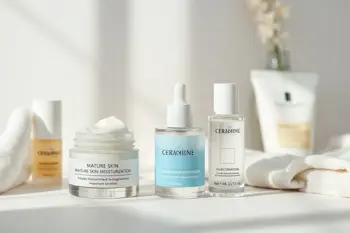
Application practices that improve moisture retention
Moisturizer is generally most useful when applied soon after washing, while the skin remains slightly damp. Dermatology and medical guidance recommends lukewarm rather than hot water, gentle cleansing, and prompt moisturization because these practices help reduce disruption and trap available water at the surface. Mature skin may also benefit from limiting prolonged bathing and avoiding harsh soaps that intensify dryness. 159
A practical routine can separate hydration from treatment intensity. A gentle cleanser can be followed by a humectant and barrier-supporting cream, with a thicker layer placed on visibly dry areas. People using retinoids, exfoliating acids, or other potentially irritating anti-aging products may need a bland moisturizer to reduce dryness and discomfort. Introducing one new product at a time makes it easier to identify irritation, especially when a formula contains fragrance, essential oils, or multiple active ingredients. 37
Moisturizer and broader mature-skin concerns
Moisturizer can improve the appearance and comfort of dryness, but it cannot replace sun protection or reverse every structural change associated with aging. Daily broad-spectrum sunscreen is an important companion measure because ultraviolet exposure contributes to premature aging, including wrinkles, uneven pigmentation, and reduced elasticity. The Skin Cancer Foundation links regular broad-spectrum sunscreen use with protection from ultraviolet damage associated with premature skin aging. 8
Some products combine moisturizing ingredients with cosmetic anti-aging claims. Revision D·E·J Face Cream describes microbiome-friendly hydration, antioxidants, pH support, and ingredients including glycerin, squalane, jojoba esters, and vitamin C derivative. BIOEFFECT EGF Power Cream reports an in-house study of 34 participants using the product twice daily for three months, with reported maximum changes of 71% in skin density, 65% in elasticity, and 44% in the appearance of wrinkles. These findings are manufacturer-reported and should not be treated as independent proof for every user. 1516
Risks, limitations, and when medical advice is appropriate
More ingredients do not necessarily mean better tolerability. Fragrance ingredients and some botanical oils can cause irritation or allergic reactions, according to the U.S. Food and Drug Administration. Retinoid-containing or exfoliating moisturizers may also increase sensitivity for some users. Patch testing, gradual introduction, and attention to burning, swelling, persistent redness, or itching are sensible precautions, particularly when the skin barrier is already compromised. 7
Persistent or severe dryness should not be managed only with cosmetic products. Pain, cracking, inflammation, significant itching, or symptoms that do not improve can indicate an underlying dermatologic condition, and the NHS advises seeking medical guidance in those circumstances. Product claims also vary in evidentiary strength: some are based on ingredient research, some on brand-sponsored testing, and some on consumer satisfaction surveys. Reading the complete ingredient list and matching texture to symptoms is more reliable than relying on anti-aging language alone. 91216
Sources
- American Academy of Dermatology, Dermatologists' top tips for relieving dry skin
- National Institute on Aging, Skin care and aging
- PubMed, Review of moisturizers and their mechanisms
- National Center for Biotechnology Information, Barrier-repair ingredients in moisturizers
- Mayo Clinic, Dry skin symptoms and causes
- Cleveland Clinic, Choosing a moisturizer for dry skin
- U.S. Food and Drug Administration, Ingredients in cosmetics
- Skin Cancer Foundation, Sun protection and premature skin aging
- National Health Service, Dry skin guidance
- SkinCeuticals, Triple Lipid Restore 2:4:2 Face Cream
- Vivier Skin, Intensive Hydrating Moisturizer
- Caudalie, Premier Cru The Rich Cream
- Sunday Riley, ICE Ceramide Moisturizing Cream
- Erno Laszlo, Phelityl Reviving Cream
- Revision Skincare, D·E·J Face Cream
- BIOEFFECT, EGF Power Cream
Authored by MyTrendSpot team