At-Home Sleep Studies: How They Work and Clinical Diagnostic Procedures
Key facts
- Home sleep studies are primarily designed to diagnose obstructive sleep apnea by monitoring airflow, heart rate, and blood oxygen levels 1.
- Portable home test devices generally cost between 150 USD and 1,000 USD out of pocket, depending on the provider and location 2.
- Medicare Part B may cover home sleep testing when it is deemed clinically necessary for diagnosing specific sleep disorders 3.
- Patients are typically required to have a formal consultation with a physician before a home sleep test can be ordered 4.
At-home sleep studies represent a shift in how medical professionals screen for sleep-disordered breathing, particularly obstructive sleep apnea (OSA). Unlike traditional in-lab polysomnography, which requires an overnight stay in a clinical facility, these tests utilize portable equipment that allows patients to record their physiological data within their own sleep environment 1 5. This diagnostic approach is often recommended by clinicians when they suspect a patient has a high probability of OSA, provided the patient does not present with complex comorbid conditions that might necessitate more intensive monitoring 6.
The Clinical Procedure for Home Sleep Testing
The process for conducting a home sleep study begins with a formal medical consultation. A healthcare professional, such as a primary care provider or a sleep specialist, evaluates the patient's symptoms, sleep history, and general health to determine if a home-based test is appropriate 7 4. If the physician deems the test medically necessary, they issue an order, and the testing kit is typically delivered directly to the patient's home or picked up from a clinical location 6.
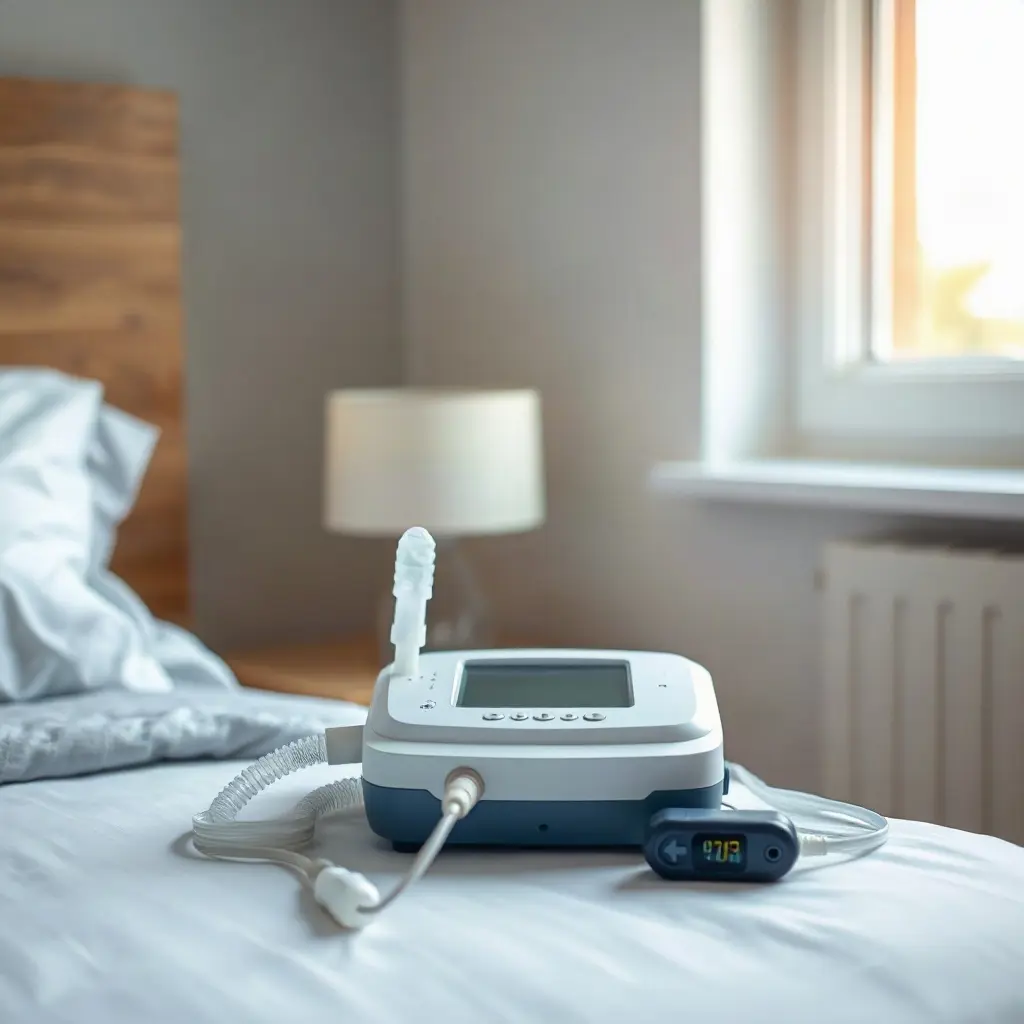
The equipment used in these studies, often referred to as a Home Sleep Apnea Test (HSAT), is simplified compared to laboratory-grade sensors. The patient is instructed on how to apply the wearable sensors, which usually include a nasal cannula to monitor airflow, a pulse oximetry clip for the finger to measure blood oxygen saturation, and chest belts or wrist units to track heart rate and respiratory effort 1 6. The device records this data throughout the night; some models store information on an internal drive, while others may transmit data wirelessly to the testing provider 1 6.
Data Interpretation and Follow-Up Care
Once the recording period is complete, the patient returns the device to the healthcare provider or shipping facility for data analysis. A board-certified sleep physician then reviews the recorded metrics to identify patterns indicative of sleep apnea, such as the frequency of breathing disruptions or drops in oxygen levels 1 4. The physician uses these findings to create a personalized treatment program, which may include lifestyle adjustments or the introduction of positive airway pressure (PAP) therapy 4 2.
It is important to note that the accuracy of home testing depends significantly on the correct placement of sensors and the quality of the data captured. In cases where the initial home test provides inconclusive results or if the physician suspects other sleep disorders-such as narcolepsy or complex central sleep apnea-they will typically order a follow-up in-lab polysomnography to obtain a more comprehensive diagnostic picture 7 4.
Costs and Insurance Coverage Factors
The financial aspects of at-home sleep testing vary depending on the patient's insurance plan, regional healthcare policies, and the specific diagnostic provider. Market data from 2026 indicates that out-of-pocket costs for these tests typically range from 150 USD to 1,000 USD 2. Many major commercial health insurance carriers cover these tests when they are ordered by a physician, although patients are encouraged to verify coverage by providing the specific diagnostic code to their insurer beforehand 8 9.
Under Medicare Part B, sleep studies are covered when they are medically necessary to diagnose conditions such as obstructive sleep apnea. Beneficiaries are responsible for 20% of the Medicare-approved amount after meeting their annual deductible 3. As of 2026, some procedures may require prior authorization from the insurer, making it essential for patients to confirm the requirements with their member services representative before scheduling the test 3 9.
Comparing Home Testing to In-Lab Polysomnography
While home sleep studies offer convenience and shorter wait times, they differ substantially from in-lab polysomnography in terms of the data points measured. Laboratory studies remain the standard for diagnosing complex conditions because they monitor brain activity (EEG), eye movements (EOG), and muscle activity (EMG), which are not captured in standard home kits 5. The controlled environment of a lab allows technicians to intervene if sensors become dislodged or if a more thorough observation is required 5.
A physician may specifically recommend an in-lab study for patients with a complex medical history, heart failure, or neuromuscular diseases, as these factors may require a more nuanced diagnostic approach than what home equipment provides 4. Home tests are primarily reserved for patients with a suspected high likelihood of uncomplicated obstructive sleep apnea, where the benefit of avoiding travel and sleeping in a familiar environment is prioritized 6.
Limitations and Clinical Risks
A primary limitation of at-home testing is the potential for sensor errors or failure to record a full night of sleep, which may necessitate repeat testing. Additionally, home devices may under-detect mild cases of sleep apnea because they lack the comprehensive physiological monitoring provided by laboratory equipment 1 7. Because of these variables, an at-home study is not a universal diagnostic tool for all sleep-related issues.
Patients should consult with a qualified medical professional to discuss whether their symptoms warrant a home-based screen or if an in-lab evaluation is necessary for an accurate diagnosis. Clinical guidelines emphasize that untreated sleep apnea can lead to serious long-term health complications, including hypertension, heart disease, and stroke, underscoring the importance of following professional guidance throughout the testing and treatment process 4.
Sources
- At-Home Sleep Study: How It Works, Benefits, and Limitations: https://www.sleepfoundation.org/sleep-studies/at-home-sleep-study
- How Much Does A Sleep Study Cost?: https://www.sleepfoundation.org/sleep-studies/how-much-does-a-sleep-study-cost
- Does Medicare Cover Sleep Study at Home? - Medicare.org: https://www.medicare.org/articles/does-medicare-cover-sleep-studies/
- Sleep apnea testing and diagnosis | Resmed: https://www.resmed.com/en-us/sleep-health/blog/sleep-apnea-testing-diagnosis/
- Polysomnography | UCSF Health: https://www.ucsfhealth.org/care/medical-tests/polysomnography
- At-Home Sleep Study: How It Works, Plus Pros and Cons: https://www.sleepapnea.org/diagnosis/at-home-sleep-study/
- Sleep apnea - Diagnosis and treatment - Mayo Clinic: https://www.mayoclinic.org/diseases-conditions/sleep-apnea/diagnosis-treatment/drc-20377636
- Is an At-Home Sleep Study Covered by Insurance? – Sleeping.com: https://www.sleeping.com/blogs/sleep-testing/is-an-at-home-sleep-study-covered-by-insurance
- Home Sleep Test Insurance: CPT 95800 and Your Cost | SleepDr: https://sleepdr.com/the-sleep-blog/how-to-check-your-insurance-coverage-for-a-home-sleep-test
Authored by MyTrendSpot team