Choosing the Best Outdoor Curtains for Wind and Privacy
Facts:
- Over 60% of homeowners seek enhanced outdoor living comfort.
- Trend info in EN for patio curtains is increasing for weather protection.
Understanding Your Needs for Wind and Privacy Curtains
Selecting the ideal outdoor curtains for your patio or pergola involves a careful balance of aesthetic appeal and functional performance. The primary goals are often to provide shelter from gusty conditions and to create a secluded, intimate atmosphere. This guide delves into the crucial considerations for choosing wind resistant curtains and effective privacy curtains, ensuring your outdoor space remains comfortable and secure against the elements and prying eyes. Understanding the specific challenges of your environment, such as prevailing wind directions and sun exposure, is the first step toward making an informed decision about the type of fabric, mounting hardware, and overall design that will best suit your needs.
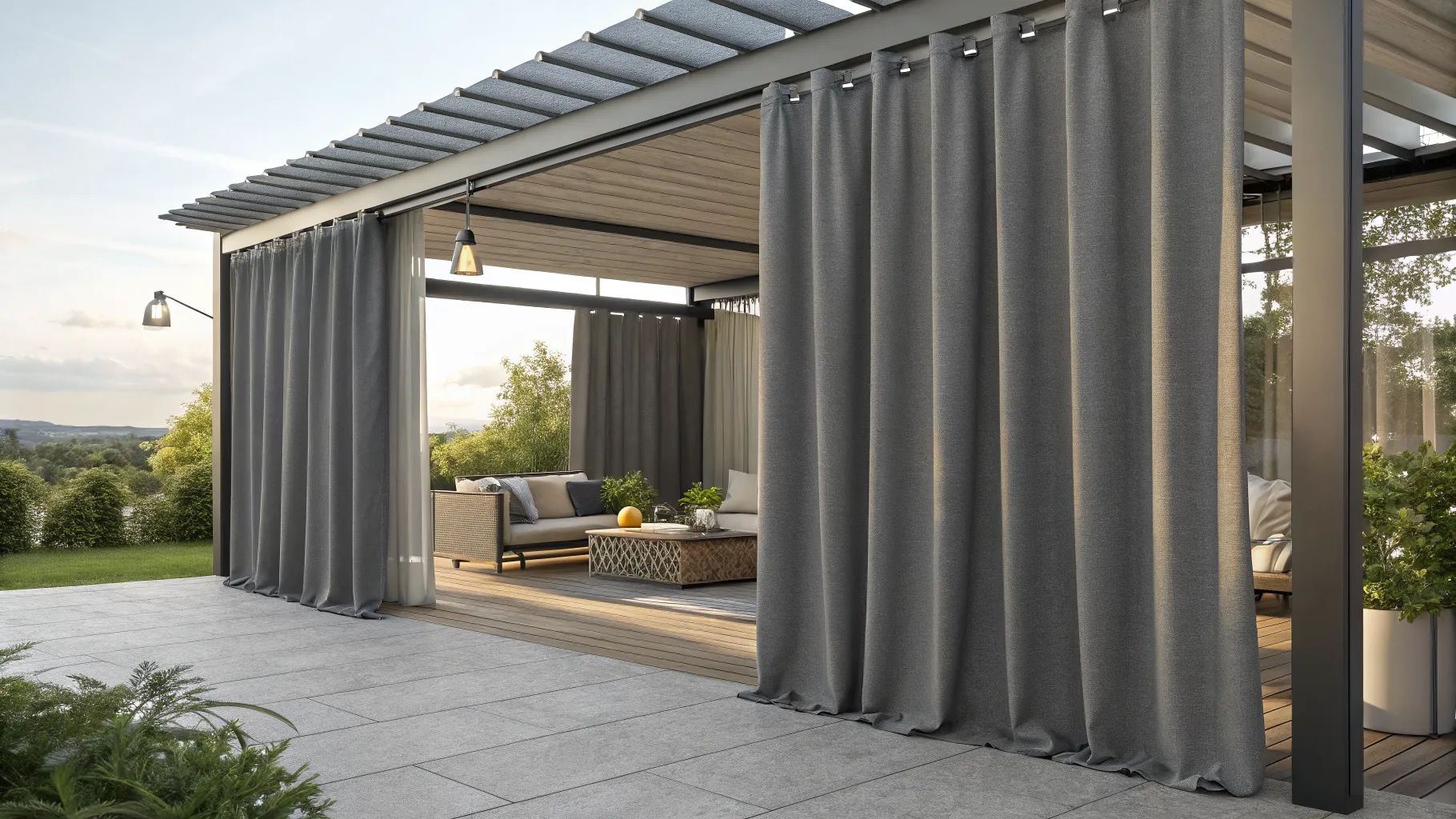
Key Factors in Selecting Outdoor Curtains
When you embark on the journey of choosing the perfect outdoor curtains, several critical factors must be taken into account to ensure longevity, functionality, and aesthetic satisfaction. Each element plays a pivotal role in how well your chosen curtains will perform against the elements and how effectively they will enhance your outdoor living experience. Paying close attention to these details will prevent common pitfalls and lead to a more durable and enjoyable installation of your new patio curtains.
Material Matters: Durability and Weather Resistance
The choice of material is arguably the most important decision when selecting outdoor curtains. For effective wind resistant curtains, you need fabrics that are not only strong but also resistant to fading, mildew, and general weather degradation. Materials like solution-dyed acrylic, marine-grade vinyl, and specific types of polyester are often recommended. Solution-dyed acrylic, for instance, is known for its exceptional colorfastness and resistance to UV rays, preventing the fabric from weakening and fading over time. Marine-grade vinyl offers superior waterproofing and can be very effective in strong winds, though it might be less breathable. Polyester blends with UV and water-repellent coatings provide a good balance of durability and affordability. Always look for a robust, weatherproof outdoor fabric that can withstand continuous exposure to sun, rain, and varying temperatures without compromising its integrity or appearance. The weave of the fabric also contributes to its strength and resistance to tearing, which is crucial for high-wind areas.
Weight and Weave for Wind Protection
The physical characteristics of the curtain fabric, specifically its weight and weave density, directly impact its ability to stand up to wind. Heavier fabrics, by their nature, are less prone to flapping wildly and are more stable in breezy conditions. However, excessively heavy fabrics can put strain on mounting hardware. A balanced approach is to choose a fabric with a substantial but manageable weight. The weave also plays a significant role; a tight, dense weave will offer greater resistance to wind penetration and will be less likely to fray or tear under stress. Open weaves, while attractive for light filtering, will offer minimal wind resistance. For truly wind resistant curtains, consider fabrics that are specifically engineered for outdoor use, often featuring rip-stop properties or reinforced edges to prevent damage from wind shear. This careful selection ensures your outdoor curtains remain functional and aesthetically pleasing, even on blustery days.
Achieving Optimal Privacy Levels
When selecting privacy curtains, the opacity of the fabric is key. Different materials and weaves offer varying degrees of light filtration and visual blockage. Sheer or semi-sheer curtains provide a gentle filter for light and a subtle hint of privacy, ideal for areas where you want to maintain an airy feel while subtly obscuring direct views. For complete visual seclusion, particularly in urban settings or close-knit neighborhoods, opaque fabrics are necessary. These materials block light almost entirely, creating a solid barrier. Some fabrics offer a middle ground, providing ample privacy without making the space feel too enclosed. Consider the specific level of privacy you desire and how it interacts with the amount of natural light you wish to let into your outdoor area. Layering different types of outdoor curtains, such as a sheer inner layer and an opaque outer layer, can offer versatile control over both light and privacy throughout the day.
Mounting Hardware and Installation Stability
Even the most robust outdoor curtains will fail if not properly installed with suitable hardware. For wind resistant curtains, sturdy, weather-resistant mounting systems are non-negotiable. Look for rust-proof materials like stainless steel or powder-coated aluminum rods, tracks, or cables. The brackets must be securely anchored into a stable structure, capable of bearing the weight of the curtains and the additional stress from wind. Options like grommets with tie-backs, weighted hems, or bottom attachments (such as bungee cords or clips that secure the curtain to the ground or a railing) can significantly enhance stability. These features prevent the curtains from billowing excessively or detaching during high winds, ensuring they remain in place and continue to provide both privacy and protection. Proper installation with appropriate hardware is paramount for the longevity and performance of your patio curtains.
Aesthetic Considerations and Style Integration
Beyond functionality, the aesthetic appeal of your outdoor curtains plays a crucial role in defining the ambiance of your outdoor space. The curtains should complement the existing décor, furniture, and architectural style of your home. Consider color palettes that harmonize with your exterior, or choose bold hues to create a vibrant focal point. Textures, patterns, and hanging styles (e.g., rod pocket, grommet, tab top) can all contribute to the overall look. For a cohesive design, select patio curtains that align with the intended mood—be it tranquil and serene, lively and inviting, or modern and sophisticated. The right curtains can transform a simple patio into an elegant extension of your living area, effectively marrying form and function.
Comparing Popular Outdoor Curtain Materials
When choosing outdoor curtains, the material is central to its performance against wind and its ability to provide privacy. Solution-dyed acrylics, such as Sunbrella, are highly favored for their exceptional fade resistance, UV protection, and durability. They offer a luxurious feel and come in a wide range of colors and patterns, making them excellent patio curtains. While not fully waterproof, they are highly water-resistant and quick-drying, making them suitable for many climates. Polyester fabrics, often coated for UV and water resistance, present a more budget-friendly alternative. They are generally robust and can be effective wind resistant curtains, though their colorfastness might not match that of acrylics over very long periods. Vinyl is an option for maximum waterproofing and can be incredibly effective as privacy curtains due to its opacity. However, vinyl can be stiff, less breathable, and may not offer the same fabric drape as acrylics or coated polyesters. When considering a weatherproof outdoor fabric, always weigh the balance between initial cost, expected lifespan, ease of maintenance, and the specific aesthetic you desire for your outdoor space.
Actionable Advice: Installation Tips for Wind and Privacy
Proper installation is crucial for maximizing the effectiveness of your outdoor curtains in providing both wind protection and privacy. Following these tips will ensure your curtains perform optimally and last longer.
Secure Your Mounting Hardware: Always use heavy-duty, weather-resistant hardware like stainless steel rods or galvanized cables. Ensure brackets are deeply anchored into stable structures such as house walls, sturdy pergolas, or robust fence posts. Loose hardware is the primary cause of curtain failure in windy conditions, especially for wind resistant curtains.
Utilize Weighted Hems and Bottom Anchors: To prevent curtains from billowing excessively or flying up in gusts, opt for curtains with weighted hems or add weights yourself (e.g., small chain or magnetic weights sewn into the bottom). For enhanced stability, consider using bungee cords, clips, or ties to secure the bottom of your privacy curtains to ground anchors, patio railings, or heavy planters. This creates a more fixed barrier against the wind.
Choose the Correct Length and Width: Curtains that are too short will not offer adequate privacy and will flap more in the wind. Ensure they are long enough to reach the ground or just skim it. For width, ensure enough fabric to create a full, ripple effect when closed, which not only looks better but also provides a more substantial barrier against wind and offers greater privacy. Overly stretched curtains will be less effective as privacy curtains and more prone to tearing.
Consider a Track System for Easy Management: A track system allows for smooth opening and closing of your patio curtains, and when closed, it provides a more continuous and secure barrier. This is particularly beneficial for managing large sections of curtains or in areas frequently exposed to strong winds, as it minimizes gaps and prevents individual panels from becoming untethered.
Install Multiple Panels for Flexibility: Instead of one large curtain, consider installing several narrower panels. This allows you to open and close sections independently, giving you more control over sun, wind, and privacy. For example, you can open one panel for a view while keeping others closed for protection. This modular approach enhances the versatility of your outdoor curtains.
Frequently Asked Questions
What is the best weatherproof outdoor fabric for high winds?
Solution-dyed acrylics (like Sunbrella) and heavy-duty marine-grade vinyl are excellent choices. These materials are known for their durability, UV resistance, and ability to withstand harsh weather conditions, making them ideal for wind resistant curtains.
How can I ensure my privacy curtains stay secure in strong gusts?
To keep your privacy curtains secure, use robust mounting hardware, ensure they have weighted hems, and consider bottom anchors such as bungee cords or ties that can secure the curtain to ground hooks, railings, or heavy furniture. A track system can also provide superior stability.
Do outdoor curtains provide good insulation against heat or cold?
While not providing full insulation, thicker outdoor curtains made from dense fabrics can offer some thermal benefits. They can block direct sunlight, reducing heat gain in summer, and provide a slight barrier against cool breezes, enhancing comfort in milder conditions. For significant temperature control, insulated versions of patio curtains are available.
Can I machine wash my outdoor curtains?
It depends on the fabric. Many solution-dyed acrylic and polyester outdoor curtains are machine washable with cold water on a gentle cycle, using mild detergent, and then air-dried. Always check the manufacturer's care instructions for your specific weatherproof outdoor fabric to avoid damage.
What’s the difference between indoor and outdoor curtains?
The primary difference lies in durability and weather resistance. Outdoor curtains are specifically designed to withstand UV rays, moisture, mildew, and wind, utilizing specialized weatherproof outdoor fabric and construction. Indoor curtains are not built for these elements and would quickly degrade if used outdoors.
References
- Textile Technology and Fabric Durability Standards
- Outdoor Living Space Design Best Practices
- Residential Wind Load Analysis for Exterior Structures
- Material Science in Weatherproofing Applications
- Architectural Design for Patio Enclosures
Authored by MyTrendSpot team