Sleep hygiene ideas for a more restful night: Evidence, clinical options and typical sleep-study costs
Key facts
- Sleep hygiene combines behavioral routines and environmental changes that support regular, sufficient sleep.
- Clinical assessment may include medical history, medication review, and overnight polysomnography measuring brain activity, heart rate, and breathing.
- A 2023 claims-based benchmark lists $234.72 as the average Medicare payment and $1,173.55 as the average provider bill for in-lab study code 95810. 1
- Sleep specialists may include pulmonologists, neurologists, psychiatrists, and clinicians certified in sleep medicine.
Sleep hygiene ideas for a more restful night generally refer to practical habits and bedroom conditions that support the body’s regular sleep and wake cycle. They can be useful as general health measures, but persistent or disruptive sleep difficulties require assessment by a qualified professional. Clinical care may involve behavioral therapy, testing for breathing disorders, or carefully selected medical treatment rather than household changes alone.
What sleep hygiene means in practice
Sleep hygiene is a collection of behaviors and environmental arrangements intended to support regular, sufficient sleep. A 2026 review describes it as an array of behavioral and environmental practices, including daily planning and changes to the sleep setting. Sleep supports physical repair, memory formation, emotional regulation, immune function, and metabolic processes, while repeated disruption can affect daytime alertness and concentration. 2
The most consistent foundation is a stable sleep and wake schedule, including on days without work or school. A wind-down period can use quiet activities, dimmer light, and reduced stimulation. Screens may be limited before bedtime because evening light and engaging content can delay the transition to sleep. Daytime movement and appropriately timed outdoor light can also help align circadian rhythms, although schedules for shift workers and adolescents may require individualized advice. 3
Bedroom conditions and evening routines
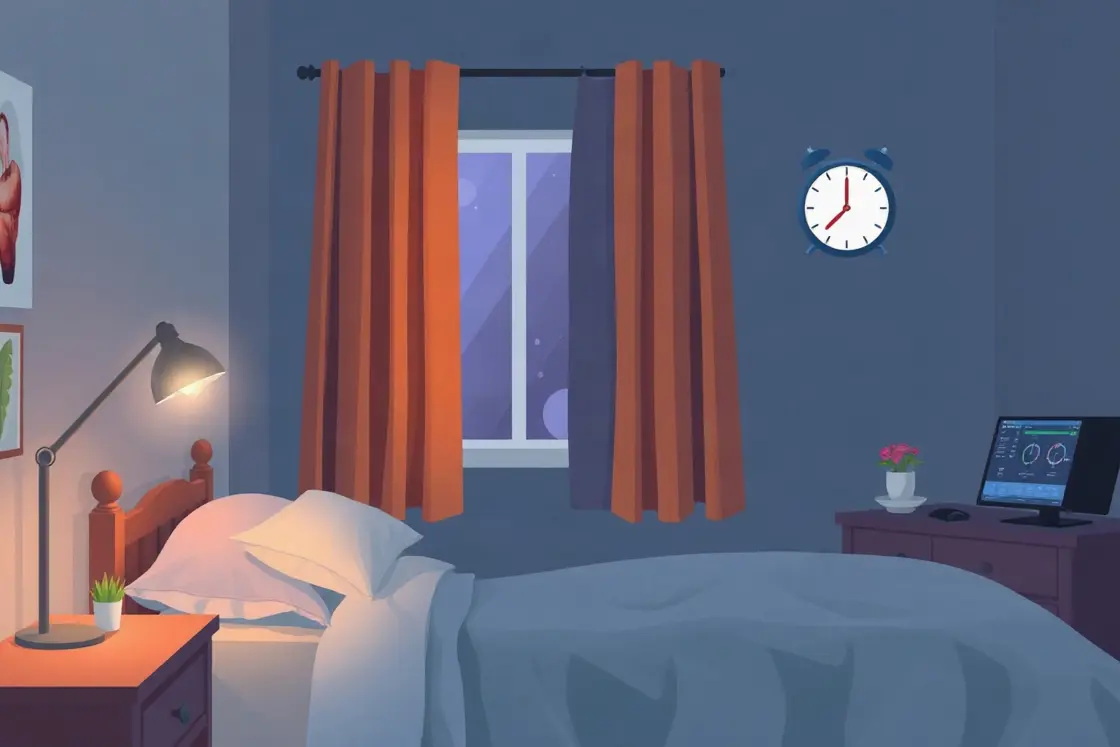
A sleep-supportive room is typically dark, quiet, and comfortably cool, with bedding and furnishings that do not create avoidable heat or noise. Light exposure is especially relevant to circadian timing, so bright indoor lighting late in the evening can be replaced with softer illumination. Noise may be reduced through household agreements, environmental changes, or consistent background sound, provided that safety alerts remain audible.
Evening habits can include avoiding heavy meals close to bedtime, limiting alcohol and nicotine, and keeping caffeine earlier in the day. Exercise is associated with general sleep benefits, but vigorous activity immediately before bed may be stimulating for some people. These measures are supportive rather than guaranteed solutions. A 2026 lifestyle review emphasizes circadian alignment, adequate sleep timing, exercise, behavior modification, and careful consideration of nutrition and substances. 3
Sleep stages and the meaning of continuity
Normal sleep cycles through non-rapid-eye-movement stages and rapid-eye-movement sleep several times during the night. Non-rapid-eye-movement sleep progresses from lighter sleep toward deeper slow-wave sleep, while rapid-eye-movement sleep is associated with vivid dreaming and important aspects of memory and emotional processing. The proportions change across the night, making regular opportunity for sleep important.
Sleep continuity means spending enough time asleep without frequent, prolonged awakenings. Repeated interruptions can reduce the amount of deeper or rapid-eye-movement sleep, although the effect depends on the cause, timing, and duration of disruption. Snoring, witnessed breathing pauses, restless movements, medication effects, mood symptoms, and persistent difficulty falling asleep warrant professional discussion. Sleep hygiene is not considered a stand-alone treatment for chronic insomnia, for which multi-component cognitive behavioral therapy is recommended as a leading clinical approach. 4
When a sleep clinic assessment is appropriate
Professional evaluation becomes especially relevant when sleep disturbance persists, causes significant daytime impairment, or occurs alongside loud snoring, gasping, breathing pauses, unusual nighttime movements, or a schedule that cannot be maintained. A primary-care clinician may begin with a history and medication review, then refer to a sleep-medicine service. Specialists can include board-certified sleep physicians, pulmonologists, neurologists, psychiatrists, and psychologists trained in behavioral sleep treatment.
Sleep clinics are medical facilities that assess suspected disorders and arrange follow-up care. Examples of institutions connected with sleep medicine include Cedars-Sinai Medical Center and UCLA-based specialists in Los Angeles, California, and Huaihe Hospital of Henan University in Kaifeng, China. These examples illustrate the range of hospital departments involved, not an endorsement or guarantee of appointment availability. Waiting times depend on referral requirements, location, test capacity, and clinical priority.
How sleep disorders are investigated
The initial assessment commonly reviews sleep timing, awakenings, daytime symptoms, medical history, mental health, substances, and current medicines. A sleep diary or validated questionnaire may help describe patterns. For suspected obstructive sleep apnea, a home sleep apnea test may be considered when clinically appropriate. It records selected breathing-related signals but generally provides less physiological information than an attended laboratory study.
Polysomnography is an overnight test performed in a sleep centre. Sensors monitor brain activity, eye movements, muscle activity, heart rate, airflow, breathing effort, and blood oxygen levels. The results can help clinicians evaluate sleep stages, breathing interruptions, limb movements, and unusual behaviors. Some laboratory studies include a subsequent positive-airway-pressure titration, while insomnia evaluation may rely more heavily on clinical history and behavioral assessment than on routine overnight testing.
Treatment options, risks, and typical U.S. costs
For chronic insomnia, cognitive behavioral therapy for insomnia, or CBT-I, combines structured methods such as stimulus control, sleep scheduling, relaxation, and work on unhelpful sleep-related thoughts. It may be delivered individually, in groups, through telehealth, or through guided digital programs. Medication can be considered in selected circumstances, but it may cause sedation, next-day impairment, interactions, dependence, or other adverse effects. A qualified professional should match treatment to the diagnosis, age, medicines, and safety risks. 5 4
For obstructive sleep apnea, treatment may involve positive-airway-pressure equipment, oral appliances, positional strategies, weight-related care, or procedures, depending on clinical findings. Sleep-study charges vary with setting, location, test type, and coverage rules. A claims-based 2023 benchmark for attended in-lab polysomnography code 95810 reports an average Medicare payment of $234.72 and an average provider bill of $1,173.55. 1
Those figures are reference points, not guaranteed out-of-pocket amounts. Public coverage and private health coverage may apply different eligibility, referral, authorization, deductible, and co-payment rules. The 2026 Medicare physician fee schedule sets a policy framework for professional reimbursement, while sleep-specific payment depends on the service and setting. 6 Before testing, a clinic can explain whether the study is home-based or attended, which professional services are included, how results are reviewed, and what follow-up treatment may cost. Clinical risks include sensor irritation, inconvenience, false-negative or inconclusive home testing, and treatment side effects, so decisions should be made with a qualified sleep professional.
Sources
- Sleep Study In Sleep Lab (95810) Cost: https://plainprocedure.com/procedure/95810-sleep-study-in-sleep-lab-6-years-or-older
- Sleep hygiene: foundations, implications, and strategies for enhancing sleep health | Sleep Science and Practice | Springer Nature Link: https://link.springer.com/article/10.1186/s41606-025-00151-w
- Lifestyle and Behavioral Enhancements of Sleep: A Review - PubMed: https://www.ncbi.nlm.nih.gov/pubmed/41523151
- Management of adult insomnia in Australia: A joint position statement of the Australasian Sleep Association, Sleep Health Foundation, Royal Australian College of General Practitioners, Australian Psychological Society, Pharmaceutical Society of Australia, and Australian Primary Health Care Nurses Association: https://exa.ai/library/publication/nddtnhmkqtq
- Frontiers | Summary of the best evidence that cognitive behavioral therapy for insomnia improves sleep quality in patients with chronic insomnia: https://www.frontiersin.org/journals/psychiatry/articles/10.3389/fpsyt.2025.1688561/full
- CMS releases 2026 Medicare physician fee schedule final rule - American Academy of Sleep Medicine – Association for Sleep Clinicians and Researchers: https://aasm.org/cms-releases-2026-medicare-physician-fee-schedule-final-rule/
Authored by MyTrendSpot team