Government surplus vehicles auction UK
Government surplus vehicles auction UK channels represent one of the most structured and transparent routes for acquiring publicly owned transport assets in Britain. Vehicles enter these sales when public agencies cycle out fleet stock, when law enforcement disposes of seized property, or when the Ministry of Defence (MOD) decommissions specialist military equipment. The process is governed by value-for-money obligations and must produce an auditable trail that withstands public scrutiny, which is precisely why open, competitive auction formats are the mandated disposal method for public sector bodies across the country. 1
How the UK Government Surplus Vehicle Auction System Works
Public sector organisations in the UK are bound by procurement frameworks that prevent quiet, private sales of taxpayer-owned assets. According to published government guidance, the disposal of surplus assets must be conducted through a competitive bidding process that is open, transparent, and demonstrably in the public interest. 2 Online auctions fulfil both requirements by creating a documented price-discovery process that simultaneously reaches the widest possible pool of registered buyers, thereby maximising the financial recovery on each lot. 3
The mechanics are broadly consistent across auction houses: sellers catalogue and photograph each vehicle, set a reserve price or an unreserved starting figure, publish the lot with condition notes and service history where available, and then open bidding for a defined window. Most events are now run as timed online auctions, although certain specialist sales retain physical viewing days at logistics hubs or storage yards. Payment terms, buyer's premiums, and VAT obligations are set out in each auction's terms and conditions, and buyers are typically required to complete payment within 24 to 72 hours of the hammer falling. 4
Key Auctioneers and Official Disposal Channels
Several specialist firms handle the bulk of UK government vehicle disposals. BCA (British Car Auctions) is a primary partner for disposing of government and local authority fleet vehicles at scale across the country. 5 Witham Specialist Vehicles is the official contractor most commonly appointed by the UK MOD for the auction of surplus military and utility vehicles, having managed ex-military disposals for decades. 6 John Pye Auctions, established in 1968 and processing approximately 50,000 lots per year, operates a dedicated government surplus division handling police surplus, electronics, and vehicles from a range of public bodies. 7
Other notable platforms include Wilsons Auctions, Northern Ireland's largest auctioneer with roots dating to 1936, which handles property, vehicles, and government surplus across the UK and processes around 50,000 lots annually. 8 GPSV (Government and Police Surplus Vehicles) specialises in ex-MOD vehicles, plant, and machinery, running direct online auctions on behalf of UK government departments and global contracts. BPI Auctions, based in Dudley and established in 1979, handles police surplus and industrial machinery. Anglia Car Auctions is another venue where ex-military lots appear regularly, including genuinely documented MOD assets. 9
Types of Vehicles Available at UK Government Auctions
The variety of stock at UK government surplus auctions is broader than most prospective buyers anticipate. Local authority fleet disposals typically include cars, vans, light commercials, grounds maintenance vehicles, and construction plant. NHS and healthcare body sales frequently include patient transport and adapted vehicles. Police and law enforcement auctions cover patrol cars, seized civilian vehicles, specialist command units, and motorcycles. 10
Ex-MOD auctions represent a distinct and historically significant segment. Recent documented lots have included a 1993 Land Rover 110 VPK Snatch with service records linking it to units including the Royal Regiment of Fusiliers, the Grenadier Guards, and 2nd Battalion Parachute Regiment, which sold at Anglia Car Auctions with a pre-auction estimate of £2,500 to £4,500 and a final result of £8,100 including buyer's premium. 11 Other ex-military types regularly appearing at auction include Land Rover Defenders, MAN 4x4 fuel tankers, Toyota Hilux variants, Volvo FH trucks, and specialist command vehicles such as the Ford Transit T350 TDCi mobile command unit. 12
Registration, Inspection, and Bidding Requirements
Participation in UK government surplus vehicle auctions is not automatic. Buyers must register an account with the relevant auction house, providing verified identification, and in some cases paying a registration deposit before bidding rights are granted. Most platforms operate online-first bidding, meaning registered users can participate remotely, but pre-auction viewing periods are strongly recommended and sometimes available strictly by appointment. 13
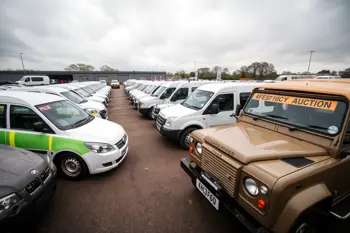
Government fleet vehicles are routinely decommissioned at 80,000 to 120,000 miles, meaning relatively modern vehicles can appear in these sales, but the absence of dealer-style warranties makes independent inspection critical. 14 The average lot value across police and government surplus auction categories has been recorded at approximately £320, though specialist or military vehicles routinely exceed this significantly based on condition and provenance. Auction platforms operating in this space include 15 or more distinct auction houses across the UK, each with separate registration systems, terms, and geographic coverage. 15
Pricing Context and Financial Considerations
VAT is typically applied to the hammer price of government surplus vehicles unless the listing specifies a margin scheme or zero-rating, which affects the true cost of acquisition. 16 Buyer's premiums, which are added on top of the winning bid, vary by auction house and can range from 5% to 20% of the hammer price. These charges must be factored into any pre-auction budget. For example, one documented Sullivan County-style public works auction applied a flat 10% buyer's premium across all lots, a figure broadly comparable to many UK surplus events. 17
Because all government surplus vehicles are sold on an as-is, as-seen basis, buyers carry full responsibility for post-purchase repair costs, MOT compliance, and any roadworthiness work. Ex-military vehicles may additionally require UK civilian registration before they can be used on public roads, a process that involves DVLA documentation and, in some cases, Individual Vehicle Approval (IVA) testing. Vehicles sold via the MOD disposal chain through contractors such as Witham Specialist Vehicles come with cast-off certificates confirming military release, but this does not replace civilian registration. 18
Risks, Compliance, and Due Diligence Obligations
The competitive appeal of government surplus auctions must be weighed against a clear set of structural risks. No warranties are offered on any lot. Vehicles may have incomplete V5C documentation, photocopies rather than originals, or gaps in service history. The Ford Transit T350 TDCi command vehicle listed in Doncaster, for instance, carried a notation of mileage not warranted and a V5 order status listed as photocopy only, details that materially affect resale value and insurance eligibility. 19
Export of certain ex-military vehicles, particularly those with specialist communications or weapons-mounting infrastructure, may require an export licence from the UK Export Control Joint Unit before they can be transported abroad. Buyers intending to export should research licensing obligations specific to the vehicle type before bidding. Additionally, vehicles that have been seized by police or other enforcement agencies may carry encumbrances or title complexities that require legal clarification before transfer. Prospective bidders are consistently advised by auction houses to attend physical viewing sessions, commission independent inspections, and read all condition notes in full before placing any bid. 20
Where Government Surplus Vehicle Auctions Are Held Across the UK
Government surplus vehicle auctions are conducted across multiple regions of the UK with no single centralised portal. Wilsons Auctions operates from Newtownabbey in Northern Ireland as well as locations in Queensferry and Shotton Point in Wales. John Pye operates from Nottingham. BPI Auctions is based in Dudley in the West Midlands. Anglia Car Auctions is located in Kings Lynn, Norfolk. GPSV conducts sales including direct MOD lots from Gibraltar as well as domestic UK sites. 21
The UK government's own published guidance references the Government Surplus and Auction Services (GSAS) framework as the primary channel through which public sector bodies are directed to dispose of assets including vehicles, with procurement rules requiring bodies to follow competitive disposal procedures to demonstrate responsible stewardship of public funds. Local authorities across London, Birmingham, Leeds, Manchester, Cardiff, and Belfast also conduct their own surplus vehicle disposals through approved auction providers, meaning that regional buyers can often find stock in closer geographic proximity without bidding against the broadest national audience. 22
Sources
- BTG Eddisons Asset Sales - eddisonsassets.com
- GOV.UK - gov.uk/government/publications/sell-surplus-assets-to-the-public
- BTG Eddisons Asset Sales - eddisonsassets.com
- GOV.UK - gov.uk/guidance/auction-your-vehicle
- BCA - bca.co.uk
- Witham Specialist Vehicles - witham-sv.com
- AuctionRadar - auctionradar.co.uk/category/police-surplus
- Wilsons Auctions - wilsonsauctions.com/auctions/police-government-auctions
- Anglia Car Auctions - angliacarauctions.co.uk
- BTG Eddisons Asset Sales - eddisonsassets.com
- Anglia Car Auctions - angliacarauctions.co.uk/auctions/2752-11-Apr-2026/14152
- GPSV - gpsv.co.uk
- GOV.UK - gov.uk/guidance/auction-your-vehicle
- GovAuctions.app - govauctions.app/guides/how-to-buy-government-surplus-vehicle
- AuctionRadar - auctionradar.co.uk/category/police-surplus
- Civil Service World - civilserviceworld.com
- Sullivan County NY - sullivanny.gov/news/sullivan-county-auctioning-surplus-vehicles-and-equipment-1
- ExArmyUK - exarmyuk.com
- Autoline24 UK - autoline24.uk
- Raw2k - raw2k.co.uk/news/how-to-buy-a-confiscated-car-from-police-auctions
- AuctionRadar - auctionradar.co.uk/category/police-surplus
- GOV.UK - gov.uk/government/collections/government-surplus-and-auction-services
Authored by MyTrendSpot team