Warning Signs of Heart Disease: A Clinical Guide to Symptoms and Emergency Signals
Heart disease warning signs should never be ignored, even when symptoms seem mild, intermittent, or easy to blame on stress, aging, indigestion, or being out of shape. The body may signal coronary artery disease, heart failure, an arrhythmia, or an impending heart attack through chest discomfort, shortness of breath, unusual fatigue, nausea, or pain outside the chest. 1
Recognizing the Main Warning Patterns
Heart disease includes multiple conditions affecting the heart and blood vessels, so symptoms vary by cause. Commonly reported signs include unexplained fatigue or weakness, rapid or irregular heartbeats, persistent cough, nausea or indigestion, reduced appetite, numbness or weakness in the limbs, and swelling in the feet, ankles, fingers, or abdomen. Mild symptoms can be difficult to interpret, which is why regular medical assessment remains important even when symptoms are not dramatic. 3
A pattern linked to exertion deserves particular attention. Harvard Health reports that a symptom provoked by physical activity or emotional stress and relieved by rest may be heart related, especially in people with high blood pressure, high cholesterol, diabetes, tobacco use, obesity, inactivity, or a strong family history of heart disease. Coronary artery disease can also remain silent until a heart attack occurs. 220
Chest Discomfort and Pain Beyond the Chest
Heart-related chest discomfort is often described as pressure, tightness, squeezing, fullness, or heaviness rather than a sharp sensation. It may last several minutes, come and go, or appear during activity and emotional stress. Because indigestion and heartburn can feel similar, recurring or unfamiliar chest symptoms should not be dismissed based only on timing after meals or an assumption that stress is responsible. 112
Discomfort caused by reduced blood flow to the heart may occur in one or both arms, the shoulders, back, neck, jaw, or upper abdomen. The sensation may be dull, tight, or uncomfortable instead of intensely painful. Angina commonly occurs during exertion and improves with rest, but new, worsening, prolonged, or rest-related symptoms may indicate a more serious problem requiring emergency evaluation. 515
Breathlessness, Fatigue, and Less Typical Symptoms
Shortness of breath during ordinary activities, such as walking, climbing stairs, or completing routine chores, can indicate that the heart is not adequately meeting the body’s demand for oxygen-rich blood. Unusual fatigue may also precede a serious event or reflect coronary artery disease or heart failure. Cleveland Clinic describes early heart-attack symptoms that can begin hours, days, or weeks beforehand and may wax and wane. 18
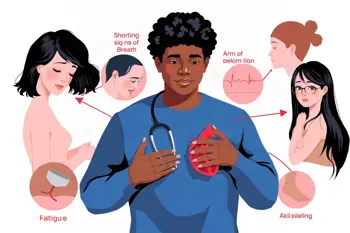
Women may experience heart-related symptoms without classic chest pain. Potential signs include unusual tiredness, nausea, indigestion, back or jaw discomfort, and shortness of breath. Nausea, stomach discomfort, cold sweats, lightheadedness, or a general sense that something is wrong can also accompany a heart attack. These symptoms are not specific to heart disease, but unexplained combinations or symptoms with exertion warrant medical attention. 81312
Warning Signs of Heart Failure
Heart failure occurs when the heart cannot pump effectively enough to meet the body’s needs. Early signs may include fatigue, reduced ability to perform normal activities, breathlessness, persistent coughing or wheezing, and difficulty breathing. Fluid accumulation can cause swelling in the ankles, legs, thighs, abdomen, hands, or feet. Harvard Health groups these findings under the FACES framework: fatigue, activity limitation, congestion, edema, and shortness of breath. 9
Rapid weight gain can accompany fluid retention in heart failure, even when food intake has not changed. Swelling or breathlessness becomes more concerning when it is persistent, progressively worse, or paired with reduced exercise tolerance. Other possible heart-disease symptoms include lack of appetite, nausea, indigestion that does not resolve, and a persistent cough. These findings can have other causes, so diagnosis requires clinical assessment rather than symptom interpretation alone. 314
Palpitations, Fainting, and Neurologic Signals
Palpitations may feel like racing, pounding, fluttering, or skipped beats. Arrhythmias can also produce dizziness, fainting, chest discomfort, or shortness of breath. A fast or irregular heartbeat is not automatically dangerous, but fainting, repeated episodes, or palpitations combined with chest discomfort or breathlessness can indicate a rhythm disorder requiring evaluation. 316
Cardiovascular disease can also be associated with stroke symptoms. Sudden facial drooping, weakness or numbness in an arm, speech difficulty, severe dizziness, or loss of balance should be treated as emergency warning signs. These symptoms can occur abruptly and may signal interruption of blood flow to the brain. Their sudden appearance is more important than whether pain is present. 17
When Symptoms Require Emergency Care
Possible heart-attack symptoms include chest pressure or pain, discomfort spreading to the arms, back, neck, jaw, or stomach, shortness of breath, cold sweats, nausea, and lightheadedness. A heart attack can occur with mild symptoms or without obvious chest pain, particularly among some older adults, people with diabetes, and women. Waiting for symptoms to become severe can delay treatment. 1118
Emergency medical services should be called for possible heart-attack symptoms rather than driving oneself to a hospital. The Food and Drug Administration explains that emergency responders can begin care during transport. Emergency evaluation is also appropriate for sudden fainting, severe or unexplained breathlessness, persistent or worsening chest discomfort, or stroke indicators such as facial drooping, arm weakness, and speech trouble. 1917
Sources
- NIHD, “Early Signs of Heart Disease You Shouldn’t Ignore,” https://www.nih.org/nihd-news/2026/february/heart-disease-warning-signs-you-should-never-ign/
- Harvard Health, “5 Overlooked Symptoms That May Signal Heart Trouble,” https://www.health.harvard.edu/heart-health/5-overlooked-symptoms-that-may-signal-heart-trouble
- UC Davis Health, “Heart Disease,” https://health.ucdavis.edu/conditions/heart-vascular/heart-disease
- Cleveland Clinic, “Warning Signs of a Heart Attack,” https://health.clevelandclinic.org/early-signs-of-a-heart-attack
- Harvard Health, “Coronary Artery Disease,” https://www.health.harvard.edu/heart-health/coronary-artery-disease-a-to-z
- Harvard Health, “5 Warning Signs of Early Heart Failure,” https://www.health.harvard.edu/heart-health/5-warning-signs-of-early-heart-failure
- Centers for Disease Control and Prevention, “Heart Disease Signs and Symptoms,” https://www.cdc.gov/heart-disease/signs-symptoms/index.html
- American Heart Association, “Warning Signs of a Heart Attack,” https://www.heart.org/en/health-topics/heart-attack/warning-signs-of-a-heart-attack
- National Heart, Lung, and Blood Institute, “Heart Attack Symptoms,” https://www.nhlbi.nih.gov/health/heart-attack/symptoms
- MedlinePlus, “Heart Failure,” https://medlineplus.gov/heartfailure.html
- Mayo Clinic, “Angina: Symptoms and Causes,” https://www.mayoclinic.org/diseases-conditions/angina/symptoms-causes/syc-20369373
- Johns Hopkins Medicine, “Arrhythmias,” https://www.hopkinsmedicine.org/health/conditions-and-diseases/arrhythmias
- National Institute of Neurological Disorders and Stroke, “Stroke,” https://www.ninds.nih.gov/health-information/disorders/stroke
- Cleveland Clinic, “Heart Attack,” https://my.clevelandclinic.org/health/diseases/16818-heart-attack-myocardial-infarction
- U.S. Food and Drug Administration, “Heart Attack Symptoms? Don’t Wait, Call 911,” https://www.fda.gov/consumers/consumer-updates/heart-attack-symptoms-dont-wait-call-911
- National Institute on Aging, “Heart Disease,” https://www.nia.nih.gov/health/heart-health/heart-disease
Authored by MyTrendSpot team