Demystifying the Process: Guide to bidding at police surplus auctions
Understanding the administrative mechanics of public asset sales is crucial for anyone seeking a guide to bidding at police surplus auctions. Across the United States, federal, state, and local law enforcement agencies regularly retire fleet equipment, liquidate seized assets, and dispose of unclaimed property 1. Navigating these public events requires an analytical understanding of bidding platform logistics, state and federal regulations, and transaction timelines 1.
Understanding the Police Surplus Ecosystem
Public asset liquidation operates across municipal, county, and federal government levels, with each tier using distinct channels to cycle out inventory 1. Local police departments and county sheriff offices sell unclaimed property, seized assets, and municipal fleet vehicles that have reached operational limits 1. These sales help agencies clear out high-density storage facilities and recover municipal storage costs, meaning starting bids are often set below retail averages to facilitate rapid liquidation 1.
State and federal auctions consolidate larger volumes of surplus assets from highway patrols, environmental agencies, and federal bureaus 1. The General Services Administration manages over 500 million dollars in federal surplus assets annually 2. It is essential to distinguish between surplus property, which refers to retired state-owned assets, and seized property, which is confiscated under civil asset forfeiture or tax laws and liquidated under different legal statutes 3.
Core Logistics of Government Auction Platforms
To manage the high volume of public liquidations, most local, state, and federal government entities contract with specialized third-party digital marketplaces rather than hosting live, in-person events 2. This digital transition has standardized registration and bidding procedures across different jurisdictions, though structural rules still vary. Bidders must familiarize themselves with platform-specific buyer premiums, which are additional percentage charges added to the final hammer price of an item 2. This comparative overview highlights how platform-specific fees and bidding formats can vary significantly across active government auction systems 4.
| Platform | Asset Focus | Typical Premium | Format Type |
|---|---|---|---|
| GSA Auctions | Federal surplus and fleet vehicles | None | Sealed / Timed |
| GovDeals | State and local fleet vehicles | 12.5% | Timed online |
| GovPlanet | Military vehicles and heavy equipment | 10.0% | Timed online |
| PropertyRoom | Police seized goods and electronics | 16.5% | Timed online |
| PublicSurplus | Municipal and school surplus | Variable | Timed online |
This overview highlights how structural expenses vary by platform 4. While GSA Auctions charges zero premiums, other sites require up to 16.5 percent, which must be factored into budgets 2.
Essential Pre-Bidding Registration and Requirements
Participating in public surplus auctions is open to the general public, and most events do not require a specialized commercial or auto dealer license 2. Bidders must register online, a process requiring a valid government-issued ID card and occasionally a credit card for pre-authorization 5. Specialized categories, such as salvage-only vehicles, may still require proof of a salvage or dealer license before registration is approved 6.
Additionally, public buyers must comply with strict financial and administrative timelines. Platforms often impose tight payment windows, requiring successful bidders to complete transactions via wire transfer, certified cashier check, or cash within three to five business days of the auction closing 2. Failing to submit payment within these designated windows results in immediate administrative penalties, which frequently include the forfeiture of any deposits and permanent account suspension 5.
Vehicle Inspections and the As-Is Reality
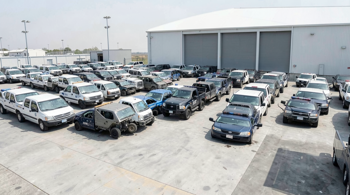
A defining legal aspect of municipal and federal asset sales is that all items are liquidated on an as-is, where-is basis 7. The selling agency provides no warranties or options for returns, transferring all post-sale liabilities directly to the buyer 7. Consequently, taking advantage of scheduled physical inspection periods is critical before committing capital 8. Local agencies host scheduled preview days, allowing registered bidders to inspect physical inventory on-site 9.
When evaluating retired police cruisers, experienced managers look beyond basic odometer mileage. Patrol cars often experience extensive idle hours while stationary, causing engine wear equivalent to thousands of driving miles 10. One engine hour of idling is structurally equivalent to roughly thirty-three miles of road wear, making the idle-hour metric a much more accurate gauge of engine health 10. Checking for milky residue under the oil cap can prevent bidding on vehicles with critical head gasket issues 11.
Post-Auction Retrieval and Removal Protocols
Winning an auction triggers a strict logistical timeline for payment and removal. Municipalities enforce rapid removal guidelines to prevent auction vehicles from taking up space in impound lots 1. For example, many municipal tow lots require that won items be picked up by the Saturday following the sale, or they assess daily storage penalties, which can run as high as thirty dollars per day 6.
Furthermore, standard safety and liability policies dictate that municipal vehicles cannot be driven directly off the auction lot, even if they are in running condition 6. Bidders must arrange for a professional towing service or transport trailer to haul the acquired vehicle off the property 6. Preparing these commercial logistical arrangements in advance ensures compliance with local municipal lot rules and successfully avoids administrative delays or penalties 6.
Paperwork Friction and the Titling Process
The final phase of acquiring an asset through public channels involves navigating state-specific titling laws, which present significant administrative friction 10. Federal agencies do not issue standard state vehicle titles; instead, they hand over a Standard Form 97, also known as the Certificate of Release of a Motor Vehicle 12. While some state DMVs process this certificate efficiently, others are unfamiliar with federal documentation, which can lead to incorrect salvage designations 12.
For municipal police vehicles, buyers typically receive a municipal bill of sale, requiring a follow-up verification process before a title can be issued 6. Many jurisdictions mandate that buyers schedule an official Vehicle Identification Number inspection with the state highway patrol to verify the vehicle identity and confirm it has no active liens 6. Compiling correct bills of sale, municipal receipts, and state-specific registration forms is essential to legally register the vehicle and secure plates 12.
Sources
- legalclarity.org
- bidprowl.com
- invrecovery.org
- bidprowl.com
- usa.gov
- kcmo.gov
- engineerfix.com
- bidprowl.com
- dgs.virginia.gov
- eathealthy365.com
- eathealthy365.com
- 0taxtags.com
Authored by MyTrendSpot team