Affordable tires near me: Navigating Local Market Options and Essential Maintenance Realities
Finding accessible tire services requires balancing immediate vehicle needs with long-term safety and performance standards. Whether consumers search for local independent shops or national retail chains, the market offers a diverse array of procurement methods, ranging from walk-in service centers to online-to-offline fulfillment models 1, 2. Understanding the structural differences between these service providers is essential for drivers aiming to maintain vehicle integrity while managing overall automotive expenditures 3, 4.
Evaluating Local and Independent Tire Service Centers
Independent tire shops often provide personalized service and community-based expertise, which can be advantageous for drivers seeking quick resolutions to tire damage or replacement needs. Many local establishments, such as Calderon’s Tires in San Jose, emphasize same-day replacement and comprehensive services including alignment, suspension repair, and TPMS diagnostics 1, 2. These shops typically cater to a variety of vehicle types, from standard passenger cars to modified SUVs, often offering specialized services like lift and leveling kits 2, 6.
When utilizing independent shops, consumers should prioritize verification of the technician's expertise and the shop’s reputation. For instance, some local centers are recognized for specific quality benchmarks, such as CARFAX service center ratings, which provide a level of objective assessment for potential customers 1, 5. Unlike larger franchises, smaller shops may offer more flexibility in scheduling and personalized diagnostic consultations, making them a viable option for those requiring specific technical attention rather than generalized retail services 3, 6.
National Retail Networks and Service Standardization
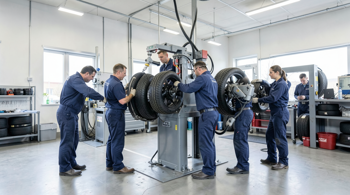
National tire retailers provide a standardized experience characterized by widespread location density and uniform service protocols. Chains such as Discount Tire, Mavis Discount Tire, and others maintain extensive footprints across the United States, offering benefits like price matching, national warranty programs, and integrated digital appointment scheduling 7, 9, 10. These organizations frequently utilize service bays equipped for high-volume operations, ensuring that tasks like tire rotation, balancing, and pressure checks are performed according to manufacturer specifications 7, 8.
The advantage of large-scale retailers lies in the consistency of their support services. Many offer lifetime maintenance programs-such as free rotations, balances, and flat repairs-for tires purchased at their locations, which can mitigate long-term vehicle ownership costs 7, 8. However, consumers should be aware that these large networks may have different operational constraints compared to local shops, such as standardized pricing models and potentially longer lead times for specific tire brands not currently held in local inventory 7, 9.
Online Aggregation and Digital Procurement Models
The rise of digital tire marketplaces has introduced a new layer of efficiency for drivers. Platforms like SimpleTire or Tire Rack act as aggregators that compare prices across various distributors, allowing users to browse a vast catalog of tire brands before facilitating delivery to a local independent installer 8. This model provides a degree of transparency in pricing, as all-inclusive costs for installation, mounting, and balancing can often be calculated at the point of purchase, reducing the likelihood of unexpected service charges 8.
| Service Model | Primary Benefit | Typical Inclusion |
|---|---|---|
| Independent Shop | Localized/Personalized Care | Custom adjustments, specialized repairs |
| National Chain | Networked Consistency | Nationwide warranties, standardized pricing |
| Digital Aggregator | Market Transparency | Pre-calculated install fees, wide inventory |
Maintenance Realities and Safety Compliance
Regardless of where tires are purchased, ongoing maintenance is a fundamental requirement for vehicle safety. Proper wheel alignment, regular tire rotation, and monitoring tire pressure are critical to maximizing the lifespan of the rubber and ensuring consistent vehicle handling 5, 9. Neglecting these maintenance tasks can lead to uneven tread wear, reduced fuel efficiency, and compromised traction, particularly during adverse weather conditions 6. Many shops provide complimentary inspections, which are valuable opportunities to assess the condition of sidewalls, tread depth, and valve stems before potential failures occur 6, 7.
Consumers should also remain vigilant regarding the age of tires. The Department of Transportation (DOT) code printed on the tire sidewall contains information identifying the week and year of manufacture, which is a standard industry indicator for determining a tire's shelf-life and safety profile. When opting for lower-cost or used tire alternatives, inspecting this date code is a mandatory step to avoid installing older, degraded rubber that may no longer meet safety standards despite having visible tread remaining 10.
Understanding Service Fees and Ancillary Costs
When selecting a tire service provider, it is important to distinguish between the cost of the hardware and the cost of professional labor. Standard installation fees typically include mounting, balancing, and the replacement of rubber valve stems, but customers should clarify whether these services cover extras such as TPMS sensor maintenance or handling fees for oversized vehicles 8. Some shops include 24/7 roadside assistance packages with the purchase of a full set of tires, providing additional security for the duration of the tire's service life 8.
Additionally, consumers should be prepared for potential upsell scenarios during standard maintenance, such as wheel alignment services or brake system inspections. While these services are often recommended to maintain the integrity of the tire and the vehicle’s overall performance, customers should request a clear, itemized quote for any additional work beyond the initial installation to ensure the total cost aligns with their expectations 5, 9.
Regulatory Oversight and Consumer Recourse
The tire industry operates under various regulatory guidelines designed to protect consumers and ensure road safety. Professional shops are generally required to adhere to strict disposal protocols for used tires to mitigate environmental impact, a cost often factored into the total installation fee 8. Furthermore, national warranties and workmanship guarantees provide a layer of protection if a defect or installation error arises after the service is complete 5, 6. Consumers are encouraged to maintain detailed records of all tire-related services, as these documents are often required to validate claims under manufacturer or shop warranties 5.
Sources
- Calderon’s Tires, Bascom Ave Location
- Calderon’s Tires, Story Rd Location
- Holbrook Tire Center
- Mr. Tires Kansas City
- Plaza Tire Service
- The Auto Pro Newark
- Discount Tire
- SimpleTire
- Mavis Discount Tire
- General Automotive Safety Guidelines (DOT Standards)
Authored by MyTrendSpot team