Ways to manage lower back pain at home: Evidence-based guidance for safer self-care
Ways to manage lower back pain at home generally begin with gentle movement, temporary changes to activities, pain-relief measures, and careful monitoring for warning signs. Most uncomplicated episodes are linked to muscle strain or other mechanical causes and often improve with time, while prolonged bed rest can slow recovery. 1
Start with relative rest, not prolonged bed rest
When lower back pain follows lifting, exercise, a fall, awkward movement, or prolonged sitting, reducing the activities that clearly worsen symptoms can help calm the flare. This does not usually mean remaining in bed. Research summarized by Dartmouth Health indicates that staying active supports recovery, whereas excessive rest may make back pain worse. 2 Short periods of comfortable rest can be combined with gradual returns to ordinary movement.
- Pause heavy lifting, repeated bending, and twisting while pain is intense.
- Change positions regularly rather than sitting or lying still for long periods.
- Resume ordinary walking and household activity as symptoms permit.
- Stop an activity if it produces increasing pain, spreading numbness, or weakness. 6
Use heat or cold according to the situation
Cold packs and superficial heat are common home measures for acute lower back pain. Cold may numb discomfort and can be considered after a fresh strain, while heat from a heating pad or warm bath may relax tense muscles and ease stiffness. Scripps Health describes ice during the first 48 hours after an acute episode as a useful approach, while other clinical guidance supports heat as a non-drug option for acute pain. 5 8
- Wrap an ice pack or heat source in cloth rather than placing it directly against skin.
- Use the approach that provides relief without causing skin irritation or worsening symptoms.
- Avoid falling asleep with a heating pad in place.
- Do not treat heat or cold as a substitute for assessment when warning signs are present.
Consider over-the-counter pain relievers carefully
Over-the-counter medicines may provide short-term relief when used exactly as directed on the label. Nonsteroidal anti-inflammatory drugs, including ibuprofen or naproxen, are commonly used for pain and inflammation, while acetaminophen is another option described in consumer guidance. These medicines are not appropriate for everyone, and the available research specifically cautions that medication choice depends on personal health circumstances. 7 A pharmacist or clinician can help identify contraindications and possible interactions.
- Read the active ingredients and follow the labeled dose and timing.
- Avoid combining products that contain the same active ingredient.
- Ask a healthcare professional before using medication if medical conditions or other medicines could affect safety.
- Seek advice if pain continues despite appropriate short-term self-care.
Keep movement gentle and progress gradually
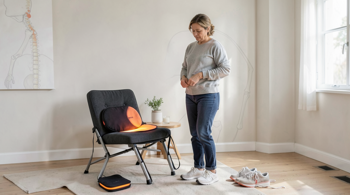
Gentle stretching and controlled exercises may improve mobility, strength, and confidence in movement for uncomplicated lower back pain. Examples described in physiotherapy guidance include pelvic tilts, knee-to-chest movements, bridges, bird dogs, and gentle core exercises. The correct routine depends on the cause of pain, so exercises should not be forced through significant discomfort. 10 Light walking is generally preferable to strict inactivity when it can be performed safely.
- Begin with a small number of slow, comfortable repetitions.
- Use breathing and controlled movement rather than sudden stretches.
- Increase duration or repetitions gradually as tolerance improves.
- Stop and seek professional guidance if exercise causes worsening leg symptoms, weakness, or unusual pain.
Improve posture, sleep, and daily mechanics
Daily positioning can influence how much stress reaches the lower back, particularly during long periods of sitting, sleeping, or lifting. Workspace adjustments and ergonomic chair support may reduce lumbar strain, while side sleeping with a pillow between the knees can help maintain a more neutral spinal position. Proper lifting technique also matters: sudden twisting or lifting with poor mechanics is associated with common muscle and ligament strains. 6 7
- Keep frequently used items within easy reach to limit repeated bending.
- Use a supportive sitting position and change posture regularly.
- When lifting, keep the load close and avoid twisting while carrying it.
- Experiment with side sleeping and a pillow between the knees if that position feels more comfortable.
Recognize symptoms that require medical care
Home management is not appropriate for every episode. Scripps Health identifies loss of bladder or bowel control, numbness in the groin or inner thighs, and rapidly worsening weakness or numbness in one or both legs as emergency warning signs. 5 Merck Manual guidance also emphasizes medical review for older adults with unexplained pain or warning signs. Fever, significant trauma, severe or unusual symptoms, and persistent pain should also prompt professional assessment rather than continued self-treatment. 1
- Seek emergency care for bladder or bowel control changes.
- Seek emergency care for saddle-area numbness or rapidly worsening leg weakness.
- Arrange clinical evaluation when pain is severe, recurring, or does not improve.
- Do not assume that a painful episode is a simple strain when symptoms are unusual or progressively worsening.
Plan prevention after the flare settles
Longer-term management focuses on restoring normal activity and strengthening muscles that support the spine. Merck Manual notes that strengthening the stomach, hip, and back muscles can help prevent future low back pain. 1 Harvard Health also identifies exercise, lifestyle changes, and medication as approaches that may help, while surgery is rarely needed for common forms of back pain. 4 Persistent or chronic pain, defined in the supplied Harvard guidance as lasting longer than 12 weeks, warrants structured professional care.
- Build core, hip, and back strength progressively rather than during severe pain.
- Maintain regular movement instead of relying on occasional intense exercise.
- Address repeated lifting, prolonged sitting, or other identifiable triggers.
- Consider a physiotherapist for an individualized program when symptoms persist or recur. 10
Sources
- Merck Manual Consumer Version, “Quick Facts: Low Back Pain”
- Dartmouth Health, “Tips to Relieve Your Lower Back Pain”
- Cedars-Sinai, “The Best Stretches and Exercises for Lower Back Pain”
- Harvard Health, “Back Pain”
- Scripps Health, “What to Do When You Throw Out Your Back”
- Denver Spine Surgeons, “Lower Back Pain Self Care Guide”
- Acibadem Hospitals Group, “Over the Counter Remedies for Lower Back Pain Explained”
- Nolla Health, “Lower Back Pain Relief: What Actually Works, According to the Evidence”
- Harvard Health, “Create a Plan to Relieve Your Back Pain”
- Releaf Physio, “Lower Back Pain: Physiotherapy Exercises You Can Do at Home”
Authored by MyTrendSpot team