Best pilates classes for seniors near me: A Location, Safety, and Class-Format Guide
What senior Pilates classes typically offer
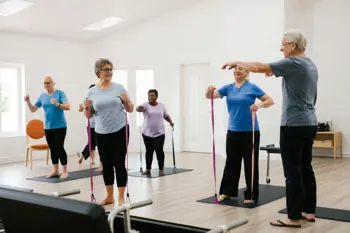
Search results for “best Pilates classes for seniors near me” commonly point to gentle, low-impact sessions focused on strength, balance, flexibility, posture, and functional movement. Knect Pilates in Scarborough describes reformer-based classes with hands-on guidance, beginner modifications, and support for conditions including arthritis, osteoporosis, spinal stenosis, hip replacements, multiple sclerosis, Parkinson’s disease, and degenerative joints. These examples show why senior suitability depends more on adaptation and supervision than on the Pilates label alone. 1
Class formats vary substantially. A senior-specific reformer class may use springs to assist movement and avoid floor transfers, while mat classes can emphasize controlled breathing, core stability, hips, posture, and coordination. The Studio Pilates in Atlanta identifies a dedicated Reformer for Seniors class for adults aged 60 and older, with low-impact work and no required floor work. Its guidance also distinguishes between group classes, semiprivate sessions, and one-to-one instruction for people with more specific needs. 2
Examples of senior-focused class models
Several researched programs illustrate different approaches. Gold Pilates at the St Clements Centre in Oxford is physiotherapist-led and designed for adults over 65 or people who find getting on and off the floor difficult. Its one-hour sessions combine standing, sitting, and optional mat exercises, with individual adaptations and support. The published course structure uses six-to-eight-week blocks, which means availability may follow a term schedule rather than a continuous drop-in model. 3
Other examples target different age groups and goals. The Center in Charlottesville lists a gentle, floor-based Mat Pilates for Active Aging class addressing fall prevention, core stability, flexibility, and everyday movement. Columbia’s Move with Ease class is described as a 50-minute mat session for adults aged 50 and older using balls, bands, and light weights. These formats may suit participants comfortable with floor work, but accessibility should be confirmed before attendance. 4 5
| Format | Common emphasis | Important screening question |
|---|---|---|
| Reformer | Supported strength, balance, and mobility | Can springs and equipment be adjusted for joint or balance limitations? |
| Mat | Core control, posture, flexibility, and coordination | Are standing or seated alternatives available? |
| Private | Individual goals, recovery, and detailed modification | Does the instructor have relevant senior experience? |
How to identify a suitable nearby option
A ZIP code or city is necessary to identify genuinely nearby classes, because the researched examples span Scarborough, Oxford, Atlanta, Charlottesville, Columbia, New York, St Albans, Redmond, and Brisbane. National directories can provide starting points, but schedules, accessibility, instructors, and class capacity are local details. Club Pilates maintains a studio locator, while YMCA branches may list Pilates-related or senior fitness programs separately by location. 6 7
Directories connected with established Pilates education systems can offer another research route. Balanced Body provides a studio and instructor directory, and Merrithew provides a Find a Studio directory. The Pilates Method Alliance also offers professional Pilates resources. Directory inclusion should not be treated as proof that a particular class is appropriate for an older adult. Class size, floor-transfer requirements, instructor qualifications, and experience with medical limitations still require direct verification. 8 9 10
Questions about safety and medical limitations
Older adults with osteoporosis, joint replacements, balance problems, cardiovascular disease, spinal conditions, or recent procedures should ask a healthcare professional whether Pilates is appropriate and should disclose relevant limitations to the instructor. Atlanta guidance advises caution with severe osteoporosis, post-knee or hip replacement recovery, acute spinal compression fractures, active rehabilitation, bed rest, and strict activity restrictions. Provider clearance may therefore be more important than whether a class is marketed specifically to seniors. 2
Pilates is often characterized as low impact, but low impact does not mean risk-free or universally suitable. Equipment resistance, spinal flexion, balance challenges, transfers, and unsupported positions can all affect suitability. A responsible studio should explain how exercises are modified, whether chairs or props are available, how emergency concerns are handled, and whether participants can opt out of floor exercises. These practical details are stronger indicators of safety culture than promotional language. 13
Comparing group, private, and small-class instruction
Group classes can provide social contact and a consistent routine, but individual attention may be limited when several ability levels share one room. Private or semiprivate instruction may be more appropriate for a participant beginning after surgery, managing significant balance limitations, or needing close technique observation. Knect lists private and duo classes as options for comfort and additional attention, while The Studio Pilates identifies private sessions as particularly relevant to injury recovery or specific goals. 1 2
Small classes can also combine supervision with community. Pilates on Collingwood Street in Brisbane describes 40-minute Ageing Strong Reformer, Strength, and Stretch programs with a maximum of eight participants. The programs separate functional weight-bearing work, reformer-based balance and mobility, and restorative stretching. This model may help participants select intensity according to their needs, although the published descriptions do not establish that every participant will receive clinical assessment or individualized medical programming. 11
What to expect from the wider exercise plan
Pilates can support core strength, posture, mobility, coordination, and balance, but it may not cover every element of an older adult’s recommended physical-activity pattern. The CDC advises older adults to include aerobic, muscle-strengthening, and balance activities each week, adapted to individual abilities and conditions. A Pilates class may contribute to strengthening and balance goals, while additional activity types may still be needed depending on personal health guidance. 12
The National Institute on Aging likewise emphasizes choosing physical activity suited to an individual’s ability and health circumstances. This makes ongoing maintenance a practical consideration: progress depends on regular attendance, appropriate challenge, clear communication about symptoms, and periodic reassessment when health or mobility changes. Course-based programs, such as Oxford’s six-to-eight-week blocks, may require advance scheduling, while local centers and studios can change days, times, instructors, or eligibility rules. 14 3
Sources
- Knect Pilates Studio, Pilates for Seniors in Scarborough
- The Studio Pilates, Pilates for Seniors Atlanta
- Pop-Up Pilates, Gold Pilates at St Clements Centre, Oxford
- The Center Charlottesville, Mat Pilates for Active Aging
- Active.com, Move with Ease, Columbia, Maryland
- Club Pilates studio locator
- YMCA branch locator
- Balanced Body studio directory
- Merrithew Find a Studio directory
- Pilates Method Alliance
- Pilates on Collingwood Street, Ageing Strong
- Centers for Disease Control and Prevention, Physical Activity Guidelines for Older Adults
- Cleveland Clinic, Benefits and Precautions of Pilates
- National Institute on Aging, Exercise and Physical Activity
Authored by MyTrendSpot team