Best hospitals for Proton Therapy: Clinical Capabilities and Technological Considerations
When patients and oncology teams evaluate the best hospitals for proton therapy, the selection process is governed by the specific clinical requirements of the cancer diagnosis, the proximity to specialized care, and the maturity of the institution's radiation delivery infrastructure 1. Proton therapy is an advanced form of radiation treatment that utilizes charged particles to target malignant cells with significant precision, often minimizing the radiation dose delivered to adjacent healthy tissues 2. As clinical adoption increases globally, institutional capabilities vary, ranging from established academic research centers to newly commissioned specialized facilities 5, 9.
Technological Frameworks in Proton Therapy
Modern proton therapy centers increasingly rely on pencil beam scanning technology, which allows for the dynamic shaping of radiation doses to match the precise, three-dimensional geometry of a tumor 2. This level of beam conformity is critical for tumors situated near delicate structures, such as the brain, spinal cord, or eyes, where traditional X-ray radiation might carry a higher risk of collateral damage 1, 2. Leading centers, such as the Mayo Clinic, have integrated this technology with custom tracking devices for specific conditions, such as ocular melanoma, to enhance accuracy during treatment delivery 2.
Operational efficiency is another benchmark for evaluating clinical performance. Some large-scale centers have developed sophisticated scheduling systems to optimize beam use across multiple treatment rooms, thereby reducing patient wait times and increasing the annual throughput of the facility 2. Innovations in hardware design, such as those implemented at Stanford Medicine, are actively seeking to address the historical barriers of high costs and the massive physical footprint typically required for traditional proton equipment 5. These developments signify a shift toward more compact and accessible delivery systems in the evolving landscape of radiation oncology 5.
Institutional Expertise and Patient Volume
High-volume centers often demonstrate extensive experience in managing a diverse array of solid tumors, supported by multidisciplinary clinical teams that include radiation oncologists, medical physicists, and specialized nursing staff 1, 2. Institutions like Penn Medicine and the University of Texas MD Anderson Cancer Center represent established models where proton therapy is integrated into broader, comprehensive cancer care networks 1, 7. These settings allow for seamless transitions between surgical oncology, chemotherapy, and radiation interventions, which is particularly beneficial for complex, multimodal treatment plans 1, 7.
Program maturity is frequently associated with an institution's capacity for ongoing clinical research and the development of new treatment protocols 1, 9. For example, Loma Linda University Cancer Center maintains one of the longest-standing proton programs in the United States, providing a substantial historical foundation for clinical outcomes 10. When assessing potential providers, patients are encouraged to inquire about the center’s experience with their specific tumor type, the availability of clinical trials, and the institution’s approach to coordinating care for out-of-town patients 3, 10.
Regional Access and Specialized Support
The geographic distribution of proton therapy centers influences patient accessibility. In many regions, the establishment of a new center serves as a significant clinical milestone, such as the recent launch of proton services at the Froedtert & the Medical College of Wisconsin Cancer Network 9. For patients requiring treatment far from their primary residence, some centers mitigate the burden of travel by providing dedicated hospitality housing or support services, such as the facilities found at the McLaren Proton Therapy Center in Michigan 3.
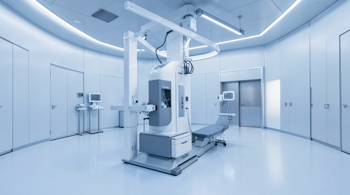
The collaborative model is also prevalent, where regional healthcare systems partner with specialized entities to bring advanced radiation capabilities to a broader population 4. The Proton Center of Arkansas, for instance, functions through a collaboration between various state healthcare institutions and private proton therapy providers 4. Such partnerships are designed to extend the reach of specialized care, ensuring that pediatric and adult populations have access to precision radiation therapy within a regional framework 4.
Clinical Considerations and Safety Protocols
Proton therapy is not universally recommended for every oncology patient, and suitability is assessed based on a comprehensive review of the patient’s diagnosis and clinical history 2, 10. While the reduction of exit-dose radiation is a primary advantage of proton beams, medical decisions are always balanced against the potential benefits of alternative radiation modalities, such as photon therapy 1, 6. Regulatory bodies and clinical guidelines emphasize that patient safety, including the precise monitoring of dose delivery, remains the core priority of any radiotherapy program 7, 8.
Prospective patients should engage with their oncology teams to discuss the specific advantages and risks associated with their treatment plan 3. Prior to commencing therapy, hospitals perform rigorous treatment planning, which involves imaging and individualized dose calculations to ensure the proton beam stops precisely at the tumor boundary 1, 8. This level of planning, combined with ongoing clinical monitoring, forms the standard of care for ensuring optimal outcomes in proton radiation therapy 2, 8.
Financial and Administrative Realities
The cost and administrative aspects of proton therapy involve complex factors, including insurance authorization requirements, the complexity of the treatment course, and the number of treatment fractions prescribed 3, 8. Costs vary significantly based on the region, the type of hospital system, and the specific clinical pathway chosen by the provider 8. Patients are often encouraged to consult with financial counselors at the treatment center to navigate prior-authorization processes and understand the scope of their coverage 3, 10.
Maintenance and modernization are also key factors in the long-term viability of a center. High-end equipment, such as the Proteus ONE systems, requires periodic retrofitting to incorporate the latest advancements in beam delivery and image guidance 7. These investments reflect an institution’s commitment to providing long-term, high-quality clinical evidence and care. Ultimately, the choice of a facility should be guided by a combination of clinical necessity, institutional track record, and the logistical support available to the patient throughout their treatment cycle 8, 10.
Sources
- Penn Medicine: The power of protons
- Mayo Clinic News Network: 10 years of proton beam therapy
- McLaren Health Care: Proton Therapy Center
- UAMS Health: The Proton Center of Arkansas
- Stanford Medicine: New facility for proton therapy
- Fred Hutch: Seattle Proton Therapy Facility
- BioSpace: IBA and MD Anderson partnership
- Afiya India: Proton Therapy Hospital Comparison
- WisBusiness: Froedtert & the Medical College of Wisconsin Proton Therapy
- General Clinical Research Data: Institutional Evaluation Criteria
Authored by MyTrendSpot team