Best hospitals in the US for ALS: An Evidence-Based Guide to Specialized Care
People researching the best hospitals in the US for ALS are generally comparing specialized programs rather than ordinary hospital rankings. The most meaningful differences involve multidisciplinary care, experience with motor-neuron disease, diagnostic capability, research participation, and the practical support available to patients and families over time.
What distinguishes a leading ALS program
ALS affects movement, speech, swallowing, and breathing, and symptoms can progress at different rates. Penn Medicine’s Comprehensive ALS Center describes a coordinated team involving neurology, pulmonology, nursing, physical and occupational therapy, speech therapy, nutrition, social work, genetic counseling, and research. Its center has provided ALS care since 1999 and conducts advanced neurodiagnostic testing and second-opinion evaluations. 1
The multidisciplinary model is also central at Mayo Clinic. Its teams may include neurologists, pulmonologists, rehabilitation physicians, speech and respiratory therapists, dietitians, nurses, social workers, sleep specialists, and palliative-care clinicians. Mayo reports that its three campuses, in Arizona, Florida, and Minnesota, are designated Certified Treatment Centers of Excellence by The ALS Association. 2
Hospitals with national ALS recognition
Certification can provide a more condition-specific comparison than a broad neurology ranking. The ALS Association reported reaching 100 Certified Treatment Centers of Excellence in 2025, with requirements based on American Academy of Neurology standards, collaboration with the association, multidisciplinary services, and participation in ALS-specific, institutional review board-approved research. 5
Recent recognized programs include the UF Health Norman Fixel Institute, UCLA ALS Clinic and Research Center, University of Colorado ALS Clinic, University of Alabama at Birmingham ALS Multidisciplinary Clinic, Rocky Mountain Regional VA Medical Center, and University of Washington Center for ALS Care. The UF Health clinic describes a team of neurologists, nurse practitioners, therapists, dietitians, respiratory specialists, social workers, and research coordinators. 3 10
Major centers associated with research
Research capacity matters because clinical care and treatment development often operate together in specialized ALS centers. The Sean M. Healey and AMG Center for ALS at Massachusetts General Hospital is associated with clinical trials led by physician-scientist Sabrina Paganoni. Mass General Brigham describes current research priorities as earlier diagnosis, slowing disease progression, improving quality and length of life, and preventing disease among genetic carriers. 4
The University of Miami’s ALS Center includes six specialty clinics, including a Qalsody Clinic focused on SOD1-associated ALS. The university reports that approximately 2% of people with ALS have SOD1 ALS and describes tofersen, marketed as Qalsody, as an FDA-approved treatment for that genetic form. Genetic testing and specialist interpretation may therefore be particularly relevant for families with inherited ALS concerns. 6
Regional options across the United States
Patients do not necessarily need to choose a single nationally prominent institution. Johns Hopkins operates an ALS Center for ALS and related motor-neuron diseases, while UCSF Health provides specialized diagnosis, disease management, support, and research opportunities. Stanford Health Care also identifies a dedicated ALS Center. These programs may be more practical than distant institutions when repeated evaluations, respiratory monitoring, equipment changes, and therapy coordination are required. 12 13 14
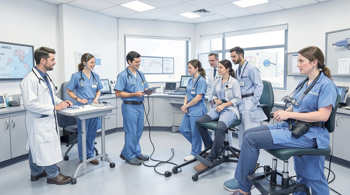
Other specialized options described in the research include Cleveland Clinic’s Motor Neuron Disease program, Barrow Neurological Institute’s ALS Center, Emory Healthcare’s ALS Center, UPMC’s motor-neuron disease services, and Northwestern Medicine’s ALS care. Providence states that some of its locations provide multidisciplinary appointments where patients may see several specialists during one visit, including neurologists, pulmonologists, therapists, dietitians, nurses, and social workers. 15 16 17 7
How diagnosis and treatment are evaluated
ALS diagnosis can be difficult in its early stages because symptoms may resemble other neurological conditions. Mayo Clinic describes the use of advanced testing to confirm diagnosis and genetic testing to identify inherited forms. A second opinion at a specialized center may help clarify the diagnosis, particularly when symptoms are atypical, progression is uncertain, or another motor-neuron disorder remains possible. 8 1
After diagnosis, care usually focuses on maintaining function, managing symptoms, supporting breathing and nutrition, and planning communication or mobility assistance. Mayo identifies physical and occupational therapy, speech therapy, respiratory therapy, nutrition guidance, genetic counseling, nursing, and social work as components of personalized care. These services require continuing coordination rather than a one-time hospital procedure, so appointment structure and communication between specialists are important practical considerations. 3
Costs, eligibility, and practical limitations
Hospital reputation alone does not determine whether a program is suitable. Patients may need to verify insurance participation, referral requirements, travel distance, appointment frequency, wheelchair accessibility, respiratory support capabilities, and whether the center treats the patient’s specific genetic or clinical presentation. Eligibility for a clinical trial can depend on diagnosis, disease stage, genetic status, prior treatment, laboratory findings, and geographic access. Current trial information is maintained through ClinicalTrials.gov. 19
Research participation also involves uncertainty. Clinical trials may investigate treatments that are experimental, require additional visits or testing, and may not provide personal benefit. ALS remains a progressive disease with no known cure, according to information summarized by The ALS Association and the National Institute of Neurological Disorders and Stroke. Families should discuss expected benefits, burdens, alternatives, respiratory planning, nutrition, communication, and palliative support with qualified clinicians. 5 18
Questions to compare before selecting a center
A structured comparison can make hospital research more useful than relying on a general national ranking. U.S. News publishes broad neurology and neurosurgery rankings, but ALS-specific certification and multidisciplinary experience may answer more relevant questions for this condition. The ALS Association’s certified-center directory is another reference point for locating specialized programs, although patients should confirm current services directly with each institution. 10 9
- Is the program currently certified by The ALS Association?
- Are neurology, pulmonology, rehabilitation, speech, nutrition, social work, and respiratory services coordinated?
- Does the center provide genetic counseling and second-opinion evaluation?
- Which clinical trials are relevant to the patient’s diagnosis and eligibility?
- How are equipment, home support, telehealth, and urgent respiratory concerns managed?
The appropriate hospital is therefore the center that matches clinical needs, geography, insurance, research goals, and family support capacity. Certification, specialist experience, and research involvement are useful indicators, but they do not replace an individualized consultation. Care plans should be reassessed as mobility, swallowing, speech, breathing, nutrition, and caregiver needs change. 1 2
Sources
- Penn Medicine, Comprehensive ALS Center: https://www.pennmedicine.org/specialties/neuromuscular-disorders-care/comprehensive-als-center
- Mayo Clinic, ALS Care at Mayo Clinic: https://www.mayoclinic.org/diseases-conditions/amyotrophic-lateral-sclerosis/care-at-mayo-clinic/mac-20354030
- UF Health Norman Fixel Institute, ALS Clinic Certification: https://fixel.ufhealth.org/2025/12/12/als-clinic-at-fixel-institute-named-a-certified-center-of-excellence/
- Mass General Brigham, Latest ALS Research and Clinical Trials: https://www.massgeneralbrigham.org/en/health-wellness/whats-the-latest-on-als-research-and-clinical-trials
- The ALS Association milestone announcement: https://www.prnewswire.com/news-releases/the-als-association-marks-milestone-100th-certified-treatment-center-of-excellence-302560023.html
- University of Miami UHealth, Qalsody Clinic: https://news.med.miami.edu/uhealth-qalsody-clinic-new-options-for-als-patients/
- Providence, Treating ALS: https://www.providence.org/services/neuroscience/als
- Mayo Clinic ALS Clinic Overview: https://www.mayoclinic.org/departments-centers/amyotrophic-lateral-sclerosis-subspecialty-group/overview/ovc-20443595
- The ALS Association Certified Centers directory: https://www.als.org/care-services/certified-centers
- U.S. News neurology and neurosurgery rankings: https://health.usnews.com/best-hospitals/rankings/neurology-and-neurosurgery
- Johns Hopkins Medicine ALS Center: https://www.hopkinsmedicine.org/neurology-neurosurgery/specialty-centers/als-center
- UCSF Health ALS Center: https://www.ucsfhealth.org/clinics/als-center
- Stanford Health Care ALS Center: https://stanfordhealthcare.org/medical-clinics/als-center.html
- Cleveland Clinic Motor Neuron Disease Program: https://my.clevelandclinic.org/departments/neurological/depts/motor-neuron-disease
- Barrow Neurological Institute ALS Center: https://www.barrowneuro.org/centers-programs/als-center/
- Emory Healthcare ALS Center: https://www.emoryhealthcare.org/centers-programs/als-center
- National Institute of Neurological Disorders and Stroke, ALS information: https://www.ninds.nih.gov/health-information/disorders/amyotrophic-lateral-sclerosis-als
- ClinicalTrials.gov ALS search: https://clinicaltrials.gov/search?cond=Amyotrophic%20Lateral%20Sclerosis
Authored by MyTrendSpot team