Best compression therapy for varicose veins: Clinical evidence, pressure selection, and practical limits
The best compression therapy for varicose veins depends on symptom severity, swelling, vein location, arterial circulation, and the person’s ability to wear the garment consistently. Recent evidence identifies 18 to 32 mmHg as an effective pressure range for uncomplicated varicose veins, while lower or higher pressures may be appropriate at different stages of venous disease. 1
How compression therapy works
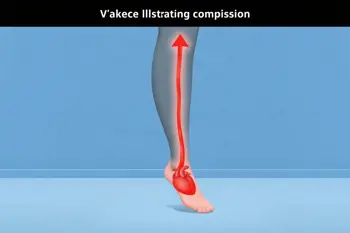
Graduated compression stockings apply the greatest pressure at the ankle and progressively less pressure higher up the leg. This external support narrows the diameter of major veins, limits blood pooling, and encourages venous blood to move toward the heart. The approach is intended to reduce venous hypertension and symptoms such as heaviness, aching, fatigue, and ankle swelling rather than remove the underlying varicose veins. 2
Compression is therefore a management strategy, not a cure for faulty valves or already enlarged veins. It may be useful for people who stand or sit for long periods, during pregnancy, after selected procedures, or when definitive intervention is unsuitable or undesired. Guidance is not completely uniform: some clinical recommendations emphasize intervention for suitable patients rather than using compression as the routine first treatment for uncomplicated varicose veins. 5
Choosing the pressure level
For uncomplicated varicose veins classified as CEAP C2, the 2025 review found that approximately 18 to 32 mmHg provides optimal symptom control. In everyday clinical terminology, this often corresponds to a moderate medical compression garment, commonly described as 20 to 30 mmHg. Lower pressure between 10 and 21 mmHg may be sufficient for early symptoms without significant swelling, while stronger compression should not be selected solely because it feels more therapeutic. 1
| Clinical situation | Pressure information reported in the research |
|---|---|
| Early symptoms, CEAP C0s to C1 | 10 to 21 mmHg |
| Uncomplicated varicose veins, CEAP C2 | 18 to 32 mmHg |
| Venous edema, CEAP C3 | 15 to 21 mmHg for prevention; around 40 mmHg for treatment |
| Active venous ulcer, CEAP C6 | 40 to 50 mmHg, generally under clinical supervision |
Pressure requirements rise when chronic venous disease causes edema, skin damage, or ulceration. Around 40 mmHg was reported as more effective for treating established venous edema, while lipodermatosclerosis also requires about 40 mmHg. Healed ulcers may need more than 30 mmHg to reduce recurrence risk, but higher pressure can reduce adherence because garments become harder to tolerate and apply. 1
Garment design and length
Knee-high graduated stockings are commonly sufficient when symptoms and visible veins are concentrated below the knee. Thigh-high or waist-high garments may be considered when venous involvement extends higher, although the appropriate length depends on anatomy, swelling distribution, and whether the garment stays correctly positioned. The garment should provide graduated pressure without rolling, bunching, or creating a narrow constricting band. 4
Material also affects practical treatment. Elastic stockings provide sustained pressure while worn, whereas short-stretch materials and adjustable compression wraps are often used for more severe edema or active ulcers. The pressure measured at the skin can vary with limb shape, movement, fabric, and application technique. A recent meta-analysis of five randomized trials involving 874 patients found that progressive elastic compression produced higher clinical improvement rates than graduated elastic stockings, although no significant difference in venous ejection fraction was found. 3
Fitting, timing, and maintenance
Correct measurement is central to both effectiveness and safety. Legs are generally measured when swelling is at its minimum, often in the morning, because an improperly sized garment may be too tight when swelling increases or too loose to deliver therapeutic pressure. Professional assessment can account for ankle and calf dimensions, leg length, skin condition, and the location of the venous problem. 6
Adherence is a major practical limitation. A garment that is technically appropriate but difficult to put on, uncomfortable, or prone to slipping may be worn inconsistently and provide limited benefit. Elastic fibers gradually lose performance, and the supplied research identifies replacement at roughly three- to six-month intervals as a common maintenance expectation. Washing and care instructions should follow the garment’s clinical guidance because fabric deterioration can alter delivered pressure. 4
When stronger or different compression is used
Compression for venous ulcers and advanced chronic venous insufficiency should not be treated as equivalent to routine support for uncomplicated varicose veins. Active ulcers were reported to heal fastest under approximately 40 to 50 mmHg, preferably using short-stretch materials or adjustable wraps. Healed ulcers may require pressure above 30 mmHg to help prevent recurrence, while severe skin changes such as lipodermatosclerosis may require about 40 mmHg. 1
Intermittent pneumatic compression is a different modality that uses an air pump and inflatable chambers to apply repeated pressure. It may be prescribed in severe cases or for non-healing venous leg ulcers, particularly when standard garments are difficult to use or insufficient as part of a supervised plan. Research on post-procedure compression, thrombosis, and post-thrombotic syndrome remains inconsistent, so duration and device selection should not be generalized across patients. 7
Safety, limitations, and clinical assessment
Compression should be selected cautiously when arterial circulation is impaired, or when significant heart failure, severe peripheral edema, or other complicating conditions are present. The supplied clinical guidance specifically limits routine recommendations for uncomplicated varicose veins to adults without arterial insufficiency, heart failure, or severe peripheral edema. Evaluation is also important when swelling is sudden, one-sided, painful, associated with skin breakdown, or accompanied by significant skin color changes. 5
Compression can reduce aching, heaviness, fatigue, and swelling, but it does not correct venous reflux or eliminate bulging veins. It should not delay assessment of persistent symptoms, ulcers, bleeding, skin changes, or suspected thrombosis. Clinical sources describe compression as one component of broader vein care, with intervention considered when symptoms persist or when the patient is an appropriate candidate for endovenous or surgical treatment. 6
Practical conclusions from the evidence
For many adults with uncomplicated symptomatic varicose veins and no identified circulation contraindication, a correctly fitted knee-high graduated stocking in the moderate range of approximately 20 to 30 mmHg is a commonly supported starting point. The broader evidence review places the useful C2 range at 18 to 32 mmHg, making fit, comfort, garment length, and consistent use as important as the nominal pressure printed on the package. 1
Higher pressures are not automatically better. Around 40 mmHg or more is associated with treatment of venous edema, advanced skin disease, and ulcers, but these situations require individualized assessment because tolerance and safety become more consequential. Progressive compression may offer higher symptom improvement than conventional graduated compression in limited trial evidence, although longer and higher-quality studies are still needed before it can be treated as universally superior. 3
Sources
- Phlebology, “What is the recommended compression pressure for different clinical indications?” DOI: 10.1177/02683555251410002
- West Medical, “Compression Therapy for Varicose Veins: What You Need”
- PubMed, “Therapeutic Outcomes of Graduated and Progressive Compression in Chronic Venous Disorders: A Meta-Analysis”
- Integrative Cardiology, “Compression Stockings for Varicose Veins: Complete Guide”
- DrOracle, “Which compression stocking class and length is appropriate for an adult with uncomplicated varicose veins?”
- Vein Solutions, “Compression Stockings: NICE / NHS Guide”
- Journal of Vascular Diseases, “Role of Compression and Physical Therapy in the Treatment of Chronic Venous Insufficiency”
- Charm Vascular Clinic, “Best Compression Stockings for Varicose Veins: Do They Really Work?”
- Fox Vein Care, “Compression Therapy: Benefits and Limitations”
Authored by MyTrendSpot team