Home Recovery for a Sciatica Flare-Up: A Clinical Guide to Safe Self-Care
Home recovery for a sciatica flare-up is usually aimed at calming an irritated nerve while preserving tolerable movement. Sciatica can cause pain, tingling, numbness, or weakness that travels from the lower back or buttock into the leg, and many uncomplicated cases improve over several weeks with conservative care. 1
What a flare-up may mean
Sciatica describes a symptom pattern rather than one single diagnosis. Irritation or compression of a nerve root can produce radiating pain, burning, tingling, numbness, or weakness along the sciatic nerve pathway. Common contributors include a herniated disk, changes that narrow the spaces where nerve roots exit the spine, or irritation of nearby tissues. The underlying cause affects recovery time and determines whether clinical assessment is needed. 3
A flare-up does not necessarily indicate a new injury. Symptoms may become more noticeable after prolonged sitting, a change in activity, lifting, twisting, or another position that exceeds current tolerance. The practical objective during the first phase is to reduce aggravating loads enough to sleep, walk, and perform essential tasks without making leg symptoms progressively worse. 2
Movement without overexertion
Remaining active as tolerated is generally preferred to staying in bed for extended periods. Short, easy walks can help maintain routine movement when walking does not substantially increase leg pain, numbness, or weakness. Positions should be changed regularly, because long uninterrupted periods of sitting or lying down may increase stiffness and reduce activity tolerance. 4
Activity modification means reducing unnecessary strain rather than stopping all movement. Heavy lifting, forceful twisting, prolonged sitting, and any task that clearly spreads pain farther down the leg are reasonable activities to limit during a flare. Normal activity can be resumed gradually as symptoms permit, with the response over the following hours used as a guide to whether the load was appropriate. 6
- Take brief walks if they remain comfortable.
- Change sitting, standing, and lying positions regularly.
- Stop or modify movements that produce sharp, shooting, or worsening leg symptoms.
Heat, ice, and supported rest
Short periods of ice or heat may provide symptom relief, although the more useful option is the one that makes movement or rest more comfortable. Ice may feel helpful early in a flare, while heat can reduce the sensation of muscle stiffness or spasm. Neither approach addresses every possible cause, and skin protection is important when using either modality. 1
Supported rest can be used between periods of gentle activity. A comfortable position may reduce pressure or tension temporarily, but remaining in one posture for long periods is not generally the goal. If a position increases radiating pain, tingling, numbness, or weakness, it should be changed rather than maintained in an attempt to force relief. 2
Gentle exercise and physical therapy
Exercise selection should be individualized because sciatica does not respond identically to one stretch or routine. Gentle movements that do not substantially increase leg symptoms may help preserve mobility, while aggressive stretching, forceful twisting, or pushing through sharp nerve pain can aggravate a sensitive nerve. A movement that feels acceptable in the back but increases symptoms farther down the leg warrants caution. 5
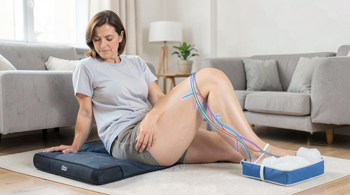
After pain begins to improve, a healthcare professional can design a physical therapy program focused on posture, core strength, range of motion, and gradual functional recovery. Physical therapy may also include stretching, strengthening, education, and activity modification. The purpose is not only short-term symptom control but also improved tolerance for daily activity and reduced risk of repeated limitation. 10
Medication considerations
Over-the-counter pain medicines may help some people, but medication choice depends on medical history, allergies, pregnancy status, kidney function, gastrointestinal risk, cardiovascular risk, and other medicines being taken. Nonsteroidal anti-inflammatory drugs can cause gastrointestinal, kidney, cardiovascular, or bleeding complications and are not appropriate for everyone. Product directions and advice from a pharmacist or clinician should guide use. 8
Clinical treatment for persistent sciatica may include anti-inflammatory medicines, corticosteroids, antidepressants, anti-seizure medicines, or opioids, but these options require professional judgment. Medicines do not remove the need to assess progressive weakness, persistent symptoms, or a pattern that fails to improve with self-care. Imaging is also not routinely recommended for uncomplicated symptoms unless serious disease is suspected or results would change management. 1
When home recovery is not enough
Medical assessment is appropriate when pain persists, repeatedly returns, limits ordinary function, or does not improve over several weeks. Severe pain or symptoms that fail to improve may lead a clinician to consider tests such as an X-ray, MRI, CT scan, or electromyography, depending on the examination and suspected cause. These tests are not automatically required for every flare-up. 1
Urgent evaluation is needed for new loss of bladder or bowel control, numbness around the genitals or anus, or severe or progressive weakness in the legs. Fever with severe back pain or major symptoms after trauma also requires prompt medical attention. These warning signs should not be managed by continuing a home exercise routine or waiting for routine improvement. 9
- New bladder or bowel control problems.
- Numbness in the saddle area around the genitals or anus.
- Severe or worsening weakness in one or both legs.
- Severe back pain accompanied by fever or following significant trauma.
What recovery typically involves
Most uncomplicated sciatica improves with nonsurgical care, but the pace varies according to the source and severity of nerve irritation. A useful recovery plan combines relative rest, position changes, tolerable walking, symptom-guided movement, and gradual return to normal tasks. Tracking whether symptoms are settling, staying stable, or traveling farther down the leg can help identify whether an activity is well tolerated. 3
Longer-term prevention generally depends on rebuilding strength, mobility, posture control, and confidence with ordinary movement rather than avoiding activity indefinitely. Bed rest has not been shown to improve outcomes for acute low-back pain, so prolonged inactivity can be counterproductive. When symptoms remain function-limiting or recur frequently, individualized clinical guidance is more appropriate than repeatedly testing increasingly intense home exercises. 7
Sources
- Mayo Clinic, “Sciatica: Diagnosis and treatment”
- NHS, “Sciatica”
- Cleveland Clinic, “Sciatica”
- MedlinePlus, “Sciatica”
- National Institute of Neurological Disorders and Stroke, “Sciatica”
- National Institute for Health and Care Excellence, Guideline NG59
- American Academy of Family Physicians, “Low Back Pain”
- American College of Physicians, Clinical Guidelines
- American Association of Neurological Surgeons, “Sciatica”
- Johns Hopkins Medicine, “Sciatica”
Authored by MyTrendSpot team