Ways to manage hypothyroidism at home: Evidence-informed daily care
Ways to manage hypothyroidism at home begin with consistent treatment and informed daily routines. Home measures can support comfort and general health, but they do not replace thyroid hormone therapy, laboratory monitoring, or clinical review when symptoms change.
Take levothyroxine consistently
Hypothyroidism is commonly treated with levothyroxine, a thyroid hormone replacement medicine taken by mouth each day. The treatment is intended to restore hormone levels to a healthy range, and many people require it on an ongoing basis. Symptoms do not reliably establish the correct diagnosis or dose, so medication routines should be based on a healthcare professional’s instructions rather than fatigue, weight changes, or cold sensitivity alone. 1
Levothyroxine should be taken exactly as directed, without independently changing the amount, stopping treatment, or switching thyroid products. Consistency helps clinicians interpret follow-up results and determine whether the prescribed dose remains appropriate. A regular routine, such as taking the medicine at the same time each day as instructed, can reduce missed doses and make changes in symptoms easier to discuss during appointments. 234
Plan around food and medicine interactions
Absorption is an important part of home medication management. Calcium, iron, antacids, some medicines, soy, and high-fibre meals may interfere with levothyroxine when taken too close to it. The appropriate separation interval can depend on the product and the person’s treatment plan, so a pharmacist or prescribing clinician should clarify timing rather than relying on a universal schedule. 56
Keeping a written list of prescriptions, over-the-counter medicines, vitamins, and supplements can help identify potential interactions. Biotin, which may be included in multivitamins or marketed for hair and nails, can affect thyroid blood-test results. Healthcare professionals should be told about biotin and other supplements before testing, because misleading results can complicate dose decisions or diagnosis. 1
Use nutrition to support general health
No single diet has been shown to cure hypothyroidism or reliably restore thyroid hormone production. A varied eating pattern that supplies adequate protein, fibre, and essential nutrients is generally more useful than restrictive diets promoted as thyroid “resets.” Iodine, selenium, zinc, iron, vitamin D, and vitamin B12 may be relevant to nutritional status, but supplementation is best guided by a clinician when deficiency or a related medical condition is suspected. 1213
Iodine requires particular caution. Iodine is necessary for thyroid hormone production, and dietary sources include dairy, eggs, fish, and seaweed, while iodized salt can contribute to intake. However, iodine deficiency is uncommon in many countries, and excessive iodine from supplements or large quantities of seaweed can worsen thyroid dysfunction in some people. Taking iodine specifically to treat hypothyroidism without professional advice is therefore not a reliable home strategy. 714
Support energy, movement, and sleep
Regular physical activity, adequate sleep, stress-management practices, and weight-management habits can support general wellbeing while medical treatment is being adjusted. These measures may help with fitness, mood, digestion, and daily functioning, but they cannot substitute for thyroid hormone replacement in established hypothyroidism. Persistent exhaustion, constipation, low mood, or weight change should not automatically be attributed to lifestyle or treated solely with exercise and diet. 1516
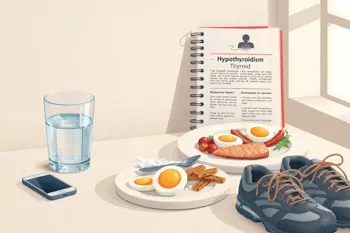
Activity should be matched to current energy, fitness, age, and other health conditions. A gradual routine is more practical than using strenuous exercise to compensate for untreated or poorly controlled hypothyroidism. Sleep habits can include a consistent schedule and attention to factors that disturb rest, while stress reduction may involve relaxation practices or professional support. Ongoing symptoms despite adherence warrant review for dose issues, absorption problems, or another health condition. 139
Monitor treatment at home and through testing
Home symptom notes can provide useful context, especially when they record medication timing, missed doses, new supplements, sleep, bowel changes, temperature sensitivity, mood, and changes in energy. Such records cannot confirm whether thyroid hormone levels are normal. Diagnosis and long-term management rely on blood tests, particularly thyroid-stimulating hormone, or TSH, with free T4 and sometimes T3 assessed when clinically appropriate. 18
TSH testing helps clinicians find and maintain the appropriate levothyroxine dose. Repeat testing is commonly needed after a dosage change and periodically after levels become stable, although the schedule is individualized. Results may also be affected by medicines and supplements, including biotin. A change in symptoms, a new medication, difficulty taking the prescribed routine, or continued abnormal results should prompt clinical communication rather than self-adjustment. 186
Know when home care is not enough
Pregnancy and plans to become pregnant require early communication with a healthcare professional because thyroid hormone needs often increase during pregnancy. Monitoring and dose requirements may change, making it unsafe to manage treatment through symptoms alone. People with autoimmune thyroid disease, prior thyroid surgery, radioactive iodine treatment, coeliac disease, kidney disease, diabetes, or medication changes may also need individualized advice about testing, nutrition, and absorption. 1013
Severe drowsiness, confusion, unusually low body temperature, slowed breathing, or loss of consciousness can indicate severe untreated hypothyroidism and require urgent medical care. These symptoms are different from the mild, gradual complaints often associated with an underactive thyroid. The central home-management principle is therefore continuity: take treatment as prescribed, avoid unverified supplement strategies, keep monitoring appointments, and seek professional assessment when symptoms are severe, persistent, or suddenly worse. 1112
Sources
- Mayo Clinic, “Hypothyroidism: Diagnosis and Treatment”
- National Institute of Diabetes and Digestive and Kidney Diseases, “Hypothyroidism”
- American Thyroid Association, “Thyroid Hormone Treatment”
- MedlinePlus, “Levothyroxine”
- National Health Service, “Underactive Thyroid: Treatment”
- U.S. Food and Drug Administration, “Levothyroxine Information”
- NIH Office of Dietary Supplements, “Iodine: Health Professional Fact Sheet”
- American Academy of Family Physicians, “Hypothyroidism: Diagnosis and Treatment”
- Cleveland Clinic, “Hypothyroidism”
- American Thyroid Association, “Thyroid Disease and Pregnancy”
- Merck Manual, “Hypothyroidism”
- British Thyroid Foundation, “Thyroid and Your Health”
- International Journal of Pharmaceutical Sciences, “Non-Pharmacological and Lifestyle Modifications for the Management of Hypothyroidism”
- Verywell Health, “Natural Treatments for People With Hypothyroidism”
- Acibadem Hospitals Group, “Eating Well With an Underactive Thyroid Gland”
- HTuse, “How to Heal Hypothyroidism at Home?”
Authored by MyTrendSpot team