Warning signs of glaucoma: symptoms, diagnosis, treatment and typical US costs
Key facts
- Open-angle glaucoma often has no early symptoms and may first affect peripheral vision gradually.
- A full glaucoma diagnostic workup is commonly estimated at $300 to $600 out of pocket in US guides. 1
- Common diagnostic tests include pressure measurement, visual-field testing, optic-nerve imaging and drainage-angle examination.
- Treatment options include eye drops, laser procedures and surgery, selected according to clinical findings and glaucoma type.
Warning signs of glaucoma are not always visible at the beginning of the disease. Glaucoma describes several conditions that damage the optic nerve, often in association with pressure inside the eye, although damage can also occur at a normal pressure. Because early changes may be silent, a qualified optometrist or ophthalmologist is needed for assessment rather than symptom-based self-diagnosis. 2
Early warning signs and symptom patterns
Open-angle glaucoma is the most common form and usually develops slowly. Early disease may produce no pain, blur or noticeable change, while gradual loss of peripheral, or side, vision can occur as optic-nerve damage progresses. Central vision may remain clear for a long period, making ordinary activities seem unchanged. Symptoms alone cannot establish glaucoma, and a normal-feeling eye does not rule it out. 2 3
Later-stage visual changes can include blind spots, reduced side vision and blurred vision. These signs have several possible causes, including conditions unrelated to glaucoma, so clinical examination is essential. Family history, optic-nerve appearance and eye-pressure readings are among the factors specialists consider when deciding whether monitoring or treatment is appropriate. 4
Sudden symptoms that require urgent assessment
Angle-closure glaucoma can develop differently from the slow pattern of open-angle disease. A sudden attack may involve severe eye pain, headache, blurred vision, halos around lights, nausea or vomiting. The pressure rise can be rapid because fluid drainage becomes blocked. Acute angle-closure glaucoma is treated as an emergency and requires same-day medical referral. 2 5
Prompt assessment is important because a symptom cluster involving intense eye discomfort and visual disturbance can have several causes, some of them time-sensitive. Dilating drops and certain medicines can trigger an attack in susceptible eyes, so medication history and previous eye findings should be reported to the assessing clinician. Treatment decisions depend on the angle anatomy, pressure, optic nerve and visual field. 2
How specialists diagnose glaucoma
A comprehensive eye examination typically combines several measurements rather than relying on a single pressure reading. Tonometry measures intraocular pressure, while optic-nerve examination looks for structural changes. Gonioscopy examines the drainage angle, and perimetry maps the visual field, including peripheral areas that may be affected before central vision. Optical coherence tomography can measure retinal nerve-fiber thickness. 1
Specialists also compare findings over time. A high pressure can increase risk without proving that glaucoma is present, and glaucoma can occur without a high pressure reading. The label “glaucoma suspect” may therefore lead to observation, repeat testing or treatment depending on the combined risk profile. The University of Utah’s John A. Moran Eye Center describes optic-nerve appearance, pressure and family history as important considerations. 4
Treatment options and how they work
Prescription eye drops are commonly used to lower intraocular pressure by reducing fluid production or improving fluid outflow. Latanoprost and timolol are examples discussed in US treatment-cost guides. Possible effects vary by medicine and can include eye irritation, redness, changes in eyelash growth or skin pigmentation with some agents, while beta-blocker drops may require special caution in people with certain heart or breathing conditions. 6
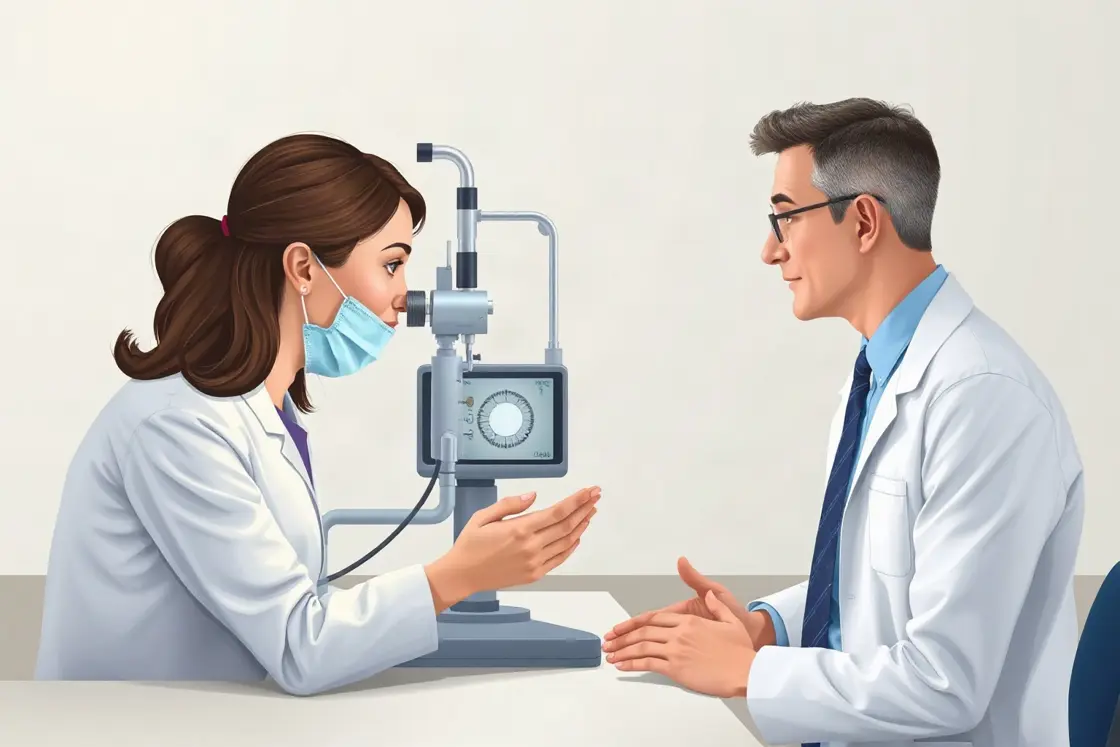
Laser treatment can alter fluid drainage or create an alternative pathway, depending on the glaucoma type. Selective laser trabeculoplasty is used in some open-angle cases, while laser peripheral iridotomy is associated with angle-closure management. Traditional operations, including trabeculectomy or tube-shunt surgery, create or support a route for fluid leaving the eye. Risks include inflammation, pressure changes, infection, bleeding and the possibility of additional treatment, so an ophthalmologist should explain suitability and follow-up.
Typical US costs in 2026
Published US cost estimates vary by location, facility, clinician, test combination and billing arrangements. A tonometry measurement is listed at about $30 to $80, visual-field testing at $50 to $150, optic-nerve OCT at $50 to $150, pachymetry at $50 to $100, and gonioscopy at $75 to $150. A full diagnostic workup is commonly estimated at $300 to $600 out of pocket. 1
| Service | Typical published estimate |
|---|---|
| Tonometry | $30 to $80 |
| Visual-field testing | $50 to $150 |
| Optic-nerve OCT | $50 to $150 |
| Full glaucoma workup | $300 to $600 |
A basic pressure check and dilated optic-nerve examination may be included within a comprehensive eye examination, while specialized tests can be billed separately. Public programs and private health plans apply different eligibility, referral and cost-sharing rules, and coverage can depend on whether testing is screening or medically indicated. Written estimates should distinguish professional fees, facility charges, tests, medicines and follow-up visits. 1
Where glaucoma care is provided
Initial assessment may take place with an optometrist or comprehensive ophthalmologist, while complex or progressive disease is commonly managed by an ophthalmologist with glaucoma subspecialty training. Examples of specialist settings include Penn Medicine’s ophthalmology services in the United States, the University of Utah’s John A. Moran Eye Center in Utah, and the Royal Victorian Eye and Ear Hospital in Melbourne, Australia. 2 4 5
Care pathways differ by country and region. A local optometry practice, hospital eye department or specialist eye centre can explain referral requirements, diagnostic capacity, follow-up intervals and expected charges. Hospital-based care may be appropriate for acute angle-closure symptoms or complex surgery, whereas routine monitoring can occur in outpatient eye clinics. A qualified professional should determine whether symptoms reflect glaucoma or another eye condition.
Long-term monitoring, risks and practical questions
Glaucoma management is generally ongoing because treatment aims to control a risk factor and limit further optic-nerve damage rather than restore damaged vision. Follow-up may include pressure checks, visual fields, optic-nerve imaging and medication review. Drops can be difficult to administer consistently and may cause local or systemic effects. Laser and surgery avoid daily drops for some patients but carry procedure-specific risks and still require review.
Useful questions for an eye-care appointment include which glaucoma type is being considered, what the pressure and visual-field results show, whether observation is reasonable, what side effects require contact with the clinic, and which costs are billed separately. A diagnosis cannot be made from warning signs alone. An optometrist or ophthalmologist should interpret examination results and set the treatment and monitoring plan.
Sources
- Glaucoma Testing Cost: Tonometry, VF Testing & OCT Pricing — VisionCostGuide: https://visioncostguide.com/guides/glaucoma-testing-cost/
- Glaucoma: https://www.pennmedicine.org/conditions/glaucoma
- Types of Glaucoma - Ophthalmology Advisor: https://www.ophthalmologyadvisor.com/factsheets/types-of-glaucoma/
- What It Means to Be a Glaucoma Suspect and What Happens Next | University of Utah Health: https://healthcare.utah.edu/the-scope/health-library/all/2026/03/what-it-means-be-glaucoma-suspect-and-what-happens-next
- Glaucoma in general practice: An updated framework for Australian general practitioners: https://exa.ai/library/publication/b3nvr625g03
- Glaucoma Treatment Cost: Eye Drops, Laser & Surgery Options — VisionCostGuide: https://visioncostguide.com/guides/glaucoma-treatment-cost/
Authored by MyTrendSpot team