Affordable upper-jaw dental implants near me: A Clinical Overview of Treatment Paths and Financial Considerations
When individuals search for options to address tooth loss in the upper jaw, they often encounter a wide spectrum of terminology and pricing structures. Dental implants serve as a common, long-term solution for restoring chewing function, speech clarity, and facial structure support 1. Understanding the clinical requirements and the various modalities available is essential for any patient navigating the path toward oral restoration. This overview provides a neutral analysis of the factors that influence treatment scope and the associated economic considerations encountered in modern dentistry.
Clinical Foundations of Upper-Jaw Implants
The upper jaw, or maxilla, presents unique anatomical challenges compared to the lower jaw. When planning for implants, clinicians must conduct a thorough evaluation of bone density and volume, as well as the proximity of the maxillary sinuses 1. In instances where bone volume is insufficient, additional procedures such as sinus augmentation or bone grafting may be required to create a secure foundation for the titanium posts 2. These preparatory steps are critical for the long-term success of the implant and ensure the structural integrity of the final prosthesis 3.
Implants function as artificial roots, and the complexity of the treatment varies depending on whether the goal is to replace a single tooth or an entire arch. Full-arch solutions, such as All-on-X, utilize four to six implants strategically placed to support a fixed bridge 3. This approach avoids the need for a separate implant for every missing tooth while providing a stable, non-removable result 5. Conversely, implant-supported overdentures typically rely on two to four implants per arch, providing a removable yet highly secure alternative to traditional, adhesive-dependent dentures 2.
Comparing Modern Treatment Modalities
Patients evaluating potential restorations generally choose between traditional methods and implant-supported solutions. Traditional dentures, which rely on suction and gum adhesion, are often the most cost-effective entry point, typically ranging from $1,500 to $3,000 per arch 2. However, these lack the bone-stimulating benefits of implants and may require daily adhesives 2. In contrast, implant-supported snap-on dentures offer a middle ground, providing greater security at a cost typically between $5,000 and $12,000 per arch 2.
For those seeking a permanent, non-removable bridge, All-on-X solutions represent the most extensive clinical intervention. These procedures involve attaching a fixed prosthesis to a titanium framework, often enabling same-day restoration where the patient leaves with a functioning set of teeth 3. While these procedures are often priced between $12,995 and $35,000 per arch depending on the complexity of the lab work and materials, they offer a level of stability and aesthetics that closely mimic natural dentition 2, 3, 9.
| Treatment Option | Mechanism | Primary Advantage | General Market Range |
|---|---|---|---|
| Traditional Dentures | Suction/Adhesion | Low initial cost | $1,500 - $3,000 |
| Snap-on Overdentures | 2-4 Implants | Security and removal | $5,000 - $12,000 |
| Fixed All-on-X | 4-6+ Implants | Permanent, fixed feel | $12,995 - $35,000 |
Financial Planning and Insurance Realities
Navigating the cost of dental implants requires an understanding of what is included in a quoted treatment plan. Affordable care is often achieved through efficient digital workflows, modular treatment plans, or staged procedures 4. It is standard practice to verify whether a quote covers the full scope of work, including extractions, grafting, temporary teeth, and the final zirconia or ceramic bridge 1, 9. Relying on a comprehensive written treatment plan is the most effective way to avoid unexpected expenses during the course of care 1, 4.
Insurance coverage for implants is notoriously limited. Many standard dental plans exclude implant procedures, and Original Medicare generally does not provide coverage for routine dental services 1, 7. While some Medicare Advantage plans may offer limited benefits, patients must confirm their specific plan rules and annual maximums before committing to a procedure 1. Due to these limitations, many clinics offer internal financing or payment plans, which allow patients to spread the cost of treatment over an extended period 4, 7.
Evaluating Providers and Specialized Care
When searching for local implant centers, patients are encouraged to look beyond pricing. Verifying the credentials of the oral surgeon or restorative dentist is a crucial step in ensuring high-quality outcomes 4. Resources such as the American Dental Association’s Find-a-Dentist directory can assist in identifying qualified professionals in specific regions 9. Additionally, some regions offer access to dental schools, which may provide lower-cost options through supervised student clinics, though these facilities often operate on different timelines and eligibility criteria than private practices 1, 10.
Community health centers represent another avenue for individuals seeking low-cost dental resources. While the availability of specialized implant services varies significantly by facility, these centers can provide essential referrals and foundational oral health care 1, 8. Regardless of the provider, candidates should always prioritize a thorough consultation where risks, benefits, and long-term maintenance requirements are fully disclosed 4. A transparent, judgment-free discussion regarding bone health and material choices is the hallmark of a professional clinical environment 1.
Risk Mitigation and Long-Term Maintenance
Dental implants require a commitment to long-term oral hygiene to prevent peri-implantitis and ensure the longevity of the restoration. Unlike natural teeth, implants are not susceptible to cavities, but the supporting gum tissue and bone remain vulnerable to infection 4. Proper maintenance involves regular professional cleanings and adherence to the care instructions provided by the clinic 5. Patients should be prepared for potential maintenance costs, including regular checkups to assess the stability of the attachments and the condition of the bridge 5.
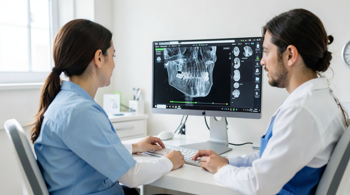
Furthermore, medical history plays a significant role in the candidacy for implant surgery. Conditions such as uncontrolled diabetes, heavy smoking, or significant bone loss can impact the success rate of the procedure 4. A rigorous pre-operative assessment using 3D imaging is standard to identify these risks before surgery begins 4, 9. Prospective patients should view the implant process as a partnership between their own dedication to home care and the precision of the clinical team, rather than a one-time, maintenance-free fix 5.
Summary of Professional Guidance
The pursuit of dental implants should always be guided by clinical necessity rather than the lowest advertised price. Patients are advised to solicit written estimates from multiple providers and to ensure that all comparisons are based on equivalent clinical scopes, materials, and procedures 4. By focusing on the quality of the prosthetic and the expertise of the surgical team, individuals can secure a result that provides both aesthetic satisfaction and lasting functional improvement 1. Transparent communication with dental professionals remains the most reliable strategy for achieving a successful, manageable treatment outcome 1, 4.
Sources
- National Institute of Dental and Craniofacial Research, https://www.nidcr.nih.gov/health-info/dental-implants
- Cleveland Clinic, https://my.clevelandclinic.org/health/treatments/10903-dental-implants
- Mayo Clinic, https://www.mayoclinic.org/tests-procedures/dental-implants/about/pac-20384622
- American Dental Association, https://www.ada.org/resources/ada-library/oral-health-topics/dental-implants
- American Academy of Implant Dentistry, https://www.aaid-implant.org/dental-implants/
- American Association of Endodontists, https://www.aae.org/patients/dental-implants/
- Medicare.gov, https://www.medicare.gov/coverage/dental-services
- Health Resources and Services Administration, https://findahealthcenter.hrsa.gov/
- American Dental Association, https://findadentist.ada.org/
- American Dental Education Association, https://www.adea.org/GoDental/Health-Professions-Programs/
Authored by MyTrendSpot team