Lyme Disease Symptoms: An Analytical Overview of Clinical Manifestations and Progression
Lyme disease is a bacterial infection transmitted to humans through the bite of an infected black-legged, or deer, tick 1. As the most common vector-borne infection in the northern hemisphere, it primarily affects individuals who spend time in endemic regions, including parts of North America, Europe, and Asia 6. Understanding the clinical progression of the disease is essential, as the symptoms manifest in distinct stages ranging from early, localized reactions to more severe, systemic conditions if the infection remains untreated 5.
Early-Stage Clinical Manifestations
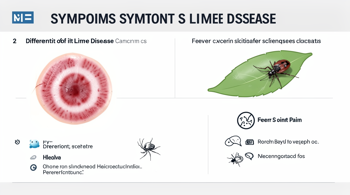
The earliest signs of Lyme disease typically appear between 3 and 30 days following an infected tick bite 1. The most recognizable symptom is a skin lesion known as erythema migrans, often referred to as a bull's-eye rash due to its target-like appearance 2. While this rash is a diagnostic hallmark, it does not occur in all cases; approximately 70% to 75% of infected individuals will develop it 1, 11. The rash typically starts at the site of the bite, expands gradually, and may reach up to 12 inches in diameter 1. It is important to note that the appearance of this rash can vary significantly based on skin tone, making it less distinct on darker skin 4.
Alongside dermatological changes, many patients experience non-specific flu-like symptoms during the early phase 2. These manifestations frequently include fever, chills, persistent headaches, profound fatigue, and generalized muscle and joint aches 1. Swollen lymph nodes are another commonly reported early indicator 8. Because these symptoms often mirror those of common viral illnesses, they are occasionally misidentified, which can lead to a delay in recognizing the infection and seeking medical intervention 4, 7.
Disseminated and Neurological Symptoms
If the bacterial infection is left untreated, it can spread beyond the initial site of the bite, leading to disseminated symptoms weeks or months later 1. Neurological involvement is a significant risk during this stage. Common manifestations include Bell's palsy, which presents as facial drooping, as well as severe, debilitating headaches and stiff neck 2, 8. Patients may also experience shooting nerve pains in the arms or legs, numbness, or tingling sensations in the extremities, indicating that the bacteria have begun to affect the peripheral or central nervous system 2, 13.
Cardiac and Rheumatologic Complications
Systemic complications of untreated Lyme disease can involve the cardiovascular and musculoskeletal systems. Lyme carditis occurs when the infection causes inflammation of the heart tissue, which may manifest as heart palpitations, irregular heartbeats, or lightheadedness due to the impact on the heart's electrical conduction system 2, 15. These cardiac events represent a serious medical situation requiring clinical attention. Similarly, Lyme arthritis is a frequent late-stage manifestation, typically characterized by intermittent or persistent, severe pain and swelling in large joints, with the knees being the most commonly affected area 14.
Diagnostic Challenges and Procedures
Diagnosing Lyme disease presents challenges because many symptoms overlap with other common clinical conditions 7. Healthcare providers typically rely on a combination of patient history, clinical examination, and physical symptoms-particularly the presence of a characteristic rash-to form an initial assessment 5, 6. Because only 25% to 30% of patients recall a specific tick bite, physicians must often investigate potential exposure based on the patient's history of being in endemic environments 6. Laboratory confirmation is usually supported by a modified two-tier testing (MTTT) protocol involving sequential immunoassays to detect specific antibodies 6.
Transmission Dynamics and Risk Factors
Transmission of the bacterium *Borrelia burgdorferi* generally requires that the tick remain attached to the human host for at least 24 to 36 hours 3, 6. The size of the tick significantly impacts the likelihood of detection; nymphal ticks are often the size of a poppy seed, rendering them difficult to spot and potentially allowing them to remain attached long enough to transmit the bacteria 6, 7, 20. Adult ticks are generally larger and more visible, which may lead to faster removal 6. Public health guidelines emphasize that testing the tick itself is not recommended as it does not reliably predict the risk of human infection 10.
Post-Treatment Considerations
While the majority of patients recover fully following appropriate antibiotic treatment, some individuals report lingering issues 3. These manifestations, sometimes categorized as post-treatment Lyme disease syndrome, can include persistent fatigue, cognitive impairment often described as brain fog, and intermittent joint pain 5, 16, 19. Research into these long-term outcomes remains ongoing, as the biological mechanisms underlying why some patients continue to experience symptoms after the bacteria have been eliminated are not fully understood by the medical community 5, 16. Medical professionals continue to stress that prevention-through the use of insect repellents, wearing protective clothing, and performing thorough tick checks after outdoor activities-remains the most effective strategy to mitigate the risks associated with Lyme disease 3, 10.
Sources
- https://familydoctor.org/condition/lyme-disease/
- https://ukhsa.blog.gov.uk/2026/06/30/what-is-lyme-disease-and-how-is-it-diagnosed-and-treated/
- https://www.urmc.rochester.edu/news/publications/health-matters/lyme-disease-prevention-and-symptoms
- https://www.health.harvard.edu/immune-and-infectious-diseases/the-problem-with-classic-lyme-disease-symptoms
- https://www.nature.com/articles/s41572-026-00691-0
- https://reference.medscape.com/p11/lyme-disease-2026a1000im7
- https://www.ama-assn.org/public-health/infectious-diseases/what-doctors-want-patients-know-about-lyme-disease
- https://www.geisinger.org/health-and-wellness/wellness-articles/2026/06/15/02/50/lyme-disease-symptoms
- https://nccid.ca/debrief/lyme-disease/
- https://reference.medscape.com/cc2/p10/prevention-diagnosis-and-treatment-lyme-disease-guideline-2026a1000es4
- https://www.cdc.gov/lyme/signs-symptoms/index.html
- https://www.mayoclinic.org/diseases-conditions/lyme-disease/symptoms-causes/syc-20374651
- https://www.hopkinsmedicine.org/health/conditions-and-diseases/lyme-disease
- https://www.arthritis.org/diseases/lyme-disease
- https://www.heart.org/en/health-topics/myocarditis/what-is-myocarditis/lyme-carditis
- https://my.clevelandclinic.org/health/diseases/15433-lyme-disease
- https://www.niaid.nih.gov/diseases-conditions/post-treatment-lyme-disease-syndrome
- https://www.mountsinai.org/health-library/diseases-conditions/lyme-disease
- https://www.globallymealliance.org/about-lyme/symptoms/
- https://www.webmd.com/a-to-z-guides/what-is-lyme-disease
Authored by MyTrendSpot team