Best hospitals in the world for treating heart failure: A comprehensive analysis of global cardiac care excellence
Finding appropriate care for heart failure requires an understanding of institutional expertise, as this chronic condition demands highly specialized, multidisciplinary management. Globally, specialized hospitals have seen significant growth, with the global specialty hospital market projected to reach approximately $176.53 billion by 2032 1. Patients increasingly seek centers that provide advanced, targeted care for complex conditions, utilizing both surgical solutions and long-term medical management 1. This article explores institutions recognized for their commitment to excellence in cardiac patient outcomes, research, and collaborative care models.
The Multi-Disciplinary Approach to Advanced Heart Failure
The most complex heart failure cases often require a collaborative effort between cardiologists and cardiac surgeons, rather than the isolated perspective of a single specialty 2. Centers such as the Leviev Heart Center at Sheba Medical Center emphasize a team-based framework where decisions regarding catheter-based procedures or surgical interventions are reached jointly 2. This model allows for the calibration of treatment based on the evolving needs of the patient, ensuring that clinical decisions reflect the full breadth of available expertise at the institution 2.
Global Benchmarks and Clinical Outcomes
Recognition from organizations such as Newsweek and U.S. News & World Report helps identify institutions that meet rigorous international standards. These rankings are often built upon surveys from medical professionals, accreditation data, and patient-reported outcome measures 1. For example, Cleveland Clinic is frequently highlighted for its significant volume of heart transplants and left ventricular assist device (LVAD) implantations 5. Reporting metrics from such centers include survival probabilities, which often exceed national benchmarks in specialized categories like one-year post-implant survival for continuous-flow LVADs 5.
Certification and Quality Standards
Hospitals demonstrating excellence in heart failure management often seek accreditations from major medical bodies, such as The Joint Commission or the European Society of Cardiology’s Heart Failure Association 4, 7. At the University Heart Centre Graz, achieving the ICARe-HF Level A accreditation confirms adherence to the strictest European quality standards 7. Such certifications reflect an institution's commitment to high standards of care, encompassing services like telemedical monitoring platforms and specialized outpatient clinics for cardiomyopathies 4, 7.
Regional Leadership in Cardiovascular Care
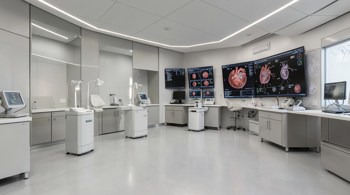
In the United States, several institutions consistently rank at the top for cardiology and heart surgery. NYU Langone Hospitals, NewYork-Presbyterian, and Mayo Clinic are frequently cited in national reports for their precision in outcome-based measurements 6. The selection of a facility often depends on a combination of clinical metrics, such as risk-adjusted patient outcomes, and the patient's ability to engage with a consistent, long-term management plan 3, 6. Internationally, institutions like Heidelberg University Hospital maintain large-scale facilities, including dedicated heart failure units, to manage thousands of procedures annually, ranging from cardiac MRI scans to complex valve interventions 8.
Integrating Research and Innovative Technology
Leading heart failure centers are defined not only by their clinical capacity but also by their active participation in clinical trials and innovation in mechanical support technologies. Institutions like Massachusetts General Hospital and Cedars-Sinai are noted for their contributions to advanced heart failure therapies and the development of new mechanical circulatory support devices 10. Furthermore, hospitals like the University of Tokyo are recognized for their leadership in cardiac innovation, including the development of artificial heart technology 10. Participation in research ensures that patients have access to the latest evidence-based management protocols 4.
Evaluating Institutional Suitability
When evaluating where to seek treatment, prospective patients should consider several factors that contribute to overall care quality. Medical boards and independent observers often look for specific benchmarks, such as a high annual volume of surgeries and ISO-certified quality management systems 8. Additionally, the availability of comprehensive support services, such as cardiac rehabilitation, cardiopsychological clinics, and ongoing outpatient management, is a hallmark of a robust heart failure program 7, 8. Understanding these institutional strengths allows for a more informed assessment of where to receive long-term cardiovascular care 3.
Sources
- Newsweek: World’s Best Specialized Hospitals 2026 – Cardiology
- Sheba Medical Center: Advanced Care at the Leviev Heart Center
- U.S. News & World Report: A Guide to Finding the Best Heart Care Near You
- Penn Medicine: Heart Failure Care and Management
- Cleveland Clinic: Heart Failure and Electrophysiology Outcomes Highlights
- Cardiovascular Business: The best hospitals in the United States for heart care
- Med Uni Graz Insights: Graz University Heart Centre receives top international accreditation
- Booking Health: Heart Failure Treatment in Germany
- Middle East Health: Outstanding expertise in cardiovascular diseases
- MedCentral: 10 Centers of Excellence in Cardiovascular Care
Authored by MyTrendSpot team