Best Thermal Wrap for Knee Pain: Evidence-Based Guidance for Choosing Heat, Cold, and Combination Therapy
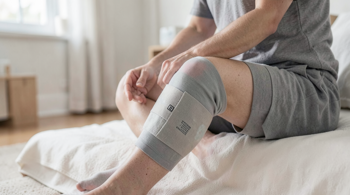
The search for the best thermal wrap for knee pain depends less on a single winning product than on the cause of discomfort, whether swelling is present, and how much adjustability is needed. Available formats include reusable hot-and-cold gel sleeves, portable air-activated heat wraps, and powered devices that combine temperature control with vibration or compression.
What thermal knee wraps are designed to do
Heat and cold serve different purposes. The American Academy of Orthopaedic Surgeons explains that heat may relax muscles and relieve stiffness, while cold can reduce pain and swelling.11 Mayo Clinic similarly describes both approaches as nonprescription measures that may help manage arthritis-related pain and stiffness when used appropriately.12 A wrap therefore should be selected according to the symptom being managed, rather than treated as a universal solution.
| Thermal approach | Typical use described in the research | Relevant limitation |
|---|---|---|
| Heat | Stiffness, tight muscles, preparation before activity | Can burn skin if excessively hot or used too long |
| Cold | Acute injury, inflammation, swelling, post-activity soreness | Requires careful skin protection and time limits |
| Contrast | Alternating heat and cold in powered systems | More complex and generally bulkier |
Reusable hot-and-cold sleeves
Reusable gel sleeves provide a relatively simple form of thermal treatment. The Old Bones Therapy Ice Sleeve is described as a nylon and spandex sleeve containing hot-or-cold gel, with 360-degree coverage, hands-free icing, and sizing from small through extra-large.9 A separate TheraICE review describes a stretchable sleeve intended to provide 360-degree hot-and-cold compression and use directly on skin or over clothing.4 These designs avoid loose ice bags but still require preparation, cleaning, and adherence to the manufacturer’s heating and cooling instructions.
- Useful features include broad joint coverage, a secure fit, reusable construction, and flexibility when frozen.
- Potential drawbacks include variable sizing, pressure that may feel uncomfortable, and the need to chill or heat the gel separately.
- Claims about reducing inflammation or accelerating recovery should be interpreted as product descriptions, not proof that a sleeve treats the underlying diagnosis.
Powered heat, cold, and vibration devices
Powered wraps add controls and integrated treatment programs but are substantially more equipment-intensive. Therabody’s RecoveryTherm Knee combines cooling, heating, contrast therapy, and three vibration modes in a one-size design made from neoprene and germanium-infused fabric.1 Medwell’s description reports up to 60 minutes of cold therapy, 90 minutes of heat therapy, or 30 minutes of contrast mode on one charge.5 A GQ product test characterized the device as bulky, with neoprene construction, three hook-and-loop closures, and a kneecap opening.2
| Feature | What to assess |
|---|---|
| Battery | Reported operating time, charging method, and whether the battery is removable |
| Fit | One-size adjustability, strap placement, kneecap opening, and pressure |
| Controls | Independent temperature and vibration settings, program clarity, and automatic shutoff |
| Portability | Weight, case, cables, and whether use requires an outlet |
Compression and alternative therapy formats
Some knee wraps emphasize compression or massage instead of temperature alone. A CINCOM knee massager is described as an open H-shaped device combining air compression with infrared heat, three massage modes, three pressure intensities, and two heat levels.8 The Anaconda Ice Recovery Knee Wrap is described as a compression brace using insulated gel packs for approximately 30 minutes of cold therapy and 360-degree coverage.6 These formats may be relevant when fit and hands-free use matter, but compression should not be assumed suitable for every swollen or recently injured knee.
Other designs target specific routines. Runner’s World reported that the Hyperice X2 is an electronic contrast therapy device intended for preparation before running and cooling afterward, while noting that it is heavy, bulky, and available in only one size.3 Heat Waves describes its InstaKnee Relief as a rechargeable wrap offering three heat levels from 45°C to 55°C and three vibration intensities, although the listed product was out of stock in the supplied research.10 Availability and specifications can change, so published features should be checked against current manufacturer information.
When heat or cold is more appropriate
Cleveland Clinic recommends heat for muscle tightness and stiffness and ice for acute injuries, inflammation, and swelling.13 Harvard Health likewise notes that heat can loosen stiff muscles and joints, whereas cold can reduce inflammation and numb pain.14 For arthritis, heat may be used to reduce stiffness before activity, while cold may help with pain and swelling after activity. An acute injury or visibly swollen knee generally calls for cold rather than heat during the early phase.
- Choose heat-oriented use for stiffness or tightness when the skin has normal sensation.
- Choose cold-oriented use after activity or when swelling and inflammatory discomfort are present.
- Do not interpret temporary comfort as evidence that the injury has healed.
- Persistent pain, major swelling, inability to bear weight, deformity, fever, or redness and warmth around the joint requires medical assessment.
Safety, fit, and maintenance considerations
MedlinePlus advises careful use of heat and cold treatments and protection of the skin from excessive temperature exposure.15 The FDA warns that heating pads and other heat-therapy products can cause burns, making product directions, suitable duration, and regular skin checks important.16 A wrap should feel comfortably warm rather than intensely hot. It should not be placed over an open wound or infected skin, or used where sensation or circulation is significantly impaired.
People with diabetes, neuropathy, vascular disease, or poor temperature sensation should consult a clinician before using a thermal wrap. Johns Hopkins Medicine emphasizes correct temperature and duration for both heat and cold therapy.18 The NHS identifies rest, ice, compression, and elevation as common self-care measures for short-term knee pain, while advising assessment for severe or persistent symptoms.17 NIAMS identifies heat and cold applications as commonly used nondrug approaches for osteoarthritis symptom management, not replacements for diagnosis or rehabilitation.19 Portable air-activated ThermaCare Knee and Elbow HeatWraps provide extended heat without electricity, but remain heat products requiring careful use.20
How to compare a wrap objectively
The most practical comparison begins with the symptom pattern, then considers coverage, fit, temperature control, session duration, and cleaning requirements. A basic reusable sleeve may be adequate for occasional cold or heat, while a powered device offers greater control but introduces battery charging, weight, electronics, and a higher maintenance burden. Product descriptions can also contain wellness claims, such as increased circulation or far-infrared effects, that should not be treated as established treatment outcomes without independent clinical evidence.1
| Decision factor | Questions to ask |
|---|---|
| Primary symptom | Is the problem stiffness, swelling, post-exercise soreness, or an undiagnosed injury? |
| Coverage | Does the wrap cover the front, sides, and back of the knee? |
| Control | Can heat, cold, vibration, or compression be used independently? |
| Safety | Are temperature limits, session guidance, and shutoff functions clearly documented? |
| Real-world use | Will the weight, charging, preparation, and cleaning routine be manageable? |
Sources
- Holabird Sports, Therabody RecoveryTherm Hot & Cold Wrap Knee
- GQ, Therabody RecoveryTherm Knee Review
- Runner’s World, Hyperice X2 Review
- IMS Orthopedics, TheraICE Knee Wrap Review
- Medwell Store, RecoveryTherm Knee Therapy Wrap
- Anaconda Performance, Ice Recovery Knee Wrap
- IMS Orthopedics, CINCOM Knee Massager Review
- Old Bones Therapy, Ice Sleeve
- Heat Waves, InstaKnee Relief
- American Academy of Orthopaedic Surgeons, Using Cold and Hot Therapies
- Mayo Clinic, Arthritis Pain Management
- Cleveland Clinic, When to Use Ice vs. Heat
- Harvard Health Publishing, When to Use Ice or Heat
- MedlinePlus, Heat and Cold Treatment Instructions
- U.S. Food and Drug Administration, Heating Pads and Heat-Therapy Products
- National Health Service, Knee Pain
- Johns Hopkins Medicine, Heat and Cold Therapy
- National Institute of Arthritis and Musculoskeletal and Skin Diseases, Osteoarthritis
- ThermaCare, Knee and Elbow HeatWraps
Authored by MyTrendSpot team