Upcoming police department vehicle liquidations: Market Trends and Operational Procedures
Exploring upcoming police department vehicle liquidations offers public buyers an analytical look at decommissioned and seized assets. This article reviews the mechanical, financial, and regulatory frameworks of these events 1.
The Lifecycle of Municipal Fleet Modernization and Decommissioning
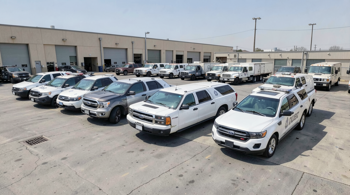
Many municipal safety agencies manage fleet operations through decommissioning programs. Decommissioned vehicles represent a standard administrative output of police operations. Over time, heavy operational demands require departments to retire high-mileage units. For example, the City of Galesburg decommissioned several 2020 Ford Explorer Police Interceptor SUVs through an online auction platform 1. These fleet modernization schedules dictate the periodic release of patrol cars, unmarked sedans, and specialty vehicles into the public secondary market.
State-level purchasing divisions coordinate new fleet acquisitions and old fleet retirements. The Alabama Department of Finance, Division of Purchasing, recently managed bidding processes for new 2026 and 2027 Chevrolet Tahoe Police Pursuit Vehicles 2. Simultaneously, local agencies like the South Windsor Police Department utilize structured bidding to balance their vehicle rosters 3. These transitions create a predictable flow of retired utility assets and specialized tactical platforms that municipal governments must systematically liquidate.
Understanding Impound and Forfeiture Asset Management
Apart from standard fleet decommissioning, public liquidations often feature assets obtained through legal seizure and impound procedures. These events involve vehicles abandoned at municipal facilities or seized during law enforcement operations. For instance, the Kansas City Police Department hosts bi-weekly impound auctions to clear its storage facilities of abandoned vehicles 4. Similarly, the Villupuram Police Department organized the public sale of 113 vehicles confiscated during prohibition and drug-related investigations 5.
In many situations, multiple law enforcement entities consolidate their confiscated inventory to streamline costs. A joint auction held in Davie, Florida, combined seized vehicles from the Broward Sheriff's Office, the Palm Beach County Sheriff's Office, the City of Margate, and the City of Boca Raton 6. These forfeiture liquidations present a diverse inventory. However, because these vehicles are acquired via legal enforcement rather than routine service, their mechanical history is completely undocumented.
Key Operational Procedures and Bidding Requirements
Participating in a law enforcement vehicle liquidation requires strict adherence to registration and financial verification protocols. Unlike traditional retail environments, government liquidations mandate pre-qualification measures to ensure all transactions are legally binding. In several jurisdictions, such as the Orange County Sheriff's Office auctions, bidders must register online and verify their age and identification credentials before participating in the sale 7. Many of these platforms operate with a zero-tolerance policy for non-payment, where incomplete transactions lead to immediate bidding bans 4.
Furthermore, financial deposits are standard administrative safeguards. The joint sheriff and municipal auction in Davie, Florida, required participants to secure a 1,000 dollar certified refundable deposit prior to viewing or bidding on any vehicles 6. Other entities, like the Kansas City Police Tow Lot, charge a 300 dollar deposit to the bidder's card upon registration, which is refunded to non-winning participants within a week 8. Buyers must also account for additional administrative fees, such as a 10% buyer's premium or fixed lot processing fees, which are standard components of the final invoice 1 8.
Regional Analysis of Scheduled Public Municipal Auctions
To illustrate the operational differences across various municipal sales, the following table organizes scheduled and completed public auction parameters across multiple regional departments:
| Agency | Platform/Location | Inventory Scale | Key Requirement |
|---|---|---|---|
| Pinellas County Sheriff's Office | JJ Kane (Online) | ~12 vehicles | In-person viewing dates posted online 9 |
| Norfolk Police Department | Auction757.com (VA) | 79 to 89 vehicles | Multi-date recurring monthly schedule 10 11 |
| Winsted Lester Prairie Police | Jeff Martin (MN) | Single Dodge Ram 2500 | Sold strictly as-is with in-person inspection 12 |
| Hampton Police & GB's Towing | Auction757.com (VA) | 58 vehicles | Onsite inspection and online bidding 13 |
These structural variations highlight the necessity of reviewing individual regional guidelines. While some departments manage low-volume, single-vehicle listings, others coordinate large-scale monthly liquidations exceeding 80 units. Buyers must verify the specific digital platform or third-party auctioneer contracted by each municipality.
Post-Auction Logistics, Transport, and Inspection Challenges
Acquiring a decommissioned public safety vehicle presents significant logistical and mechanical considerations. Because most of these units are sold as-is without warranties, bidders are solely responsible for conducting background history checks and mechanical assessments. Many impounded or abandoned vehicles, such as those processed through the Kansas City Police Tow Lot, are auctioned without keys, meaning buyers cannot verify mechanical functionality prior to bidding 4. Experienced buyers frequently rely on third-party history reports, such as CARFAX or AutoCheck, to assess the past service records of retired fleet units before placing bids 10.
Once an auction closes, winning bidders must navigate strict removal timelines and transport laws. Most municipalities do not provide shipping services and require off-site transport arrangements. At the Powell Auction and Realty police seizure events, local pickup must be completed within a tightly defined window immediately following the payment deadline 14. Failure to remove vehicles within the designated timeline often results in substantial daily storage fees or eventual forfeiture of the asset 8. Furthermore, transport must be planned carefully, as non-operational vehicles require flatbeds or towing services, and decommissioned municipal cruisers must have all official markings removed before hitting public roads.
Compliance and Regulatory Realities for Public Asset Disposals
Government asset liquidations are subject to rigorous regulatory oversight to prevent legal liabilities and public safety concerns. When police departments retire active patrol units, they are legally required to remove specialized emergency equipment. In Jefferson County, Washington, retired police Dodge Chargers and Ford Escapes are stripped of their light bars, sirens, and official decals before being released to the public, although mounting holes and decal residues often remain visible 15. This ensures that civilian buyers do not inadvertently violate impersonation laws.
In some advanced regulatory environments, vehicle liquidation undergoes severe restriction. Certain jurisdictions require designated vehicles to be sold strictly for scrap or parts rather than road use. For instance, the Tochigi Prefecture Police Headquarters in Japan conducts public biddings where retired police units must undergo complete press and shredder destruction, with contractors required to submit detailed photographic proof of the destruction process 16. These stringent recycling and decommissioning laws highlight the complex regulatory framework governing the final lifecycle of public safety transport assets.
Sources
- Galesburg Fleet Report
- Alabama PPV Records
- South Windsor Police
- KC Tow Lot Terms
- Villupuram Police Notice
- Florida Notice Registry
- Orange County Sheriff
- KC Impound Terms
- Pinellas Auction Notice
- Norfolk May Listing
- Norfolk Feb Listing
- Winsted Police Notice
- Hampton Police Terms
- Powell Seizure Registry
- Jefferson County Surplus
- Tochigi Police Tender
Authored by MyTrendSpot team