Police auction cameras and photography equipment: A neutral guide to sources, condition, and bidding risk
How police camera auctions are structured
Police auction cameras and photography equipment are generally part of broader surplus or seized-property sales rather than dedicated camera-only events. A Miramar, Florida, municipal auction included vehicles, police supplies, and several used Nikon digital cameras, with some cameras offered with lenses and others without them. The report stated that working condition was unknown, illustrating why individual lot descriptions matter more than the agency category alone. 1
Government auction systems may operate online, in person, or through mail-in bids, and the owning federal agency may conduct the sale itself or use an auction company. USAGov identifies government auction inventory as ranging from computers and laboratory equipment to artwork, boats, and motor vehicles. Cameras may therefore appear as a small category within a mixed public-property sale rather than as a recurring specialist inventory. 2
Where listings may appear
GovDeals describes an online marketplace used by government agencies to sell surplus and other public-sector property, including electronics and photographic equipment. Public Surplus is another online marketplace used by agencies to dispose of surplus property. Availability changes by agency, location, and disposal schedule, so the presence of a camera category does not establish that a particular model is currently listed. 3 4
Law-enforcement-supplied property may also be handled through PropertyRoom.com, while Municibid hosts online auctions for municipalities and other public agencies. Broader auction directories such as HiBid and AuctionZip can carry listings from auction companies, including photography equipment, but an aggregator or directory is not itself proof of government ownership or police custody. The seller identity and original lot documentation remain important verification points. 5 6 7
Equipment types and recent examples
Potential inventory can include camera bodies, interchangeable lenses, flashes, tripods, video equipment, bags, cases, filters, cords, and related electronics. The Miramar report specifically identified used Nikon digital cameras, including a Nikon D7500 DSLR, and noted that models were available with and without lenses. A separate Jacksonville Sheriff’s Office procurement notice listed Nikon Z7 II bodies, Nikon lenses, Godox speedlites, Manfrotto tripods, TTL cords, Pelican rolling cases, and lens and filter kits. 1 10
Procurement notices are different from auctions, but they show the type of equipment law-enforcement agencies may acquire for operational use. The Jacksonville notice described a one-time purchase and gave an August 21, 2026, response deadline. An Indiana State Police request titled “Camera and Accessories” was released February 16, 2026, and closed March 23, 2026. These records concern agency purchasing, not public resale, and should not be treated as auction listings. 10 11
Condition, testing, and missing components
Condition is a central uncertainty in surplus photography equipment. The Miramar account expressly said the working condition of the Nikon cameras was unknown, even while describing a D7500 listing and its stated retail reference. Unknown status can encompass unverified electronics, absent batteries or chargers, worn connectors, damaged screens, lens defects, or incomplete accessories, although a specific lot must be evaluated only from its own description and photographs. 1
As-is sales create maintenance and compatibility risks after purchase. A camera body may require proprietary batteries, a charger, storage media, firmware support, or a compatible lens, while a flash may require a particular trigger or cable. Listings can also contain cosmetic wear and incomplete sets. Auction buyers should review photographs, serial or model information when provided, testing statements, included accessories, inspection opportunities, and return terms before assigning value to a lot.
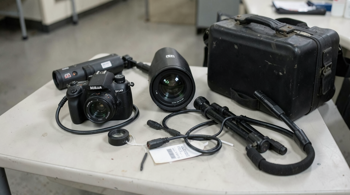
- Confirm whether the body, lens, accessories, and case belong to the same lot.
- Check whether power supplies, batteries, caps, cords, and memory media are included.
- Distinguish “tested,” “untested,” and “working condition unknown” descriptions.
Fees, logistics, and financial exposure
A winning bid does not necessarily represent the full transaction amount. In the Miramar auction, the buyer’s premium was 13 percent, meaning the fee was added to the winning bid price. Other possible obligations depend on the platform and lot, including shipping, collection arrangements, taxes, handling charges, and packaging. These terms should be read in the individual auction rules rather than inferred from the camera’s brand or model. 1
Pickup and delivery can materially affect the practicality of equipment lots. A camera body may be relatively compact, while a case, tripod bundle, or mixed electronics lot may require special packaging or local collection. Auction platforms can set separate payment windows, collection appointments, or geographic restrictions. Government and contracted auction procedures may also differ, so seller instructions, location, inspection rules, and dispute provisions should be documented before a bid is considered.
Legal oversight and eligibility issues
Federal surplus and forfeiture channels are governed by different authorities from municipal surplus sales. GSA Auctions is the federal government’s online platform for surplus personal property and other government assets. The U.S. Marshals Service states that its Asset Forfeiture Program manages and disposes of property seized or forfeited to the United States, while the Treasury Department publishes information concerning federal auctions and sales of seized or forfeited property. 8 9
Eligibility, payment, title, and release conditions can vary according to whether property is surplus, seized, or forfeited. A police-supplied item is not automatically evidence, and an auction listing is not automatically a federal sale. Buyers should verify the legal seller, title or ownership documentation where relevant, prohibited purchasers, payment requirements, and any restrictions on removal or use. Cross-border shipping, export rules, and privacy-related concerns may also create additional complications depending on the equipment and jurisdiction.
Research standards for evaluating a lot
A disciplined review separates confirmed facts from assumptions. Confirm the exact model, included components, stated condition, seller or agency, sale method, buyer’s premium, taxes, shipping or pickup requirements, and closing rules. Compare the complete cost and likely servicing needs with the value of a tested equivalent, while recognizing that the research record does not provide a universal market price or a guarantee that any particular camera is available. 1 2
Independent records can help clarify context but should not replace the official lot page or procurement document. John Pye’s camera category, for example, displayed completed accessory lots involving Kenro binoculars and prices in pounds, demonstrating that general camera categories may include adjacent optical goods and non-U.S. sales. A French procurement notice for Saint-Herblain municipal police concerned acquisition of individual cameras and accessories, with proposals due September 3, 2026, but it was a procurement opportunity rather than a resale auction. 13 12
Sources
- Miramar News
- USAGov
- GovDeals
- Public Surplus
- PropertyRoom.com
- Municibid
- GSA Auctions
- U.S. Marshals Service
- U.S. Department of the Treasury
- Jacksonville Sheriff’s Office camera equipment procurement notice
- Indiana State Police camera and accessories RFQ
- BidsFactory, Saint-Herblain municipal police notice
- John Pye Auctions
Authored by MyTrendSpot team