What to Look Out For: Reproductive Health Changes: A Clinical Reporting Guide
Recognizing a Change From Personal Baseline
Reproductive health varies across individuals and across life stages. A period that arrives a few days early, temporary fatigue, or occasional bloating may be part of an established pattern. The more useful question is whether a symptom is different for the individual, continues over time, becomes more frequent, or gradually worsens. Tallahassee Memorial HealthCare and Mayo Clinic reporting both emphasize that new or persistent changes deserve attention, even though many have noncancerous explanations.12
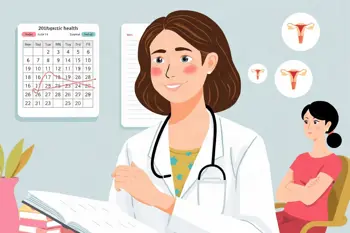
Keeping a record of cycle timing, bleeding intensity, pain, discharge, medications, contraception, and related symptoms can help distinguish an isolated variation from a sustained change. Menstrual patterns may be affected by stress, illness, weight changes, sleep, exercise, hormonal contraception, thyroid disorders, polycystic ovary syndrome, fibroids, and perimenopause. A substantial departure from an established pattern, particularly when combined with pelvic pain, fatigue, weight changes, or hair changes, is more informative than a single unusual day.469
Menstrual Timing and Flow
Irregular cycles can occur during puberty, periods of stress, and hormonal transitions, but persistent changes may reflect conditions requiring evaluation. Reported possibilities include PCOS, thyroid disorders, hormonal imbalance, fibroids, infection, or other gynecological conditions. The relevant warning pattern is not simply that a cycle differs from an average calendar, but that it becomes drastically longer, shorter, unusually heavy, unusually light, or repeatedly unpredictable compared with the person’s usual experience.469
Heavy or prolonged bleeding can affect daily life and may be associated with fibroids, hormonal causes, or bleeding disorders. The supplied clinical information identifies bleeding that requires changing a pad or tampon every hour as a pattern that commonly warrants investigation. Bleeding between periods, after intercourse, or after menopause also deserves professional assessment. Menopause is defined in the supplied Mayo Clinic material as 12 months without a menstrual period, making any subsequent bleeding a distinct symptom rather than a routine cycle variation.2412
Pelvic Pain, Cramps, and Sexual Pain
Mild cramping during menstruation is common for many people, but pain that is severe, persistent, occurs outside periods, or progressively worsens should not automatically be treated as normal. Reported possible causes include endometriosis, ovarian cysts, fibroids, pelvic infection, and other gynecological conditions. News18 reporting notes that severe period pain can disrupt school or work and may be associated with endometriosis, while Mayo Clinic guidance highlights new or worsening pelvic pain as a reason for clinical discussion.23
Pain during intercourse, unexplained pelvic pressure, and lower-abdominal discomfort are additional changes to document. Painful intercourse can have physical, hormonal, infectious, or emotional contributors, so the symptom alone does not identify a single diagnosis. The assessment generally depends on its timing, severity, recurrence, associated bleeding or discharge, and relationship to menstruation. A change that continues or interferes with ordinary activity provides stronger evidence for evaluation than occasional, familiar discomfort.41015
Discharge, Odor, and Infection-Related Changes
Vaginal discharge can vary naturally in amount and consistency, but changes in color, texture, odor, or quantity may signal a vaginal or reproductive health problem. Health reporting identifies unusual discharge, especially when accompanied by itching, irritation, pelvic pain, or an unpleasant odor, as a symptom that should be assessed. Possible explanations include bacterial vaginosis, yeast infection, sexually transmitted infection, hormonal changes, or other conditions, and appearance alone cannot establish the cause.3414
Bleeding after intercourse is another change that should be discussed with a healthcare professional. It can have causes other than cancer, including irritation, infection, cervical changes, polyps, or hormonal effects, but repeated or unexplained bleeding should not be dismissed. Cervical health guidance includes screening recommendations that vary according to age and personal history, meaning symptom evaluation and routine screening are related but separate parts of reproductive care.2718
Hormonal, Systemic, and Perimenopausal Signals
Reproductive endocrine changes can appear outside the reproductive organs. Fatigue, unexplained weight gain or loss, thinning hair, excess hair growth, acne flare-ups, or changes in menstrual regularity may accompany thyroid dysfunction, PCOS, or other hormonal disturbances. These signs are not diagnostic by themselves, but their combination with a sustained menstrual change increases the value of a clinical review. Thyroid function is specifically associated with women’s reproductive health in the supplied American Thyroid Association material.41720
Perimenopause may bring fluctuating cycles, hot flashes, night sweats, vaginal dryness, and changes in sexual well-being. The transition is commonly associated with the years before menopause, although the timing varies. A symptom should not be attributed automatically to age when it is unusually intense, begins earlier than expected, or occurs with abnormal bleeding, new pelvic pain, or other concerning changes. Hormonal shifts can also affect libido, but persistent pain or distress remains relevant regardless of the presumed cause.91619
Fertility Changes and When Assessment Matters
Fertility changes gradually with age because egg quantity and quality decline over time. The supplied fertility reporting states that this decline becomes more noticeable after age 35, while also noting that natural conception remains possible for many people in their early 30s and beyond. Age does not make pregnancy impossible, but it can reduce the chance of conception in a given month and increase miscarriage and chromosomal-abnormality risks.5
Difficulty conceiving, irregular periods, severe menstrual pain, or repeated pelvic symptoms should not automatically be explained by stress or normal aging. Conditions such as endometriosis, PCOS, thyroid disorders, fibroids, infections, or other hormonal problems may influence reproductive health and fertility. A single test, including an ovarian-reserve marker, cannot by itself describe overall fertility. Evaluation is shaped by symptoms, reproductive history, age, cycle patterns, and the duration of difficulty conceiving.356
Interpreting Risk Without Assuming the Worst
Many symptoms associated with gynecological cancers also result from common, noncancerous conditions. The five gynecological cancers identified in the supplied Mayo Clinic material are ovarian, endometrial, cervical, vulvar, and vaginal cancers. Overlapping symptoms include unusual bleeding or discharge, bleeding after menopause or intercourse, pelvic pain or pressure, persistent bloating, early fullness, and changes in bowel or bladder habits. These symptoms do not establish cancer, but persistence or progression makes medical evaluation important.12
Health information cannot replace an examination, testing, or individualized guidance. Reports from the Eve Appeal cited by The Independent found that 9% of surveyed women had sought advice from AI platforms for gynecological symptoms, while 24% felt falsely reassured by chatbot responses. That finding illustrates a practical risk: symptom interpretation through general online tools can delay appropriate care. A neutral approach is to record what changed, how long it has lasted, and which associated symptoms are present, then discuss the pattern with a qualified healthcare professional.7
Sources
- Tallahassee Memorial HealthCare, “When ‘Normal’ Isn’t Normal: Knowing When Gynecologic Changes Deserve a Second Look”
- Mayo Clinic News Network, “Warning signs of gynecologic cancer every woman should know”
- News18, “From Cramps To Infections: Early Reproductive Health Red Flags Every Woman Must Know”
- HealthShots, “5 early warning signs of gynaecological problems women should never ignore”
- News9live, “Is your reproductive health changing in your 30s?”
- Your Health Magazine, “5 Common Reproductive Health Concerns and When to Seek Care”
- The Independent, “The five gynaecological symptoms you should never ignore”
- Hindustan Times, “Silent signs of gynecological cancer”
- Times of India, “Decoding period changes in 30s and 40s”
- Liv Hospital, “7 Signs of Reproductive Diseases You Shouldn’t Ignore”
- Mayo Clinic, “Menorrhagia: Symptoms and causes”
- Planned Parenthood, “What is vaginal discharge?”
- Johns Hopkins Medicine, “Painful intercourse”
- National Institute on Aging, “What is menopause?”
- American Thyroid Association, “Thyroid disease and women”
- American College of Obstetricians and Gynecologists, “Cervical cancer screening”
- The North American Menopause Society, “Sexual health and menopause”
- Endocrine Society, “Polycystic ovary syndrome”
Authored by MyTrendSpot team