Best hospitals in US for brain tumors: A clinical guide to evaluating neurological care centers
When navigating the complexities of a brain tumor diagnosis, identifying institutions with specialized expertise is a critical step in the care process 1. While various publications rank hospitals based on aggregate data such as patient safety, staffing ratios, and research output, it is essential to recognize that individual surgical outcomes often depend on the specific neurosurgeon and the multidisciplinary team rather than the institution alone 6. Evaluating these facilities requires a focus on integrated, team-based care models where neurologists, oncologists, and surgeons collaborate to determine optimal diagnostic and treatment paths 2.
Defining Standards of Care in Neuro-Oncology
Top-tier brain tumor centers are defined by their ability to provide comprehensive, cross-specialty input for every patient case. This typically includes the involvement of neuro-oncologists, neuroradiologists, neuropathologists, and specialized neurosurgeons 2. Facilities designated as National Cancer Institute (NCI) Cancer Centers are often noted for their emphasis on clinical research, providing patients with access to the latest diagnostic innovations and clinical trials 11. The presence of these academic and research infrastructures ensures that patients benefit from emerging biological discoveries and precision medicine-guided strategies rather than relying solely on standardized therapeutic approaches 3.
Advanced diagnostic capabilities, including molecular and DNA testing, are now considered foundational in the 21st-century classification of gliomas and other brain tumors 2. Institutions that employ advanced imaging technology, such as intraoperative MRI suites and AI-assisted tumor diagnostics, enable surgeons to visualize complex brain anatomy with greater accuracy 6. By focusing on molecular classification, providers can better understand the biological markers of a tumor, which in turn influences the development of personalized treatment plans that balance tumor removal with the preservation of patient quality of life 4.
Institutional Rankings and Metrics
Rankings such as those provided by U.S. News & World Report often highlight hospitals with high volumes and recognized specialty expertise in neurology and neurosurgery 6. For example, NYU Langone Health has been recognized for its focus on advanced intraoperative MRI and AI-assisted tools 6. Similarly, the Mayo Clinic maintains high-volume surgical programs, performing over 3,000 brain and central nervous system surgeries annually, with adult 30-day mortality rates for brain tumor surgery documented at approximately 0.3%, compared to a national average of 1% to 4% 1.
| Institution | Key Focus Areas |
|---|---|
| Mayo Clinic | High-volume surgery and multidisciplinary collaboration |
| NYU Langone Health | AI-assisted diagnostics and advanced intraoperative imaging |
| UCSF Medical Center | Glioma surgery and awake craniotomy techniques |
| Northwestern Memorial | Advanced neuro-oncology and clinical research |
The Role of Multidisciplinary Tumor Boards
The primary advantage of seeking care at major neuro-specialty centers is the utilization of a multidisciplinary tumor board. In this model, the patient’s diagnostic data, pathology reports, and imaging are reviewed by a diverse panel of specialists, ensuring that treatment recommendations are vetted by multiple experts 2. This approach minimizes the risk of fragmented care and ensures that even complex, traditionally inoperable tumors receive a thorough review by experts in radiation, medical oncology, and neurosurgery 1. These teams often coordinate appointments to streamline the diagnostic phase, which can be critical for patients 2.
Collaborative care models extend to pediatric neuro-oncology as well, where specialized teams work in tandem to manage the distinct physiological and developmental needs of children 2. By housing pediatric neuro-oncologists alongside general neurology and surgical staff, these hospitals facilitate a more integrated transition of care. The focus remains on longitudinal health, monitoring the long-term effects of surgery, radiation, and chemotherapy through specialized follow-up protocols designed for patients of all ages 4.
Surgical Innovations and Minimally Invasive Techniques
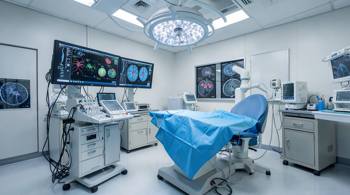
Modern neurosurgical practice emphasizes minimally invasive techniques to reduce recovery times and lower the likelihood of post-operative complications 1. Methods such as awake craniotomies, which allow surgeons to map the brain during the procedure to preserve vital functions, are hallmarks of highly specialized programs like those at UCSF Medical Center 6. Furthermore, institutions such as Johns Hopkins Medicine and Penn Medicine emphasize the integration of open surgery with stereotactic radiosurgery for metastatic tumors, providing a broad spectrum of care from simple biopsies to complex tumor resection 4, 10.
These surgical advancements are supported by sophisticated neuroradiology departments capable of precise tumor mapping. By using non-invasive or minimally invasive approaches, surgeons aim to maximize the safe removal of tumor volume while minimizing trauma to healthy neural tissue 4. Clinical outcomes are significantly influenced by the hospital's ability to maintain a dedicated neuro-ICU where post-operative monitoring is conducted by specialists trained specifically in managing the neurological status of patients recovering from brain surgery 9.
Research and Clinical Trial Integration
Clinical trials play a pivotal role in the landscape of brain tumor treatment, offering access to innovative therapies that are not yet available through standard clinical practice 7. Centers such as the Malnati Brain Tumor Institute at Northwestern Medicine and the University of Texas MD Anderson Cancer Center incorporate research directly into their care models 8, 13. This integration allows patients to potentially benefit from therapies currently under investigation, including novel drug protocols, gene expression studies, and immunotherapy 2, 7.
Patients should inquire about the availability of clinical trials during their initial consultation, as enrollment criteria are often specific to the molecular profile of the tumor. Because major academic medical centers are frequently at the forefront of these discoveries, they are able to facilitate a faster translation of laboratory findings to bedside care 3. This is particularly relevant for patients with refractory tumors who may benefit from alternative strategies developed through ongoing clinical research programs at these leading institutions 3.
Considerations for Patients Selecting a Care Center
When selecting a hospital, the decision should be based on a combination of geographic accessibility, insurance compatibility, and the specific expertise of the medical team. It is advisable to verify whether the hospital is in-network for specific insurance plans, as treatment for brain tumors often requires long-term care, follow-up imaging, and recurrent visits 10. Furthermore, patients should evaluate the logistics of care, such as the availability of global patient programs for those traveling from other regions or countries, which can assist in coordinating records and appointments 9.
Ultimately, the search for appropriate care should be framed as a search for the right specialist and the right institutional culture. While institutional rankings provide a useful starting point, direct contact with a program's intake department can help clarify whether they possess the specific subspecialized expertise required for an individual case 6. Whether dealing with primary brain tumors, metastases, or skull-base tumors, the combination of advanced diagnostic technology, a collaborative team approach, and access to the latest clinical research remains the benchmark for evaluating neuro-oncology programs in the United States 1, 3.
Sources
- Mayo Clinic: Brain Tumor Program Expertise
- Mayo Clinic: Care at Mayo Clinic
- Montefiore Einstein: Tumors of the Brain and Skull
- Penn Medicine: Brain Tumors and Brain Cancer
- Rush University Medical Center: Brain Tumor Care
- The Neurosurgical Atlas: Best Hospitals for Brain Surgery
- Penn Medicine: Our Approach to Brain Tumor Treatment
- Northwestern Medicine: Malnati Brain Tumor Institute
- Curesboost: Top 10 Best Neuroscience Hospitals
- Johns Hopkins Medicine: Dr. Chetan Bettegowda Profile
- National Cancer Institute: NCI-Designated Cancer Centers
- UCSF Health: Brain Tumor Center
- MD Anderson Cancer Center: Brain Tumor Program
Authored by MyTrendSpot team