Navigating police impound inventory for public purchase: An analysis of government auction processes and requirements
Navigating police impound inventory for public purchase involves a structured, multi-step process that differs significantly from traditional automotive retail environments 3. Unlike dealership transactions, these sales are designed to help agencies recover administrative costs, storage fees, and towing expenses incurred by unclaimed, seized, or abandoned vehicles 3. Participation requires an understanding of diverse jurisdictional rules, as there is no single national marketplace for all impounded assets 1. Prospective buyers often find themselves interacting with city police departments, county sheriffs, or third-party auction contractors, each maintaining distinct registration protocols and payment terms 1.
Understanding the Origins of Impound Inventory
Vehicles available at police auctions typically fall into several distinct legal categories, each carrying different implications for the buyer. Impounded vehicles are those seized due to traffic violations, criminal investigations, or being left unattended in restricted areas 4. If owners do not reclaim these vehicles within a state-mandated timeframe, the municipality or a contracted tower gains the legal authority to dispose of them through public sale 4. Other inventory may include retired agency vehicles, such as patrol cruisers or administrative sedans, which are often cycled out of service based on mileage or age-related replacement schedules 5.
Seized property undergoes a more rigid legal pathway compared to simple impounds. When law enforcement confiscates a vehicle as part of an investigation or civil asset forfeiture, it must be held until court-ordered authorization for disposal is granted 7. Because of this, federal agencies like the U.S. Marshals Service or the General Services Administration (GSA) often oversee the eventual sale of such items 17. Buyers should recognize that items currently tied to active evidence proceedings are strictly withheld from sale until their status is legally resolved 8.
Operational Realities of Auction Platforms
The digital shift has transformed how the public engages with these assets. Many agencies now utilize specialized government auction portals that allow for remote browsing, registration, and electronic bidding 6. These platforms provide varying levels of detail, including vehicle identification numbers (VINs), basic condition notes, and, in some cases, video walkthroughs 6. However, users must be aware that these interfaces are primarily functional rather than consumer-oriented, requiring the user to apply filtering tools effectively by location, closing time, or asset category to avoid irrelevant search noise 14.
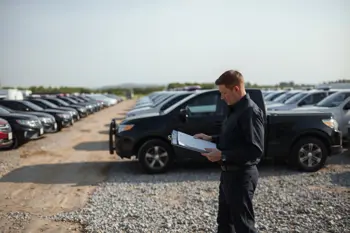
Registration for these auctions is not merely a formality. It often requires verified proof of identity and, in some instances, a refundable deposit before a bid can be placed 12. Bidders must exercise diligence in reading the specific terms of each auction house. For example, some jurisdictions allow for in-person viewing of the lot during specified hours, which provides a critical window to inspect the physical condition of the inventory before the bidding deadline closes 12.
Condition Risks and 'As-Is' Purchase Terms
A fundamental principle of almost every government auction is the 'as-is, where-is' sale condition 9. This means the selling agency provides no warranties or guarantees regarding the mechanical integrity of the vehicle 9. It is common for impounded vehicles to lack keys, feature dead batteries, or exhibit significant wear from hard service use 1. Because inspection opportunities are often limited, buyers are responsible for conducting their own due diligence, which may include reviewing vehicle history reports using the VIN prior to the auction close 8.
| Asset Type | Typical Condition Reality | Common Documentation |
|---|---|---|
| Retired Fleet | High mileage but consistent maintenance | Service records, title/bill of sale |
| Abandoned/Impound | Unknown mechanical status; often missing keys | Impound release, bill of sale |
| Seized Asset | Variable; may have been in storage long-term | Forfeiture order, government release |
Documentation and Legal Hurdles
Purchasing the vehicle is only the first part of the transaction; the subsequent titling process is where many buyers encounter difficulty. Unlike a private sale, the seller may provide a bill of sale or an SF-97 form, which acts as a certification of release for government-owned property 8. Successfully registering these documents with a local Department of Motor Vehicles (DMV) depends entirely on state-specific regulations 8. Some states have established, streamlined processes for these forms, while others may require additional inspections or administrative steps before a title is issued to the new owner 8.
Financial Considerations Beyond the Bid
The winning bid price rarely represents the total investment in an impounded vehicle. Most auctioneers impose additional costs that bidders must calculate beforehand. These typically include a buyer’s premium, which is a percentage-based fee added to the final bid, and administrative fees for processing the documentation 12. Furthermore, if a buyer fails to remove the vehicle from the lot within the specified post-auction window, storage fees may accumulate on a daily basis, rapidly offsetting the perceived savings of the purchase 12.
Maintenance and Long-Term Ownership Realities
When approaching the market for police-impounded vehicles, success is largely determined by preparation and risk management. Buyers who focus on specific inventory categories, such as fleet vehicles with known maintenance intervals, often report better outcomes than those targeting vehicles with unknown origins 5. Given the legal and administrative complexities, it is advisable for prospective buyers to consult official government websites, such as those provided by local law enforcement or regional county administrators, to verify the legitimacy of the auctioneer and the standard procedures for their specific region 8.
Sources
- Government Auctions Blog (2026). Police Auctions: How to Buy Without Guesswork.
- Autura (2026). Impound Auction Purchasing: A Buyer's Guide.
- Wondermapped.com (2026). Understanding Police Impound Vehicle Auctions: Pricing And Bidding Process.
- RevvBid (2026). Ultimate Guide to Buying Impounded Vehicles.
- GovAuctions.app (2026). How to Buy a Government Surplus Vehicle: Pricing, Inspection & Bidding.
- ZK-Cars.com (2025). Guide to Car Impound Auctions.
- Wondermapped.com (2026). Police Car and Government Surplus Auctions: What To Expect.
- Insightplume.com (2026). How to Buy Vehicles from Law Enforcement Auctions in the USA.
- 0TaxTags.com (2026). Government Surplus Vehicle Guide: Ex-Police & SF-97 Fix.
- Woolsey Auction (2026). Kansas City Police Tow Lot Auction.
- EatHealthy365.com (2026). How to Find a Local Impound Car Auction Near You.
- Jerusalem Post (2026). Guide To Affordable Police Impounded Cars.
- Juraplot.com (2026). Police Impound Vehicle Auctions and the American Legal System.
- MentalFloss (2026). The Vehicle Source Most Buyers Never Consider.
- OAI Auctions (2026). Kansas City Police Auction Records.
- Weanable.com (2026). Guide to Buying Police Impound SUVs at Auction.
- LegalClarity.org (2026). How to Retrieve an Impounded Vehicle: Process and Requirements.
Authored by MyTrendSpot team