Simple home treatments for ankle soreness: A clinical overview of recovery management
Ankle soreness is frequently associated with sprains, which occur when ligaments-the resilient bands of tissue connecting bones-are stretched beyond their normal capacity or torn 1. These injuries are commonly caused by inversion, where the foot turns inward, often resulting from walking on uneven surfaces like curbs or rocks 2. While many ankle injuries resolve with conservative management, understanding the physiological response to these strains is critical for safe recovery 3.
The RICE Protocol for Initial Management
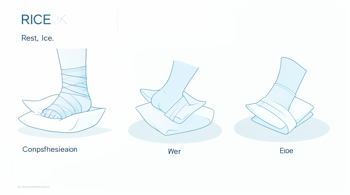
The RICE protocol is widely recognized as the foundational approach for managing acute ankle soreness in the first 48 hours following an injury 1, 4. Rest involves limiting activities that aggravate the ankle, though early, pain-free movement is encouraged to prevent stiffness 1, 7. Ice should be applied to reduce inflammation and numb discomfort, ideally for 15 to 20 minutes at a time 4, 9. To prevent thermal damage, ice packs should be wrapped in a towel rather than applied directly to the skin 1, 9.
Compression using an elastic bandage provides essential support and helps limit swelling, though it must be monitored to ensure it remains snug without impairing circulation 1, 10. Elevation of the leg, particularly above the level of the heart, uses gravity to facilitate fluid drainage and minimize edema 1, 4. Maintaining this elevation while sitting or sleeping is recommended during the initial post-injury phase to control the body's inflammatory response 1, 9.
Pharmacological Support and Symptom Relief
Over-the-counter analgesics are commonly utilized to manage pain and reduce systemic inflammation associated with soft tissue injuries 1, 8. Medications such as paracetamol can assist with pain relief, while nonsteroidal anti-inflammatory drugs (NSAIDs) may be used to address swelling and discomfort 1, 9. It is important for individuals to consult with a pharmacist or healthcare provider regarding appropriate dosages and to check for contraindications, particularly if other medical conditions are present 7, 8.
Recovery and Mobility Progression
As acute pain subsides, transitioning from rest to controlled activity is a standard component of rehabilitation 3. Gentle range-of-motion exercises, such as tracing the alphabet with the big toe, are often recommended to maintain joint mobility and prevent long-term stiffness 7, 9. Strenuous activities, including running or jumping, should be avoided until the ankle is comfortable during normal walking and swelling has significantly diminished 3, 9. Gradual reintroduction of exercise ensures the ligaments have adequate time to repair without the risk of re-injury 3.
Supportive Measures and Footwear
Supportive devices can play a role in stabilizing the ankle during the recovery phase 3, 8. While a cast is rarely necessary for mild sprains, an ankle stirrup or a supportive wrap like Tubigrip can offer stability while allowing for functional movement 1, 8. Patients are advised to wear flat, supportive footwear and should avoid high heels or shoes with minimal support, as these can increase the risk of instability during the healing process 1, 3.
Clinical Indicators for Professional Evaluation
While most ankle soreness improves within six to eight weeks, specific symptoms warrant further medical assessment 7. An inability to bear weight, intense pain, or significant deformity may suggest a fracture rather than a simple sprain 8. The Ottawa Foot and Ankle Rules are clinical tools often used to determine whether diagnostic imaging, such as X-rays, is necessary to rule out osseous damage 6. If pain persists for several months or if the ankle feels chronically unstable, referral to an ankle specialist is often the appropriate next step 3.
Summary of Home Management Strategies
| Strategy | Objective | Application Notes |
|---|---|---|
| Rest | Prevent further tissue damage | Adjust activity; avoid weight bearing if painful |
| Ice | Reduce inflammation/pain | 15-20 minutes; use towel barrier |
| Compression | Limit swelling/provide stability | Snug but not restrictive; check circulation |
| Elevation | Drain fluid/reduce edema | Keep ankle above heart level |
| Mobilization | Prevent stiffness | Perform gentle range-of-motion exercises |
Sources
- Northern Lincolnshire and Goole NHS Foundation Trust, Ankle sprain
- MSD Manual Consumer Version, Ankle Sprains
- The Princess Alexandra Hospital NHS Trust, Ankle Sprain Patient Information
- Liv Hospital, 9 Home Remedies for Sore or Sprained Ankles
- Merck Manual Professional Edition, Ankle Sprains
- American Family Physician, Management of Acute Ankle Sprains
- Leicestershire Partnership NHS Trust, Foot and Ankle Pain
- Doc Miller, 7 Home Remedies for Sprained Ankle That Really Work
- Hull University Teaching Hospitals NHS Trust, Emergency Care: Ankle Sprain
- Prof. J. Queally, When to Use RICE and When to Get Help
Authored by MyTrendSpot team