Glaucoma Surgery Hospitals: Comprehensive Guide to Surgical Facilities and Specialist Care
Glaucoma surgery hospitals represent specialized medical facilities equipped to manage one of the leading causes of irreversible blindness worldwide. When medications and laser treatments fail to control intraocular pressure, surgical intervention becomes necessary to preserve remaining vision and prevent further optic nerve damage. Understanding the landscape of glaucoma surgical centers, the procedures they offer, and the qualifications of their specialists is essential for patients requiring advanced surgical care.
Understanding Glaucoma Surgery and When It Becomes Necessary
Glaucoma is often called the "silent thief of sight" because it typically develops without noticeable symptoms in its early stages 1. Pressure relief through surgical intervention becomes critical when elevated intraocular pressure cannot be sufficiently lowered through medical therapy alone. Glaucoma surgery does not aim to improve lost vision but rather to prevent further vision loss by reducing eye pressure and protecting the optic nerve from additional damage 2.
Surgical referral typically occurs when patients have uncontrolled intraocular pressure despite maximum tolerated medical therapy, demonstrate progressive optic nerve damage or visual field loss despite current management, or cannot tolerate or comply with daily eye drop medications 3. The decision to proceed with surgery represents a significant clinical milestone, often made collaboratively between general ophthalmologists and fellowship-trained glaucoma specialists who possess expertise in advanced surgical techniques.
Types of Glaucoma Surgery Procedures Performed at Specialized Hospitals
Modern glaucoma surgery hospitals offer a spectrum of surgical approaches ranging from minimally invasive techniques to traditional filtration surgeries. Minimally Invasive Glaucoma Surgery (MIGS) procedures are ideal for early to moderate glaucoma, helping lower eye pressure with less tissue disruption and shorter recovery periods 1. These procedures work by improving the eye's natural fluid drainage pathways or creating new drainage mechanisms with minimal surgical trauma.
Traditional glaucoma surgeries remain the gold standard for advanced cases. Trabeculectomy creates a new drainage channel beneath the conjunctiva to allow aqueous humor to flow out of the eye more efficiently, offering long-term intraocular pressure control with customizable techniques 4. Glaucoma drainage devices, also called tube shunts, include the Ahmed glaucoma valve, Baerveldt implant, and PRESERFLO MicroShunt, which redirect fluid flow and provide sustained 24-hour pressure control 5. Specialized hospitals also perform cyclophotocoagulation, goniotomy, trabeculotomy, and selective laser trabeculoplasty procedures, each suited to specific glaucoma types and patient anatomies.
Specialist Qualifications and Training at Glaucoma Surgery Centers
A critical distinction exists between general ophthalmologists and glaucoma specialists. All glaucoma specialists are ophthalmologists, but not all ophthalmologists are glaucoma specialists 6. General ophthalmologists treat many eye conditions including early glaucoma, while glaucoma specialists complete an additional year of fellowship training focused entirely on glaucoma diagnosis, management, and advanced surgery. Fellowship-trained glaucoma surgeons are qualified in advanced surgical techniques to treat all types of glaucoma and maintain current knowledge of new medical and surgical treatments 6.
Leading glaucoma surgery hospitals employ surgeons with specialized credentials. Many hold fellowships from prestigious institutions such as AIIMS, Shroff Charity Eye Hospital, or international programs through Orbis International 7. Surgeons at accredited centers have performed hundreds to thousands of glaucoma procedures, with expertise in complex cases including secondary glaucoma, refractory glaucoma following prior surgeries, and pediatric glaucoma 7. Board certification from organizations such as the American Board of Ophthalmology, membership in the American Glaucoma Society, and active participation in clinical research further distinguish specialized surgical centers.
Diagnostic Technology and Pre-Operative Assessment at Surgical Hospitals
Modern glaucoma surgery hospitals utilize advanced diagnostic equipment to assess candidacy for surgery and plan individualized treatment strategies. Intraocular pressure measurement using tonometry, optical coherence tomography (OCT) imaging of the optic nerve and retinal nerve fiber layer, and automated visual field testing form the foundation of pre-operative evaluation 8. These technologies allow surgeons to detect early optic nerve damage, monitor disease progression, and make data-driven recommendations about surgical timing and technique selection.
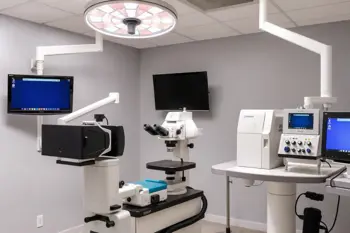
Advanced imaging modalities available at accredited surgical centers include anterior segment OCT to visualize drainage angle anatomy, gonioscopy to classify glaucoma type, and fundus imaging to document baseline optic nerve appearance 8. Some centers employ artificial intelligence-powered vision testing and genetic risk mapping to personalize treatment strategies and identify patients at highest risk of vision loss 9. This comprehensive pre-operative assessment ensures surgical planning is tailored to each patient's unique anatomy, glaucoma severity, and long-term visual potential.
Accreditation Standards and Hospital Infrastructure for Glaucoma Surgery
Glaucoma surgery requires specialized facility infrastructure including appropriately equipped operating rooms, post-operative monitoring capabilities, and dedicated follow-up clinics. Accredited surgical centers typically maintain Joint Commission International (JCI) accreditation, National Accreditation Board for Hospitals and Healthcare Providers (NABH) certification in India, or equivalent regulatory oversight in their respective countries 10. These accreditations ensure compliance with safety protocols, infection control standards, and surgical outcome documentation requirements.
Specialized glaucoma surgery hospitals are often embedded within larger eye care networks or academic medical centers affiliated with teaching institutions 11. This infrastructure provides access to multiple specialists for management of coexisting conditions such as cataracts or retinal disease, research participation opportunities for patients with complex cases, and continuity of long-term monitoring essential for glaucoma management. Ambulatory surgery centers with minimal wait times and streamlined surgical scheduling represent an alternative to hospital-based facilities, offering convenience while maintaining full surgical capability and post-operative support.
Post-Operative Care, Follow-Up Monitoring, and Long-Term Success
Glaucoma surgical success depends critically on post-operative monitoring and patient compliance with follow-up care protocols. Immediately after surgery, patients undergo intensive monitoring with examinations at day one, one week, and one month post-operatively to assess intraocular pressure control, detect complications, and adjust anti-inflammatory therapy 12. Long-term follow-up at three months, six months, and annually thereafter helps identify late complications such as bleb failure or cataract progression requiring intervention.
Specialized glaucoma hospitals maintain dedicated post-operative clinics staffed by fellowship-trained surgeons and ophthalmic nurses experienced in managing surgical complications and optimizing long-term outcomes 12. Educational support helps patients understand their condition, recognize warning signs requiring urgent evaluation, and maintain compliance with post-operative restrictions and medications. Some centers participate in clinical trials evaluating novel surgical techniques or new anti-fibrotic agents to prevent bleb scarring, providing eligible patients access to cutting-edge therapies years before widespread availability. Regular monitoring through this infrastructure is essential because sustained intraocular pressure control, not surgical intervention alone, determines long-term vision preservation in glaucoma.
Geographic Distribution and Access to Specialized Glaucoma Surgery Hospitals
Glaucoma surgery hospitals exist globally, with varying concentrations depending on healthcare infrastructure and population density. In the United States, leading institutions include Bascom Palmer Eye Institute in Miami, Wills Eye Hospital in Philadelphia, Johns Hopkins Wilmer Eye Institute in Baltimore, Massachusetts Eye and Ear in Boston, and the Moran Eye Center at University of Utah 13. These academic centers maintain high surgical volume, invest in advanced technology, and contribute significantly to glaucoma research and innovation.
International access to glaucoma surgery has expanded dramatically in India, where networks such as ASG Eye Hospital operate over 200 hospital locations with 700 ophthalmologists serving more than 3 crore (30 million) patients 14. Specialized centers in Middle Eastern countries including Dubai and other Gulf states provide MIGS and traditional glaucoma surgery using FDA-approved devices and internationally trained surgeons. Finding an appropriate glaucoma surgery hospital typically begins with referral from a general ophthalmologist, optometrist, or primary care physician, though patients can independently contact the American Glaucoma Society for specialist locator tools or research major academic centers in their geographic region 6.
Sources
- Albany Regional Eye Surgery Center - Glaucoma Surgery Overview and Minimally Invasive Approaches
- Mayo Clinic Department of Ophthalmology - Glaucoma Treatment Overview and Surgical Procedures
- Glaucoma Research Foundation - Finding a Glaucoma Specialist and When Referral is Necessary
- Almoosa Clinics and Day Surgery Center - Trabeculectomy and Glaucoma Drainage Valve Procedures
- Almoosa Clinics - iStent, PRESERFLO MicroShunt, and Minimally Invasive Drainage Devices
- Glaucoma Research Foundation - Difference Between General Ophthalmologists and Glaucoma Specialists
- ASG Eye Hospital and Dr. Anant Prakash Tripathi Profile - Fellowship Training and Complex Glaucoma Expertise
- Sanjivani Eye Hospital Ahmedabad - Advanced Diagnostic Technologies and Pre-Operative Evaluation
- iClinix Glaucoma Center Delhi - AI-Powered Vision Testing and Genetic Risk Mapping
- iClinix Glaucoma Center - JCI, NABH, and ISO Accreditation Standards
- Legacy Devers Eye Institute - Academic Medical Center Infrastructure and Research Participation
- Nirmal Eye Care Hospital and Anil Eye Hospital - Post-Operative Care and Follow-Up Monitoring Protocols
- U.S. News and World Report Rankings and Leading U.S. Eye Institutes - Academic Center Listings
- ASG Eye Hospital Network Statistics - Geographic Distribution and Hospital Access in India
Authored by MyTrendSpot team