Police auction commercial cargo vans on sale: A Journalistic Analysis of Government Surplus Liquidation Processes
Understanding the Process of Public Asset Liquidation
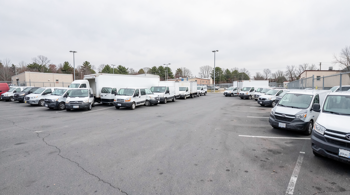
When a government agency retires a utility vehicle, the asset typically enters a structured liquidation process. Observers regularly track how a police auction commercial cargo vans on sale environment operates, as these events represent the final stage of civil asset recovery and government surplus management 17. These vehicles are processed through municipal impound yards, local police departments, or federal storage facilities until administrative periods permit public liquidation 17.
Assets are categorized based on their acquisition. Vehicles seized during legal actions or forfeited due to tax non-compliance are held under custody before public sale 17. Municipalities also consolidate abandoned vehicles from roadways, transferring them to impound lots like the Kansas City Tow Lot 1. This dual sourcing ensures a diverse rotation of vehicles, though it introduces substantial variance in operational quality.
Diverse Inventory Sourcing and Common Vehicle Models
The inventory of commercial vehicles liquidated through public channels includes standard platforms from major domestic and international manufacturers. Traditional light and heavy-duty cargo platforms, including the Ford Transit, Chevrolet Express, GMC Savana, and Mercedes-Benz Sprinter, represent the standard offerings 6 9. For instance, historical auctions have featured older utility units like a 2005 Chevrolet Express at the Freer Police Department 2 or a 2001 Ford E150 Cargo Van in New Jersey 4.
Extended wheelbase options, such as the 2014 Ford Econoline E250, are frequently processed in municipal sales 5. To illustrate the standard composition of a typical municipal liquidation yard, the following table details a selection of historical cargo van entries and their parameters:
| Model | Location | Odometer | Metrics |
|---|---|---|---|
| 2005 Chevrolet Express | Freer PD (TX) | 180,544 mi | Boost required 2 |
| 2001 Ford E150 | Brick PD (NJ) | 76,978 mi | Poor condition 4 |
| 2007 GMC Savana | Woburn (MA) | Unknown | No keys 12 |
| 2016 Ford Transit | Toronto (ON) | 110,237 km | Structural damage 13 |
Operational Status, Disclaimers, and the As-Is Mandate
The Absolute Absence of Warranties
A fundamental principle of government liquidations is the absolute absence of warranties. Every vehicle is sold strictly in as-is and where-is condition, meaning the buying party assumes all risks immediately upon the auctioneer hammer 2 3. In many impound scenarios, such as the bi-weekly auctions in Missouri, bidders are cautioned that they will not know if a cargo van runs or drives until after the purchase is finalized 1 3. Most lack ignition keys entirely, requiring lock replacement post-sale 1 12.
Mechanical and Body Discrepancies
Potential buyers must also anticipate severe structural or mechanical defects. For example, some retired cargo vans are listed with active warning indicators, structural alterations, or electrical malfunctions that render them unfit for immediate road use 13 15. Law enforcement agencies systematically strip specialized emergency lights and decals prior to title transfer, which can leave physical modifications, wiring holes, or cosmetic damage on the body paneling of former police interceptor vans 4 20.
Registration Protocols and Financial Transaction Rules
Participating in public asset auctions requires compliance with pre-qualification rules and formal registration processes. Many digital bidding platforms require users to establish verified accounts with valid identification and credit card credentials 17 18. Certain municipalities have implemented financial barriers to filter out non-serious bidders, such as the Kansas City Tow Lot, which instituted a mandatory 300 dollar deposit requirement to enable bidding activity 1 3. Non-payment leads to immediate forfeiture of the asset, loss of the deposit, and a permanent ban 3.
Financial obligations extend beyond the final bid price to include specialized administrative overhead. Standard auctions apply a buyer premium, which typically ranges from 10 percent to 15 percent of the winning bid, alongside administrative fees per lot 1 7 10. Payment terms are highly condensed, requiring full remittance via cash, cashier check, or wire transfer on the business day immediately following the auction close 1 10.
Post-Auction Removal and Legal Title Transfers
Once the payment is settled, the winning bidder is responsible for coordinating the physical extraction of the vehicle. Due to liability regulations, many municipal facilities prohibit buyers from driving purchased vehicles off the lot under their own power 4 9. Consequently, flatbed towing must be arranged 4 13. Facilities enforce strict removal windows, often ending within three days, after which daily storage fees are charged until the lot is cleared 1 9.
Acquiring valid legal ownership is another complex administrative hurdle that varies by state. Law enforcement agencies typically issue a standardized receipt, such as Form VTR-71-1 in Texas, to document the public transfer 2 19. While in-state residents can submit this paperwork to their county tax office to obtain a clean title, out-of-state buyers must contact their home state department of motor vehicles to confirm title requirements 2 19.
Digital Channels and Global Infrastructure for Government Disposal
The shift from physical on-site lot bidding to synchronized online networks has expanded the geographical accessibility of government surplus. Major digital auction hubs such as GovDeals, Copart, and Public Surplus serve as standardized portals where federal, state, and municipal agencies list retired assets directly to the public 21 22 24. These sites enable filtered searches, letting commercial buyers search specifically for cargo van models across regional boundaries to locate fleet liquidations 17 18.
This administrative method of asset disposal is practiced worldwide, reflecting a universal government effort to recover costs and clean storage yards. International departments, including the Sri Lanka Police and the Kenyan Ministry of Interior, execute similar large-scale public liquidations for decommissioned vans and transport vehicles 8 11. Ultimately, navigating these auctions successfully requires a calculated balance of rigorous prepurchase research, strict budget management, and immediate logistical readiness to handle any mechanical or legal contingencies.
Sources
- Kansas City Police Tow Lot Auction
- Global Auction Guide - Texas
- Woolsey Auction - Kansas City Police Tow Lot
- Global Auction Guide - Brick Township PD
- Global Auction Guide - Colorado
- Fleet Vehicle Disposal - Bechtelsville, PA
- Powell Auction - Police Seizure
- Bizna Kenya - Interior Ministry
- Fleet Vehicle Disposal - Salvage and Parts
- Powell Auction - August Police Seizure
- Newswire - Sri Lanka Police
- Global Auction Guide - Massachusetts
- Global Auction Guide - Ontario Transit Cargo Van
- Dempsey Auction Company
- Global Auction Guide - Toronto Sprinter Van
- Global Auction Guide - Ohio Sprinter Van
- JPost - Impound Auctions Guide
- JPost - Hyundai H350 Guide
- Global Auction Guide - Texas Ford E-350
- Wondermapped - Seized Vans
- GovDeals
- Copart
- Public Surplus
Authored by MyTrendSpot team