Government surplus heavy duty trucks for sale: An Analysis of Public Fleet Procurement and Auction Channels
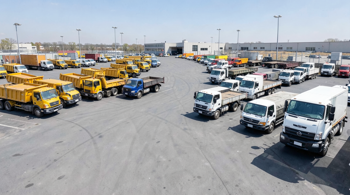
Decommissioned public fleet vehicles represent a significant segment of the secondary commercial vehicle market, offering institutional buyers and commercial operators access to heavy machinery previously utilized by state and federal entities. Across various municipalities and defense logistics programs, platforms hosting government surplus heavy duty trucks for sale facilitate the transfer of public assets to private ownership under strict regulatory guidelines.
Municipal Utility and Light-Heavyweight Fleet Disposals
Municipalities frequently update their fleet configurations to align with fiscal budgets, forcing older utility trucks and heavy-duty dump trucks into liquidation. Buyers often target these public offerings due to systematic municipal maintenance routines. However, most of these transactions are strictly governed by formal municipal bids and requests for proposals that outline structural limitations and specific requirements for bid submissions. Navigating these requirements demands attention to detail, as public agencies enforce rigid deadlines and administrative rules for all participating bidders.
For example, the State of Rhode Island Division of Capital Asset Management and Maintenance managed an as-is equipment sale of a 2006 Mack Granite CV713 dump truck through formal public bidding 1. Concurrently, smaller municipal divisions, such as the City of Ste. Genevieve, Missouri, executed timed online auctions for a 2008 Chevrolet Silverado 3500HD utility pickup equipped with a Western snow plow mount and controller 2. These sales illustrate how local governments transition high-utility, specialized machinery directly to the public bidding market.
Regional Transport Fleets and Multi-Vehicle Liquidations
County-level administrations and local school districts often execute larger-scale auctions when consolidating logistics or moving services. Unlike single-vehicle listings, multi-vehicle sales require buyers to assess varied maintenance histories and wear patterns within a single corporate lot. These offerings are particularly valuable for private transport operators seeking vocational assets, such as diesel box trucks, flatbeds, and service vehicles, that can be integrated into existing commercial fleets.
A prominent case occurred in Floyd County, Georgia, where a surplus commercial box truck fleet consisting of Freightliner M2 models and International box trucks was liquidated through an online auction platform 3. Similarly, the Pennsylvania Department of General Services regularly opens public online auctions for surplus Department of Transportation vehicles, including dump trucks and heavy machinery, ensuring that taxpayer-funded assets are recycled back into active service for residents and local businesses 4.
Federal and State Surplus Allocation Structures
At the federal level, surplus allocation follows a rigorous administrative process designed to maximize the utility of public investments. Before assets are opened to the general public, state agencies for surplus property coordinate with local governments and eligible non-profit organizations to redistribute functional assets. Only when internal public needs are satisfied are these heavy-duty vehicles and specialized machinery cleared for public bidding, ensuring an orderly transition.
This structure is evident in defense contracts, such as the Department of Defense's Invitation for Bid for used 2020 MAXUS T60 4x4 pickup trucks stationed at Camp Lemonnier, Djibouti 5. At the state level, the Kentucky Division of Surplus Property utilizes structured online auctions to liquidate heavy-duty trucks, snowplows, and tractors, directly recycling public funds back into the state's transportation infrastructure and ensuring responsible management of municipal assets 6.
Operational Risks and As-Is Asset Evaluation
Purchasing decommissioned municipal machinery presents distinct operational advantages alongside clear mechanical challenges. While many heavy-duty trucks are stored in climate-controlled municipal garages, they may also exhibit unique issues arising from prolonged idleness or intensive seasonal use. Prospective buyers must execute thorough physical inspections, review historical inspection records, and budget for potential mechanical repairs and restoration work prior to placing bids.
For instance, the Town of McMillan, Wisconsin, listed a vintage Oshkosh WA-906 municipal snowplow with a gross vehicle weight rating of 40,000 pounds in non-running condition with no diagnostic testing performed 7. To streamline these transactions, larger entities, such as the California Department of Transportation, contract with professional industrial auction companies like Bar None Auction to manage the statewide sale of surplus road maintenance assets from permanent regional facilities 8.
Digital Bidding Mechanics and Platform Specifications
The transition from traditional physical auctions to digital bidding platforms has significantly broadened the demographic of prospective fleet buyers. Modern public auctions organize these sales with specific legal terms, including buyer premiums, strict payment timelines, and delayed title distribution periods. Understanding the platform-specific rules and administrative frameworks is critical to avoiding bid disqualification and ensuring a successful, compliant transaction.
Private auction houses, such as RTI Auctions, organize scheduled net auctions featuring heavy-duty trucks, including Ford F-350 service bodies and Ram 2500 heavy-duty models with plow controllers 9. Additionally, the federal government consolidates its nationwide vehicle disposals on the GSA Auctions platform, which serves as the official portal for bidding on federal surplus personal property, including heavy-duty vocational trucks and heavy machinery 10.
Marketplace Navigation and Final Logistics Coordination
Navigating the modern surplus marketplace requires familiarity with specialized digital directories and platform structures. Platforms like GovPlanet serve as primary channels for decommissioned military vehicles and heavy machinery 11. Meanwhile, local municipal and county-level assets are frequently aggregated on directories like Public Surplus 12 or GovDeals 13, which provide structured bidding, regional filtering options, and detailed asset descriptions.
Buyers must also account for complete logistical responsibility, including vehicle removal, loading, and transport, within strict post-auction windows. This is particularly challenging for specialized vehicles, such as the used Freightliner firefighting vehicle auctioned by the Defense Logistics Agency at Camp Lemonnier, which required immediate post-customs removal and transport coordination 14. Successful bidders must verify compliance with local regulations and secure heavy-duty transport services before taking physical possession.
Sources
- Starbridge.ai - State of Rhode Island Bid & RFP Portal
- Starbridge.ai - City of Ste. Genevieve Bid & RFP Portal
- Dempsey Auction Company - Surplus Commercial Box Truck Fleet Online Auction
- PennWatch - Pennsylvania Department of General Services
- SweetSpotGov - Department of Defense Federal Contracts
- NKyTribune - Kentucky Division of Surplus Property
- Town of McMillan, Wisconsin - Oshkosh WA-906 Public Bid
- PR Newswire - Bar None Auction Caltrans Statewide Surplus Contract
- RTI Auctions - March NetAuction Portfolio
- U.S. General Services Administration - GSA Auctions Platform
- GovPlanet - Decommissioned Federal and Military Equipment
- Public Surplus - Municipal and Local Government Auctions
- GovDeals - State and Local Government Surplus Asset Directory
- SweetSpotGov - Used Firefighting Truck Bid Abstract
Authored by MyTrendSpot team