Early symptoms of Crohn's disease you should know: A clinical guide to early warning signs
Early symptoms of Crohn's disease you should know may include persistent diarrhea, cramping or abdominal pain, and unintended weight loss. Other signs, including fatigue, fever, anemia, appetite loss, joint symptoms, or mouth sores, can be less obvious and may occur before a diagnosis. Symptoms alone cannot establish Crohn’s disease because several digestive and inflammatory conditions can appear similar. 1
How early Crohn’s symptoms can appear
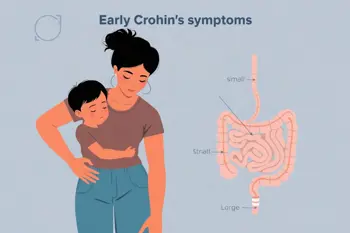
Crohn’s disease is a long-term inflammatory condition that can affect any part of the digestive tract, from the mouth to the anus, although the small intestine and large intestine are commonly involved. The location and severity of inflammation influence which symptoms appear, so one person may mainly experience diarrhea while another has pain, poor appetite, fatigue, or symptoms around the anus. 4
Symptoms may follow a relapsing pattern, with periods when problems improve and flare-ups when they return. A recurring pattern does not necessarily mean the underlying inflammation has resolved. Crohn’s disease is commonly diagnosed in older children, teenagers, and young adults, particularly between ages 15 and 35, but it can develop at any age. 4
Digestive warning signs to recognize
Persistent or recurring diarrhea is one of the most characteristic early symptoms. Abdominal pain and cramping are also common, and some people experience bloating, a feeling of fullness, constipation, or a sense that a bowel movement is incomplete. Blood in the stool or rectal bleeding may occur, particularly when inflammation affects the colon, but bleeding is not present in every person with Crohn’s disease. 1 4
Nausea, vomiting, and reduced appetite can accompany intestinal inflammation. Ongoing symptoms may interfere with eating and daily activities, while inflammation or disease-related complications can contribute to weight loss. Chronic diarrhea that persists or repeatedly returns is different from a short episode associated with an isolated illness and warrants medical assessment when it does not settle. 2 5
Fatigue, fever, anemia, and weight changes
Unintended weight loss is among the most recognized symptoms of Crohn’s disease and may result from reduced appetite, digestive symptoms, or inflammation. Fatigue can also be prominent. Anemia is another possible sign and may be associated with intestinal bleeding, inflammation, or reduced nutrient absorption. These symptoms can be overlooked because tiredness and modest appetite changes do not always seem digestive in origin. 1 6
Fever may accompany active inflammation, although fever is not specific to Crohn’s disease. The combination of fever with recurring diarrhea, abdominal pain, weight loss, or marked fatigue is more concerning than any single symptom in isolation. A clinician may need to consider infections and other causes before determining whether inflammatory bowel disease is involved. 2 5
Symptoms beyond the digestive tract
Crohn’s disease can produce manifestations outside the intestines. Joint pain or soreness, eye redness or pain, and skin changes such as red, tender bumps may occur. Mouth sores are also reported, and in some people an extraintestinal symptom may be noticed before obvious gastrointestinal problems. These findings do not prove Crohn’s disease, but they are relevant details to report during a medical evaluation. 1 3
Symptoms around the anus can include pain, fissures, drainage, or other inflammation-related problems. Such signs may be especially important because Crohn’s disease can affect the digestive tract and nearby tissues. Joint, skin, eye, and oral symptoms can have many other explanations, so their significance depends on the complete clinical history, examination, and test results. 3 5
Early signs in children and teenagers
In children, Crohn’s disease may present with abdominal pain, diarrhea, weight loss, poor appetite, or fatigue. Digestive symptoms can occur alongside delayed growth or delayed puberty. A child who is not growing as expected may therefore require assessment even when abdominal symptoms are intermittent or described as mild. Crohn’s disease is commonly identified in older children, teenagers, and young adults. 4
Growth and development concerns can reflect the effects of chronic inflammation, reduced food intake, or impaired nutrient handling. Parents, caregivers, and clinicians may need to consider the pattern over time rather than one isolated stomach complaint. Recurrent symptoms, declining weight, persistent tiredness, or slowed growth should be documented and discussed with a qualified healthcare professional. 4 6
When evaluation is important
There is no single symptom that confirms Crohn’s disease, and diagnosis generally combines a medical history and physical examination with blood or stool studies, endoscopy, and imaging when appropriate. Colonoscopy, video capsule endoscopy, computed tomography, and magnetic resonance imaging may be used to identify inflammation or complications. Similar symptoms can occur with infections, irritable bowel syndrome, celiac disease, and ulcerative colitis. 5 6
Prompt medical care is appropriate for severe abdominal pain, repeated vomiting, heavy rectal bleeding, black stools, dehydration, or high fever. These features may signal significant illness or complications and should not be assessed through symptoms alone. For less urgent but persistent or recurring diarrhea, pain, fatigue, appetite loss, or unexplained weight loss, clinical evaluation can help distinguish Crohn’s disease from other conditions and identify whether testing is needed. 5 6
Sources
- National Institute of Diabetes and Digestive and Kidney Diseases, Symptoms & Causes of Crohn’s Disease
- Mayo Clinic, Crohn's disease: Symptoms and causes
- Cleveland Clinic, Crohn’s Disease: Symptoms & Treatment
- Johns Hopkins Medicine, Crohn's Disease
- Merck Manual Consumer Version, Crohn Disease
- NCBI Bookshelf, StatPearls: Crohn Disease
Authored by MyTrendSpot team