Simple home treatments for neck and shoulder pain: A clinical guide to practical self-care
Simple home treatments for neck and shoulder pain commonly include ice or heat, gentle stretching, posture adjustments, supportive sleep habits, and carefully considered over-the-counter pain medicine. Most mild to moderate neck pain improves within two to three weeks with simple self-care, although the appropriate approach depends on whether symptoms followed an injury and whether numbness, weakness, or radiating arm pain is present. 1
When home treatment is generally appropriate
Routine neck and shoulder discomfort often involves muscles and soft tissues rather than a serious structural problem. Common contributors include muscle overuse, prolonged static positions, emotional stress, looking down at phones or tablets, desk work, and an awkward sleeping position. A stiff neck usually means soreness or pain has reduced normal movement. Imaging findings alone do not always explain symptoms, because X-rays or MRI scans can show structural changes in people who have no neck pain. 2
- Home care is most suitable for mild or moderate pain without neurological symptoms.
- Movement should remain gentle and within a comfortable range.
- Symptoms that steadily worsen, persist, or interfere substantially with daily activities warrant professional advice.
Using cold and heat safely
Cold and heat are among the main self-care measures identified for ordinary neck pain. Mayo Clinic reports that nonprescription pain medicine together with applying ice and heat is often enough to ease symptoms, and that many mild to moderate cases improve within two to three weeks. Cold is commonly considered after a recent strain or injury, while warmth may feel more useful for tight, tense muscles. 1
- Wrap an ice pack in a towel rather than placing it directly on the skin.
- Use short applications, commonly about 10 to 15 minutes, and check the skin regularly.
- A warm shower, warm towel, or heating pad can help relax tight muscles.
- Avoid prolonged or very hot applications, which can irritate or burn skin.
Gentle movement and stretching
Gentle movement can address stiffness without placing the neck under the stress associated with forceful manipulation. Suggested motions include slowly turning the head from side to side, bringing the chin toward the chest, looking upward gradually, and combining shoulder lifts with backward shoulder rolls. Harvard Health describes routine muscle pain, spasms, and strain as common causes of a stiff neck, while exercise guidance emphasizes listening to the body and stopping when movement increases pain. 2 7
- Perform movements slowly and avoid bouncing or forcing the end position.
- Keep the shoulders relaxed during neck rotations and side-to-side movements.
- Repeat only a few comfortable times, then reassess how the area feels.
- Stop and seek advice if stretching produces arm numbness, weakness, or shooting pain.
Posture and workstation changes
Holding the head forward for long periods increases the workload on the muscles behind the neck. Mass General Brigham identifies staying in one position too long, poor posture, and prolonged phone, tablet, or computer use as frequent contributors to neck and upper-back pain. Raising a screen toward eye level, keeping the head aligned over the shoulders, and changing position regularly can reduce sustained strain during desk work. 3
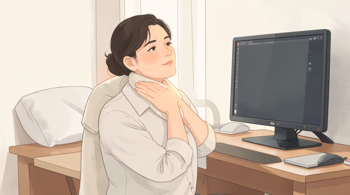
- Position the monitor so the eyes can look forward instead of downward.
- Keep shoulders relaxed and avoid prolonged shrugging or hunching.
- Break up long periods of sitting with brief changes in position.
- Hold phones closer to eye level when practical rather than bending the neck for extended periods.
Sleep support and self-massage
Sleep position and pillow support can influence morning stiffness, particularly when the neck remains bent or rotated for hours. A pillow should support the neck’s natural curve without pushing the head sharply upward or allowing it to fall backward. Light self-massage may also reduce perceived tightness in the upper shoulder muscles, but pressure should remain moderate and should not be applied to the front or side of the neck, where sensitive structures are located. 4 5
- Choose a sleep position that keeps the head aligned with the spine.
- Use gentle fingertip pressure on the shoulder muscles rather than forceful pressure on the neck.
- A massage ball should be used against the upper back or shoulder muscles, not directly over the spine.
- Stop self-massage if it causes dizziness, tingling, worsening pain, or symptoms extending into an arm.
Over-the-counter medicine and other limits
Ibuprofen and naproxen are examples of nonsteroidal anti-inflammatory drugs that may temporarily reduce pain and inflammation. However, suitability depends on medical history, other medicines, age, pregnancy status, and conditions affecting the stomach, kidneys, heart, or blood pressure. The research material identifies these medicines as common options but does not establish that they are appropriate for every person. Label directions and advice from a pharmacist or clinician should guide use. 1
- Do not combine multiple products containing the same active ingredient.
- Follow the package directions and use the smallest amount needed for the shortest appropriate period.
- Ask a healthcare professional before using an NSAID when other health conditions or medicines may create risks.
- Medicine should not be used to mask symptoms that are progressively worsening or associated with neurological changes.
Warning signs and when to seek care
Neck pain can sometimes involve nerves, joints, discs, infection, inflammation, or injury rather than uncomplicated muscle tension. Radiating arm pain, numbness, or weakness can indicate possible nerve involvement and should not be managed solely with stretches or massage. After an accident or sudden force, medical evaluation may be particularly important. Clinicians may use a history and physical examination first, checking tenderness, sensation, muscle strength, and range of motion before deciding whether imaging or other tests are appropriate. 1 5
- Arrange medical assessment for persistent or worsening pain.
- Seek prompt advice for numbness, weakness, or pain traveling into an arm.
- Obtain evaluation after whiplash, a fall, sports injury, or another significant impact.
- Do not assume an abnormal scan is the cause without considering symptoms and examination findings.
Sources
- Mayo Clinic, “Neck pain: Diagnosis and treatment”
- Harvard Health, “How to soothe a sore neck”
- Mass General Brigham, “Stiff Neck Remedies”
- AZCPM, “7 Home Remedies for Neck Pain”
- The Orthopedic Clinic, “14 Home Remedies for Neck Pain Relief”
- Journal of Pain Research, “Use of heat for the self-management of non-specific neck pain: A systematic review”
- ACC, “10 Effective Exercises to Relieve Neck and Shoulder Pain at Home”
Authored by MyTrendSpot team