Police Auction Pickup Trucks Under $10000: An Operational Guide to Government Surplus and Seizure Markets
For organizations and individuals seeking utility vehicles, navigating municipal salvage sales provides access to retired government fleets. Specifically, seeking police auction pickup trucks under $10000 represents a strategic approach to obtaining heavy-duty models without the retail markup of typical dealerships 1. These sales, organized by federal, state, and municipal agencies, offer a structured mechanism to clear storage yards and recover storage costs while placing surplus inventory back into active service 1. Understanding the structural framework of these auctions is critical for evaluating historical transaction values and mitigating operational risks.
Overview of Law Enforcement and Municipal Fleet Disposal
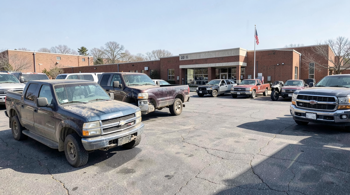
Police auctions serve as liquidating venues for two primary categories of vehicles, which include retired municipal agency fleet trucks and confiscated assets 2. State, county, and local law enforcement agencies routinely update their service fleets, resulting in the turnover of older trucks that are transitioned to municipal yards for public bidding 2. These municipal auctions are structured as open-bid public processes to maintain full financial transparency. The inventory frequently reflects vehicles that have completed their active duty cycles but retain mechanical utility.
In contrast to standard passenger vehicles, pickup trucks in these environments are frequently categorized by historical utility, ranging from active administrative units to heavy patrol and rescue operations. While some assets enter the market through routine lifecycle maintenance cycles, other vehicles arrive at municipal yards following impoundment under local municipal ordinances 3. These impounded vehicles are often abandoned by their legal owners, prompting local police departments to utilize public auctions as a practical cost recovery mechanism.
Primary Acquisition Platforms and Listing Environments
Bidders seeking municipal vehicles can locate inventory through multiple specialized channels. Online auction portals, such as GovDeals, act as centralized listing hubs for state and local government agencies to list retired utility vehicles for public bidding 1. Additionally, the federal General Services Administration manages GSA Fleet Vehicle Sales, which liquidates thousands of administrative and operational vehicles annually 2. These online marketplaces provide searchable access to public fleets across various geographical regions.
Municipalities also leverage regional auctioneers or conduct localized, bi-weekly public sales directly at municipal tow lots 3. Private towing organizations contracting with local police departments also host public liquidation events for vehicles that remain unclaimed after statutory holding periods 1. These localized events allow physical inspection of the assets prior to the initiation of the bidding process, offering a local alternative to broader digital platforms.
Common Pickup Models and Historic Valuation Metrics
The historical price distribution for municipal pickup trucks generally falls between $4,000 and $20,000, with many older or high-mileage light-duty models executing sales well under the $10,000 threshold 2. Typical inventory consists of domestic light-duty platforms, including Ford F-150 and Chevrolet Silverado 1500 units, alongside heavy-duty municipal platforms 2. The following table outlines historical sales data for various retired municipal utility trucks, illustrating the typical mechanical parameters and condition classifications observed at past public auctions.
| Vehicle Model and Year | Odometer Parameters | Historical Condition | Key Mechanical Notes |
|---|---|---|---|
| 2018 Chevy Silverado 1500 4 | 144,358 miles | Fair (Retired) | Requires jump start, transmission slips |
| 2007 Dodge Ram Pickup 5 | True Mileage Unknown | Poor (Surplus) | Dashboard unreadable, needs towing off lot |
| 2001 Ford F-550 Super Duty 6 | 22,000 miles | Good (Rescue) | Flatbed dually, 7.3L V8 diesel engine |
Structural and Mechanical Inspection Realities
A defining element of purchasing from law enforcement and impound auctions is the lack of express or implied warranties. Most municipal platforms sell all inventory on an as-is, where-is basis, meaning the purchaser assumes all financial and mechanical responsibility immediately upon the fall of the auctioneer hammer 3. In many impound scenarios, vehicles are sold without ignition keys, and buyers are unable to verify engine operational status prior to bidding 3. This environment demands that buyers exercise extreme diligence when evaluating candidates.
Buyers are strongly advised to utilize designated preview periods to visually inspect critical structural components, check fluid levels, and search for evidence of mechanical wear. Some municipal auctions offer limited preview windows where keys are made available solely to listen to engines running, though road tests are strictly prohibited 5. Engaging a qualified mechanic to perform a visual assessment during these public viewing windows can prevent costly acquisition errors.
Regulatory Compliance, Titling, and Administrative Fees
Navigating the documentation phase requires a careful understanding of state-specific motor vehicle laws. Winning bidders at police auctions are typically issued a specialized Law Enforcement Auction Sales Receipt or a comparable state-approved municipal transfer form 4. This documentation is presented to county tax offices to facilitate the registration process and obtain a legal title 4. Out-of-state buyers must verify their home state requirements, as some jurisdictions do not issue titles based solely on out-of-state municipal sales receipts.
Buyers must also anticipate that some seized or abandoned trucks carry branded titles, such as rebuilt salvage or mileage discrepancies 4. Furthermore, final transaction costs are subject to mandatory administrative fees, state sales tax, and buyer premiums, which typically range from 10% to 15% of the winning bid amount 3. Factoring in these additional regulatory costs is essential to avoid exceeding the established purchasing budget.
Operational Preparedness and Removal Coordination
The logistical demands of removing a purchased pickup truck from a municipal impound lot require immediate planning. Due to insurance regulations and safety protocols, most municipal impound yards strictly prohibit driving any auction vehicle off the lot, regardless of its operational status 5. Consequently, buyers must coordinate with licensed towing services or secure flatbed transportation to remove the vehicle 5. Planning these logistics prior to bidding ensures a seamless post-auction transition.
Auction houses enforce strict removal timelines, often requiring all vehicles to be cleared from the premises within three to four business days following the close of the sale 3. Failure to remove a vehicle within the designated timeframe typically results in daily storage fees, which can run as high as $30 per day, and eventual forfeiture of the asset 3. Maintaining prompt communication with yard coordinators prevents unnecessary administrative penalties.
Sources
- GovDeals
- BidProwl Government Vehicle Auctions Guide
- Kansas City Police Tow Lot Auction
- Global Auction Guide Chemung County Sheriff
- Global Auction Guide Township of Brick PD
- Ford Authority
Authored by MyTrendSpot team