Affordable firewood near me: A consumer guide to local wood, measurements, and safety
Searching for “Affordable firewood near me” generally means comparing nearby firewood suppliers, tree-service operators, farms, pickup sites, and peer-to-peer listings by wood type, quantity, condition, and delivery distance. Available products range from mixed softwood and hardwood intended for bonfires or supplemental heat to seasoned hardwood selected for longer indoor burns. GNF Services describes a mixed-species option containing cottonwood, pine, other softwoods, and some hardwood, sold as cut, split, and seasoned firewood. 1
What local firewood options usually include
Local firewood markets do not offer one uniform product. Some suppliers describe mixed wood as an economical choice for frequent burning, winter supplemental heat, fireplaces, stoves, and outdoor fire pits. Other regional providers emphasize split hardwoods such as ash, hickory, cherry, oak, maple, and walnut. Species, piece size, moisture content, and appearance can vary even when two sellers use the same description, so a comparison should begin with the actual contents of the load rather than the product name. 1 2
Regional examples show how service models differ. Westside Farms in Central Ohio lists full-cord, half-cord, quarter-cord, and bundle quantities, with delivery and stacking options. Brawner’s Tree Service in Michigan describes face-cord, half-cord, and full-cord orders, optional stacking, and hardwood seasoned for 12 to 18 months. These examples illustrate categories found in local markets, not a live directory or assurance that the same sizes or services exist in every area. 3 4
Measurements and the meaning of affordability
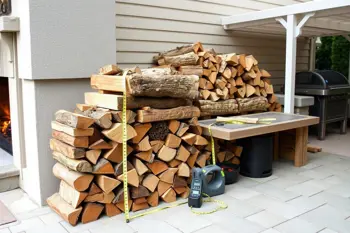
A full cord is a stack measuring 4 feet high, 4 feet wide, and 8 feet long, equal to 128 cubic feet of stacked wood. Face cords, half cords, quarter cords, and bundles represent smaller or differently defined quantities, and the usable amount can change with piece length, stacking method, and gaps between logs. Asking for the stacked dimensions and whether the wood is delivered loose or neatly stacked helps prevent quantity misunderstandings. 11
| Common description | What to verify |
|---|---|
| Full cord | Whether the stack reaches the standard 4-by-4-by-8-foot dimensions |
| Face cord | Stack length, height, and the cut length of each piece |
| Half or quarter cord | Exact volume and whether delivery is loose or stacked |
| Bundle | Piece count, approximate size, and intended use |
Reported local pricing varies significantly by region, wood species, and seasoning, with a broad general range of approximately $200 to $500 per cord. That range should be treated as market context rather than a quote. Delivery, stacking, cut length, hardwood composition, and drying time can materially affect the final cost. Buying during spring or summer is often identified as a way to encounter different pricing conditions than during peak winter demand. 12
Softwood, hardwood, and mixed loads
Hardwoods such as oak, hickory, and maple are denser than softwoods such as pine and generally provide more heat per volume. Local supplier descriptions associate oak with long burn times, hickory with high heat output, ash with clean burning and easy splitting, and cherry with a pleasant aroma. These characteristics make hardwoods relevant for sustained home heating, while softwoods and mixed loads can suit quick fires, kindling, bonfires, or supplemental use. 2 3
Species selection should match the appliance and purpose. North Atlanta Firewood describes seasoned oak cut to approximately 16 to 17 inches for fireplaces, wood stoves, and outdoor fire pits. Roswell-area information lists white oak, red oak, hickory, cherry, and pecan for indoor fires, outdoor gatherings, and cooking. These examples also show why asking about cut length matters, since a piece that does not fit the firebox can create handling and storage problems. 6 5
Seasoning, moisture, and storage checks
Seasoned firewood is wood dried for at least six to 12 months, and properly dried material generally burns more cleanly and efficiently than green wood. One supplier describes seasoned mixed hardwood with moisture content ranging from 20 to 30 percent, while also warning that outdoor exposure can leave surface moisture, mold, or occasional insects. Seasoning therefore describes a process, not a guarantee that every piece is equally dry at the moment of delivery. 13 10
Before accepting a load, a consumer can ask how long it was seasoned, whether it was split before drying, and how it was stored. Firewood intended for indoor burning should be dry enough to light and burn without persistent smoke, but visible surface dryness alone is not conclusive. Storage should keep wood elevated and protected from precipitation while allowing airflow. A supplier’s stated moisture range, species mix, and cut dimensions provide more useful information than labels such as premium or ready to burn. 7
Where nearby firewood is commonly found
Potential local sources include tree-service companies, farms, dedicated firewood suppliers, roadside sellers, and community marketplaces. Tree-service professionals may sell wood produced during clearing and removal work, sometimes at different price points from retail firewood. Angi provides a directory of tree-service and firewood professionals, while Facebook Marketplace, Nextdoor, and Craigslist are commonly used for regional peer-to-peer listings and neighborhood recommendations. Availability, quality, and seller reliability can vary substantially across these channels. 19 20 16 17 18
Delivery terms are another major comparison point. Suppliers in Chattanooga, Central Ohio, Michigan, Roswell, Connecticut, Idaho, and the Tampa Bay area describe combinations of pickup, driveway delivery, bulk orders, stacking, and custom quantities. Some serve a defined radius, while others focus on specific towns or counties. A responsible inquiry confirms delivery boundaries, placement rules, load dimensions, stacking charges, scheduling conditions, and whether the quoted quantity refers to stacked or loose wood. 2 3 4 5 8 9
Regulatory, pest, and practical risks
Moving firewood across regions can spread invasive pests, including the emerald ash borer, which is why local sourcing is recommended by the USDA Animal and Plant Health Inspection Service. Firewood Scout offers an interactive map focused on locating locally sourced wood, but local transport restrictions still need to be checked with the relevant authority. Public-land collection is not automatically permitted: the USDA Forest Service explains that specific national-forest permits may govern personal firewood gathering. 14 19 15
Other friction points include inconsistent measurements, unseasoned wood sold as seasoned, inaccessible delivery locations, pest contamination, and pieces cut too long for the appliance. Indoor burning also requires attention to chimney condition, ventilation, and the appliance manufacturer’s requirements. A comparison based on species, moisture, dimensions, quantity, source location, delivery conditions, and legal restrictions is more reliable than choosing solely by a short online description or an apparently low total. 7 11
Sources
- GNF Services, LLC, Split Budget Firewood, https://gnfservicesllc.com/product/split-budget-firewood/
- East Tennessee Outdoor Solutions, https://www.easttnoutdoorsolutions.com/firewood
- Westside Farms, https://westsidefarms.org/firewood/
- Brawner’s Tree Service, https://www.brawnerstreeservice.com/firewood-service-battle-creek-mi/
- Trees of Georgia, https://treesofga.com/firewood-delivery/
- North Atlanta Firewood, https://northatlantafirewood.com/product/seasoned-oak/
- John Fire Woods, https://johnfirewoods.com/shop/seasoned-firewood/
- Evergreen Firewood, https://evergreenfirewood.com/jerome/
- RTK Premium Firewood, https://www.rtkfirewood.com/
- J. Witkowsky & Sons Tree Service, https://jwitkowskytree.com/fire-wood/
- U.S. Environmental Protection Agency, https://www.epa.gov/burnwise/burn-wise-how-wood-heaters-work
- General market pricing information provided in the research data payload
- Chimney Safety Institute of America, https://www.csia.org/firewood.html
- USDA Animal and Plant Health Inspection Service, https://www.aphis.usda.gov/hungrypests/firewood
- USDA Forest Service, https://www.fs.usda.gov/visit/know-before-you-go/firewood
- Facebook Marketplace, https://www.facebook.com/marketplace/category/home-garden
- Nextdoor, https://nextdoor.com
- Craigslist, https://www.craigslist.org
- Angi, https://www.angi.com/companylist/firewood.htm
- Firewood Scout, https://www.firewoodscout.org
Authored by MyTrendSpot team