Warning signs of migraines: A clinical guide to prodrome and aura
Warning signs of migraines may appear well before the headache itself. Early changes can involve mood, sleep, appetite, concentration, sensory sensitivity, or vision, while some attacks occur without an identifiable warning phase. Understanding these patterns can help distinguish a familiar migraine sequence from symptoms that require urgent medical attention.
How migraine warning phases develop
Migraine is a recurring neurological disorder rather than simply a description of head pain. Attacks commonly cause moderate to severe throbbing pain, often on one side of the head, along with nausea, vomiting, and sensitivity to light, sound, or smells. An attack may progress through prodrome, aura, headache, and postdrome, but many people experience only some of these stages. The stages may overlap and can vary between attacks. 1
The prodrome, also called the premonitory phase, is the earliest warning period. It can begin several hours or days before the headache, and some clinical summaries place its onset one or two days before pain develops. Recognizing a personal pattern is more useful than expecting a universal checklist, because symptoms differ considerably between individuals and may not occur during every attack. 2
Common prodrome symptoms
Prodrome symptoms often reflect changes in energy, mood, concentration, and bodily regulation. Frequent yawning, unusual fatigue, difficulty concentrating, mental cloudiness, dizziness, neck pain, and increased sensitivity to light or sound have all been described. Mood may shift toward irritability, depression, or, for some people, an unusually elevated or euphoric feeling. These changes can be subtle and may be mistaken for ordinary stress, poor sleep, or another illness. 2
Appetite and digestive changes can also precede head pain. Food cravings, particularly for sweet foods such as chocolate, are reported warning signs, although a craving before an attack does not necessarily mean that the food caused the migraine. Some people experience nausea, constipation, or diarrhea during prodrome. Increased urination or a need to urinate more often may also occur, making a cluster of seemingly unrelated symptoms potentially meaningful when it repeats before attacks. 2
Recognizing migraine aura
Aura is a temporary group of nervous-system symptoms that can occur before or during the headache stage. Visual aura is the most common form and may include flashing or flickering lights, shimmering spots, zigzag lines, geometric patterns, blind spots, or areas of blurred vision. Symptoms often develop gradually and generally last less than 60 minutes. Aura can occasionally occur without a subsequent headache, a pattern sometimes called migraine aura without headache. 5
Sensory and language changes are also possible. Tingling or numbness may begin in one area of the face or arm and spread gradually, while language aura can cause difficulty finding or expressing words. Because some aura symptoms can resemble a stroke, the pattern, timing, and previous history matter. A new, abrupt, severe, or markedly different neurological symptom should not automatically be attributed to migraine, particularly when weakness or speech disturbance is present. 7
Symptoms as the headache approaches
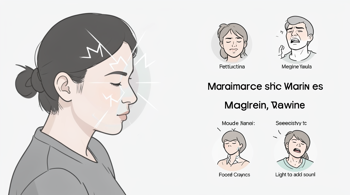
After warning symptoms or aura, the main attack may produce intense pain that is one-sided, throbbing, moderate to severe, and worsened by routine activity. Migraine pain can affect both sides of the head in some cases and may extend into the face or neck. Nausea, vomiting, and increased sensitivity to light and sound are common associated features. Attacks typically last between four hours and several days, with adult headache stages commonly lasting four to 72 hours. 1
The recovery stage is known as postdrome. Although the supplied clinical descriptions emphasize that symptoms can continue across stages, the overall attack may last four hours to three days without effective treatment. Bright light or loud sounds may remain difficult to tolerate while the person is recovering, and tiredness or impaired concentration may make ordinary activities harder. The exact combination and severity of stages can change from one migraine episode to another. 4
Triggers and recurring patterns
Warning signs should be considered alongside possible triggers, because the trigger is not always the same as the earliest symptom. Reported triggers include stress, too little sleep, too much sleep, skipped meals, hormonal changes involving estrogen, weather changes, flashing lights, strong smells, loud noises, red wine, caffeine changes, tobacco, overexertion, and medication overuse. A food craving may therefore occur because an attack is already developing rather than because the craved food initiated it. 6
Patterns can be documented by recording the timing of mood changes, yawning, fatigue, cravings, urinary changes, sensory sensitivity, aura, head pain, sleep, meals, and possible exposures. This type of record can help show whether symptoms recur in a consistent order and can give a clinician more precise information for diagnosis. It is also important to note that some people have migraine without aura, while others can experience aura without headache, so the absence of one stage does not exclude migraine. 3
When warning signs require urgent assessment
Emergency assessment is recommended for a sudden agonizing headache described as blinding pain, or for headache accompanied by paralysis or weakness in an arm, leg, face, or one side of the body. Slurred or garbled speech is another warning sign. These symptoms may indicate a serious condition such as stroke and should not be assumed to be a routine migraine aura, especially if they are new, abrupt, or unlike previous attacks. 3
Headache with fever, stiff neck, mental confusion, seizures, double vision, or a rash also requires urgent medical evaluation because these symptoms may occur with serious conditions such as meningitis. Outside emergency situations, frequent or severe migraine symptoms warrant contact with a medical practice for assessment. A clinician can compare the reported stages and neurological symptoms with the person’s history and determine whether additional evaluation is appropriate. 3
Sources
- MSD Manual Consumer Version, “Quick Facts: Migraines”
- WebMD, “Migraine Warning Signs and What You Can Do”
- NHS inform, “Migraine”
- The Migraine Trust, “Stages of a Migraine Attack”
- Mayo Clinic Store, “Migraine: Symptoms, Causes, Triggers and Treatment”
- MedlinePlus, “Migraine”
- Mayo Clinic, “Migraine with Aura: Symptoms and Causes”
Authored by MyTrendSpot team