Warning signs of gout: A clinical overview of identifying symptoms and progression
Gout is a prevalent form of inflammatory arthritis caused by the accumulation of uric acid crystals within joints and soft tissues 2, 7. Understanding the clinical warning signs is critical for identification, as symptoms often appear suddenly and require specific management strategies 1, 5. This article provides an objective summary of the physical indicators, common anatomical sites, and the physiological progression of gout as observed in clinical practice 7.
Common Physical Symptoms of Gout Flares
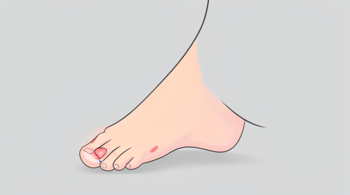
The hallmark of a gout attack is the sudden onset of intense, excruciating joint pain, which typically reaches its peak severity within 8 to 12 hours of initiation 1, 5. Patients frequently describe this sensation as throbbing or crushing 5. Accompanying the pain are significant inflammatory markers, including visible swelling, redness, and a distinct feeling of warmth in the affected joint 1, 2. In many instances, the skin over the joint may appear shiny, red, or purple, and the area becomes so hypersensitive that the weight of a bedsheet can cause intolerable discomfort 1, 5.
Beyond the acute pain phase, individuals may experience lingering joint discomfort that can persist for several days or even weeks 1. During these episodes, the range of motion in the affected joint is often significantly limited, making routine physical tasks difficult 1, 6. Furthermore, systemic symptoms such as a fever or fatigue can occasionally accompany severe gout flares, sometimes leading to initial concerns regarding potential joint infection 5, 6, 10.
Anatomical Distribution of Symptoms
While the big toe joint is the most frequently affected site-occurring in approximately 50 percent of initial flares-gout can manifest in various other joints throughout the body 1, 8. Common secondary sites include the ankles, knees, wrists, fingers, and elbows 1, 2. It is important to note that the site of the flare is not necessarily static; later attacks may occur in different joints than those affected during the initial presentation 8.
| Common Joint Sites | Typical Characteristics |
|---|---|
| Big Toe | Classic primary site for initial onset |
| Ankles & Knees | Frequent locations for lower extremity flares |
| Fingers & Wrists | Common sites, especially in post-menopausal women |
| Spine | Rare, but potential location for gout crystal deposition |
Gender-based differences have also been observed in the presentation of gout symptoms. Men commonly experience flares in the lower extremities, whereas women, particularly after menopause, may see symptoms develop in the upper extremities more frequently 8, 10. In some cases, gout in the hands can be mistakenly identified as osteoarthritis, though the presence of tophi-soft, chalky lumps under the skin-often serves as a distinguishing feature 8, 10.
Physiological Progression and Chronic Markers
Gout is categorized by periods of intense activity followed by intervals of relative remission 2, 3. In the early stages of the disease, the joints may function normally between flares 8. However, if uric acid levels remain elevated and the condition remains unmanaged, the frequency and severity of these attacks typically increase over time 3, 6. This chronic stage can result in persistent arthritis and functional decline in the affected joints 8.
A significant sign of long-term, poorly managed gout is the development of tophi 1. These are visible or palpable deposits of monosodium urate crystals that aggregate in soft tissues or bones around the joints 3, 8. While tophi themselves are often painless, they can cause disfigurement and interfere with the structural integrity of the joint, potentially leading to bone and cartilage erosion over several years 8.
Risk Factors and Uric Acid Dynamics
The primary driver of gout is hyperuricemia, or high levels of uric acid in the blood, which occurs when the body either produces too much uric acid or cannot effectively excrete it through the kidneys 4, 5, 9. Purines, which are natural chemicals found in the body and in various foods, break down into uric acid 3, 4. Dietary habits, such as the consumption of red meat, certain seafood, and high-fructose corn syrup, are documented risk factors for elevating these levels 3, 4, 9.
Other physiological and medicinal factors also contribute to an individual's risk profile. Metabolic conditions such as obesity, diabetes, and kidney disease can hinder the body's ability to maintain healthy uric acid levels 5, 9. Furthermore, specific medications, including diuretics such as hydrochlorothiazide, are known to interfere with the kidney's ability to remove uric acid, thereby increasing the susceptibility to gout in some patient populations 4, 5, 10.
Differentiating Gout from Other Conditions
Clinicians often must distinguish gout from other forms of arthritis due to the potential for overlapping symptoms 3. For example, calcium pyrophosphate deposition (CPPD) disease, previously referred to as pseudogout, involves the deposition of calcium phosphate crystals rather than uric acid crystals 3. While the inflammatory presentation is similar, the underlying etiology differs significantly, and effective management requires an accurate diagnosis to ensure appropriate therapeutic approaches 3, 10.
Additionally, symptoms of advanced gout may be clinically difficult to distinguish from rheumatoid arthritis, as both conditions can cause joint damage, chronic inflammation, and the formation of nodules under the skin 10. Diagnostic accuracy is paramount, as the treatment paths for gout, rheumatoid arthritis, and infectious arthritis differ significantly 6, 10. Persistent joint pain accompanied by a high temperature should always be investigated, as these may signal an infection within the joint, known as septic arthritis 6, 10.
Importance of Early Medical Consultation
Gout is a progressive disease that generally does not resolve without proper intervention 1, 6. While individual attacks may eventually subside on their own after 3 to 10 days, the underlying crystal deposits remain a catalyst for future, potentially more frequent, and increasingly severe flares 3, 6. Early clinical evaluation is recommended for anyone experiencing sudden, intense joint pain for the first time 6.
Effective long-term management typically centers on urate-lowering therapies and lifestyle adjustments aimed at reducing the systemic burden of uric acid 2, 7. These strategies are designed to prevent the recurrence of flares, the formation of tophi, and the development of long-term joint damage 7, 8. Regular medical monitoring ensures that treatment plans remain aligned with the patient's evolving clinical needs and disease progression 7.
Sources
- Mayo Clinic: Gout Symptoms and Causes
- Cleveland Clinic: Gout Overview
- Arthritis Foundation: Gout Diagnosis and Treatment
- Harvard Health: Gout A to Z
- Penn Medicine: Gout Conditions
- NHS inform: Gout
- StatPearls: Gout Clinical Overview
- Gout Education Society: Symptoms of Gout
- Arthritis Society Canada: Gout Information
- American College of Rheumatology: Gout Beyond the Big Toe
Authored by MyTrendSpot team