Gastric Bypass Results and Timeline: A Clinical Recovery and Weight-Loss Overview
Gastric bypass results and timeline are commonly evaluated through two connected questions: how much weight may be lost and how long recovery takes. Available clinical guidance describes substantial early weight loss, a staged return to eating and activity, and continuing medical monitoring rather than a single endpoint or guaranteed outcome.
How Results Are Measured
Clinicians commonly describe gastric bypass outcomes using excess weight loss and total body weight loss. Excess weight loss measures the percentage of weight above an estimated ideal body weight that has been lost, while total body weight loss expresses the reduction as a percentage of the starting weight. Published patient guidance commonly reports approximately 60% to 70% excess weight loss within 12 to 18 months, although individual results vary with starting weight, age, health status, eating patterns, physical activity, and follow-up adherence. 1
| Measure | Meaning |
|---|---|
| Excess weight loss | Weight lost compared with weight above an estimated ideal level. |
| Total body weight loss | Weight lost as a percentage of the original body weight. |
Weight-Loss Timeline
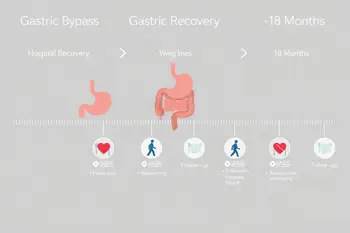
Weight loss is generally fastest during the first three to six months, when the smaller stomach pouch, altered intestinal pathway, reduced food intake, and metabolic changes have their strongest combined effect. Progress usually slows afterward, with many patients approaching a plateau around 12 to 18 months. Some clinical summaries describe a broader expected range of 60% to 80% excess weight loss by approximately 18 months, emphasizing that averages should not be treated as personal predictions. 2 3
- First three months: rapid changes are commonly reported.
- Months four through six: weight loss often continues but begins to moderate.
- Months 12 through 18: many patients approach a longer-term weight plateau.
Hospital Stay and Early Recovery
After uncomplicated gastric bypass, hospital stays commonly last about one to three days, depending on the operation, recovery progress, and local clinical protocols. Early care focuses on monitoring vital signs, controlling discomfort and nausea, checking tolerance of fluids, and encouraging short walks to support recovery. Light daily activities may resume within one to two weeks, while returning to work often takes about two to four weeks, with physically demanding work requiring individualized clearance. 5
| Period | Typical focus |
|---|---|
| Hospital days | Monitoring, pain control, fluid tolerance, and assisted movement. |
| Weeks one to two | Healing, short walks, hydration, rest, and gradual activity. |
| Weeks two to four | Possible return to desk-based work if recovery is uncomplicated. |
Diet Progression and Daily Adaptation
Eating usually advances in stages rather than returning immediately to regular meals. The sequence commonly moves from clear liquids to full liquids, pureed foods, soft foods, and eventually regular-texture foods under the bariatric team’s instructions. Portions remain small, and hydration and protein intake receive continuing attention. Temporary nausea, vomiting, constipation, abdominal discomfort, or dehydration can occur, particularly while the digestive system adapts to changed anatomy and eating volume. 4
- Clear and full liquids are introduced first.
- Pureed and soft foods follow as tolerated.
- Regular textures are reintroduced gradually under clinical guidance.
- Persistent vomiting or inability to maintain fluids requires medical assessment.
Health Improvements and Eligibility Factors
Gastric bypass is used for obesity management and may improve obesity-related conditions, including type 2 diabetes, high blood pressure, sleep apnea, and fatty liver disease. Eligibility is not determined by expected weight loss alone. Assessment generally considers the severity of obesity, related medical conditions, previous treatment efforts, surgical risk, psychological readiness, and the ability to follow dietary, supplementation, and follow-up requirements. The procedure changes both stomach capacity and nutrient handling, so expected benefits must be weighed against long-term responsibilities. 6
| Potential outcome area | Reported relevance |
|---|---|
| Metabolic health | Type 2 diabetes and related metabolic measures may improve. |
| Cardiovascular risk factors | Blood pressure and lipid-related conditions may improve. |
| Sleep and liver health | Sleep apnea and fatty liver disease may respond to substantial weight loss. |
Long-Term Maintenance and Risks
Gastric bypass requires lifelong vitamin and mineral supplementation, blood testing, and nutritional follow-up because the operation reduces nutrient absorption. Ongoing appointments also review weight trends, medications, eating tolerance, and obesity-related conditions. Recognized complications include bleeding, infection, anastomotic leaks, blood clots, bowel obstruction, ulcers, and nutritional deficiencies. Some weight regain is common several years after surgery, although long-term studies describe durable clinically meaningful weight loss for many patients. 7 8 9
- Follow-up is frequent during the first postoperative year and continues afterward.
- Supplementation should not be stopped without clinical guidance.
- Severe pain, fever, breathing difficulty, persistent vomiting, or dehydration may indicate a complication.
- Long-term results depend on nutrition, activity, behavioral adaptation, and medical monitoring.
Interpreting Individual Results
Average timelines provide a framework, not a promise. Two patients with similar starting weights may lose weight at different rates because of differences in age, health, medications, activity, eating behavior, surgical factors, and adherence to follow-up. A temporary stall does not necessarily indicate treatment failure, while rapid loss accompanied by vomiting or dehydration requires attention. The most useful assessment combines weight trends with nutritional laboratory results, symptom review, disease improvement, and functional changes rather than relying on the scale alone.
Before surgery, a qualified bariatric team typically explains the intended procedure, recovery plan, dietary stages, supplementation schedule, complication warning signs, and long-term monitoring requirements. These discussions help distinguish expected adaptation from symptoms needing evaluation and establish realistic goals for weight, health, and daily activity.
Sources
- MD Bariatrics, “How Much Weight Will I Lose With Gastric Bypass?”
- Mayo Clinic, “Gastric Bypass Surgery.”
- Cleveland Clinic, “Gastric Bypass Surgery.”
- Johns Hopkins Medicine, “Gastric Bypass Surgery.”
- MedlinePlus, “Weight Loss Surgery.”
- National Institute of Diabetes and Digestive and Kidney Diseases, “Bariatric Surgery.”
- American Society for Metabolic and Bariatric Surgery, “Bariatric Surgery Procedures.”
- Society of American Gastrointestinal and Endoscopic Surgeons, “Laparoscopic Gastric Bypass.”
- PubMed, long-term review of gastric bypass outcomes.
Authored by MyTrendSpot team