Early symptoms of lung cancer to recognize: A clinical guide to warning signs
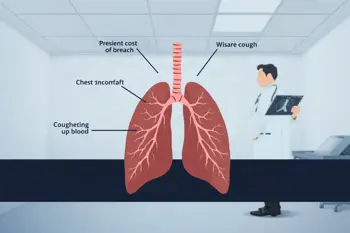
Early symptoms of lung cancer to recognize include a cough that persists or changes, shortness of breath, chest discomfort, wheezing, hoarseness, and coughing up blood. Because early disease often causes no symptoms and these signs overlap with infections, asthma, and other conditions, symptom patterns and persistence are more informative than any single complaint. 1
Why early lung cancer can be difficult to notice
Lung cancer often causes no noticeable symptoms during its earliest, most treatable stages. The lungs contain relatively few pain-sensitive nerves, allowing a tumor to grow without producing obvious discomfort. Some cases are found incidentally when imaging is performed for another medical reason. Consequently, the absence of symptoms does not establish that lung cancer is absent, particularly among people with relevant risk factors or an eligible screening history. 2
When symptoms do occur, they may resemble a chest infection, allergy, asthma flare, chronic obstructive pulmonary disease, or irritation related to smoking or air pollution. A new symptom, a persistent symptom, or a change in an established pattern is more concerning than a brief, familiar illness. Medical evaluation is needed to determine the cause because symptoms alone cannot confirm lung cancer. 3
Persistent or changing cough
A cough that does not go away is one of the most commonly reported warning signs. The relevant change may involve duration, severity, frequency, or character, including a chronic smoker's cough that becomes different. A cough lasting several weeks, gradually worsening, or failing to resolve as expected after a respiratory illness merits discussion with a clinician. The same principle applies to nonsmokers because lung cancer can occur without a smoking history. 4
Coughing up blood, known medically as hemoptysis, deserves particular attention even when the amount is small or appears only as blood-streaked mucus. Rust-colored or blood-streaked sputum can have causes other than cancer, including infection, but it should not be attributed automatically to throat irritation. A clinician may assess the symptom alongside smoking history, exposure history, other symptoms, and imaging findings. 5
Breathing and chest symptoms
Shortness of breath can develop when a tumor obstructs part of an airway, affects lung function, or occurs alongside another process in the chest. A person may notice breathlessness during routine activity, reduced exercise tolerance, or a gradual increase in effort needed for ordinary tasks. Wheezing can also occur when air moves through a narrowed airway. These symptoms are nonspecific, but progressive or unexplained changes warrant assessment. 6
Chest pain or discomfort may occur with lung cancer, particularly when nearby structures are affected. Pain can sometimes worsen with deep breathing or coughing, although chest pain has many possible causes involving the heart, muscles, ribs, lungs, and digestive system. Severe or sudden chest symptoms require appropriate emergency assessment, while persistent or unexplained discomfort should be evaluated in a clinical setting rather than self-diagnosed. 7
Voice changes and repeated infections
Hoarseness or another persistent voice change can occur when a tumor affects nerves near the voice box. It may initially be attributed to a cold, vocal strain, reflux, or allergies, so duration and recurrence are important context. Hoarseness accompanied by cough, breathlessness, chest discomfort, or other unexplained changes has greater clinical significance than an isolated short-lived alteration after a respiratory infection. 1
Repeated bronchitis or pneumonia, or an infection that does not resolve in the expected manner, can be associated with an airway obstruction. A tumor may interfere with normal airflow or drainage, creating conditions in which infection develops repeatedly in the same region. Recurrent infections do not prove cancer, but the pattern can prompt clinicians to consider chest imaging or other diagnostic testing when routine treatment does not explain the course. 8
General symptoms and signs beyond the lungs
Unplanned weight loss, reduced appetite, persistent fatigue, and weakness are possible symptoms of lung cancer, although they also occur with many noncancerous illnesses. These changes are more concerning when they are unexplained, progressive, or combined with respiratory symptoms. A person may also experience headaches, bone pain, or swelling in the face or neck if disease has spread beyond the lungs. Such findings require medical evaluation of the broader symptom pattern. 1
Less common manifestations can include difficulty swallowing and persistent pain in the shoulder, back, or chest. These symptoms have a wide differential diagnosis and should not be treated as specific indicators of lung cancer. Their relevance depends on duration, severity, associated symptoms, and personal risk factors. A detailed history and physical examination help determine whether imaging, laboratory testing, specialist review, or another approach is appropriate. 4
Risk factors, screening, and diagnosis
Smoking remains the leading risk factor, and approximately 85% of lung cancer cases are related to cigarette smoking according to Merck Manual data. Other contributors include secondhand smoke, radon, air pollution, asbestos and other workplace exposures, and family history. Lung cancer can also affect people who have never smoked, with Mayo Clinic reporting that up to 20% of cases occur in people without a smoking history. 7
In the United States, annual screening with low-dose computed tomography is generally aimed at adults aged 50 to 80 who have a significant smoking history, including a 20-pack-year history and current smoking or quitting within the past 15 years, according to the supplied clinical guidance. Symptomatic patients may begin with chest imaging, followed by CT, PET-CT, and biopsy when needed. Imaging can identify an abnormality, but biopsy is used to confirm diagnosis. 3
When symptoms should be medically assessed
A cough lasting more than three weeks, recurring chest infections, coughing up blood, persistent breathlessness, chest or shoulder pain, hoarseness, loss of appetite, or unexplained weight loss are symptoms that NHS guidance identifies for medical assessment. The appropriate timing depends on severity and progression, but persistence or worsening is a key reason to arrange clinical review. A healthcare professional can distinguish routine respiratory illness from symptoms requiring further investigation. 5
No symptom checklist can diagnose lung cancer, and many people with these complaints will have another condition. Conversely, some people with lung cancer have no symptoms when the disease is detected. Evaluation may include a medical history, examination, chest X-ray, CT scan, and biopsy when indicated. Recognizing persistent changes and communicating them accurately helps clinicians decide whether diagnostic testing or screening assessment is appropriate. 2
Sources
- Mayo Clinic News Network
- Lung Cancer Research Foundation
- Centers for Disease Control and Prevention
- National Cancer Institute
- National Health Service
- American Cancer Society
- Merck Manual
- American Lung Association
Authored by MyTrendSpot team