Warning signs of a heart attack and when to seek emergency help: A clinical overview of symptoms and urgent protocols
Recognizing the warning signs of a heart attack and knowing exactly when to seek emergency help are critical factors in reducing the risk of permanent heart muscle damage 5. A heart attack, or myocardial infarction, occurs when the blood supply to the heart is significantly reduced or completely blocked, often due to a blood clot forming on arterial plaque 47. Because time is of the essence, clinical guidelines emphasize that individuals must not ignore subtle symptoms or wait to see if discomfort improves before seeking help 29.
Common Physiological Manifestations
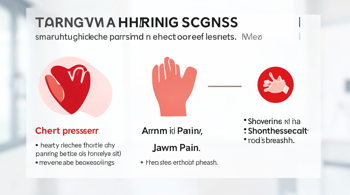
The most frequently reported sign of a heart attack is chest discomfort, which may present as pressure, squeezing, fullness, or pain in the center or left side of the chest 15. This sensation often lasts for more than a few minutes, or it may subside only to return later 25. While many associate this with intense pain, it is important to note that the sensation can also be mild or described simply as an uncomfortable tightness or aching in the chest area 16.
Beyond the chest, individuals often report pain or discomfort radiating to other parts of the upper body, including the arms, shoulders, back, neck, jaw, or teeth 12. Some may experience what feels like heartburn or indigestion, leading to potential misidentification of the event 13. Other systemic responses frequently observed include sudden cold sweats, extreme fatigue, nausea, and lightheadedness or dizziness 156. Shortness of breath is another hallmark symptom that may occur with or without accompanying chest discomfort 24.
Atypical Symptoms in Specific Populations
Clinical data indicates that heart attack presentation can vary significantly between individuals, with women, older adults, and those with diabetes being more likely to experience less obvious or atypical symptoms 16. For these populations, classic chest pain may be absent, or it may manifest only as a brief, sharp pain in the neck, arm, or back 15. Symptoms for these groups can often lean toward more general systemic distress, such as overwhelming fatigue, nausea, vomiting, or unexplained anxiety 28.
Healthcare professionals emphasize that women, in particular, may report symptoms such as:
| Symptom Category | Specific Examples |
|---|---|
| Gastrointestinal | Nausea, vomiting, indigestion, or abdominal pain |
| Respiratory | Shortness of breath |
| Musculoskeletal/Nerve | Pain in the jaw, back, shoulder, or arms |
| Systemic | Unusual tiredness, weakness, or anxiety |
Protocol for Emergency Intervention
If there is any suspicion that a heart attack is occurring, the immediate action should be to call 911 or the local equivalent emergency services number 14. Professional emergency medical services (EMS) teams can begin life-saving treatment the moment they arrive, providing an advantage over independent transport 2. It is generally advised not to drive oneself to the hospital or rely on personal transportation if an ambulance is available, as the emergency team is equipped to handle cardiac emergencies during transit 13.
Once emergency services have been contacted, the dispatcher may offer guidance on initial care. In some cases, if the individual is conscious and has no known allergy to aspirin, they may be advised to chew an aspirin to help prevent further blood clotting 36. However, this step should never delay the emergency call. If the individual becomes unresponsive and stops breathing normally, the situation has shifted to cardiac arrest, necessitating immediate CPR and, if available, the use of an automated external defibrillator (AED) 610.
Pathophysiology and Why Speed Matters
A heart attack occurs when the heart muscle is deprived of oxygen-rich blood, usually due to a blocked coronary artery 49. The heart muscle depends on a steady supply of blood to function, and without it, the muscle tissue begins to sustain damage 45. The extent of this damage is directly proportional to the amount of time that passes without intervention to restore blood flow 59. Rapid medical response is the primary factor in salvaging heart muscle and improving patient survival outcomes 29.
Diagnostic confirmation at the hospital typically involves a series of standard tests to assess the heart's electrical and physical condition 8. Physicians commonly utilize electrocardiograms (EKG) to check electrical activity, echocardiograms (ECHO) to visualize the heart's pumping efficiency, and blood tests to measure the concentration of cardiac enzymes 8. These diagnostics allow medical teams to determine the precise location and severity of the blockage and select the most appropriate treatment pathway for the patient 8.
The Nature of Silent Heart Attacks
It is important for the public to be aware that not all heart attacks manifest with clear, dramatic symptoms. Approximately 20% of heart attacks are classified as silent, meaning they may produce little to no recognizable pain or discomfort 9. Even in these instances, the underlying physiological impact on the heart muscle remains severe. Consequently, any sudden onset of unexplained fatigue, shortness of breath, or general malaise should be monitored with caution, especially in individuals with known risk factors for coronary artery disease 59.
Maintenance and Risk Awareness
While this information focuses on acute symptoms, long-term heart health is managed through the understanding of risk factors like coronary artery disease, high blood pressure, and plaque buildup 59. Atherosclerosis, the process by which fatty deposits accumulate along vessel walls, serves as a primary contributor to the sudden blockages that precipitate heart attacks 79. Understanding these underlying conditions can help individuals engage in more proactive conversations with healthcare providers about their cardiovascular health, even before a symptomatic emergency occurs 89.
Sources
- Centers for Disease Control and Prevention: https://www.cdc.gov/heart-disease/about/heart-attack.html
- American Heart Association: https://www.heart.org/en/health-topics/heart-attack/warning-signs-of-a-heart-attack
- MedlinePlus: https://medlineplus.gov/heartattack.html
- National Heart, Lung, and Blood Institute: https://www.nhlbi.nih.gov/health/heart-attack
- Mayo Clinic: https://www.mayoclinic.org/diseases-conditions/heart-attack/symptoms-causes/syc-20373106
- Cleveland Clinic: https://my.clevelandclinic.org/health/diseases/16818-heart-attack
- Johns Hopkins Medicine: https://www.hopkinsmedicine.org/health/conditions-and-diseases/heart-attack/heart-attack-symptoms-and-warning-signs
- Office on Women's Health: https://womenshealth.gov/heart-disease-and-stroke/heart-disease/heart-attack
- Harvard Health Publishing: https://www.health.harvard.edu/heart-health/heart-attack-symptoms-are-different-for-women
- American Red Cross: https://www.redcross.org/take-a-class/first-aid/performing-first-aid/heart-attack
Authored by MyTrendSpot team